How To Draw a Butterfly Easy Stunning Beginner Guide
Learning How To Draw a Butterfly is a classic starting point for any aspiring artist. These creatures are the epitome of natural symmetry and grace. This tutorial is designed to break down the complex, flowing shapes of a butterfly into six simple, manageable steps, making how to draw feel easier and more enjoyable for beginners of all ages.
Simple Ways to Draw a Cute Butterfly
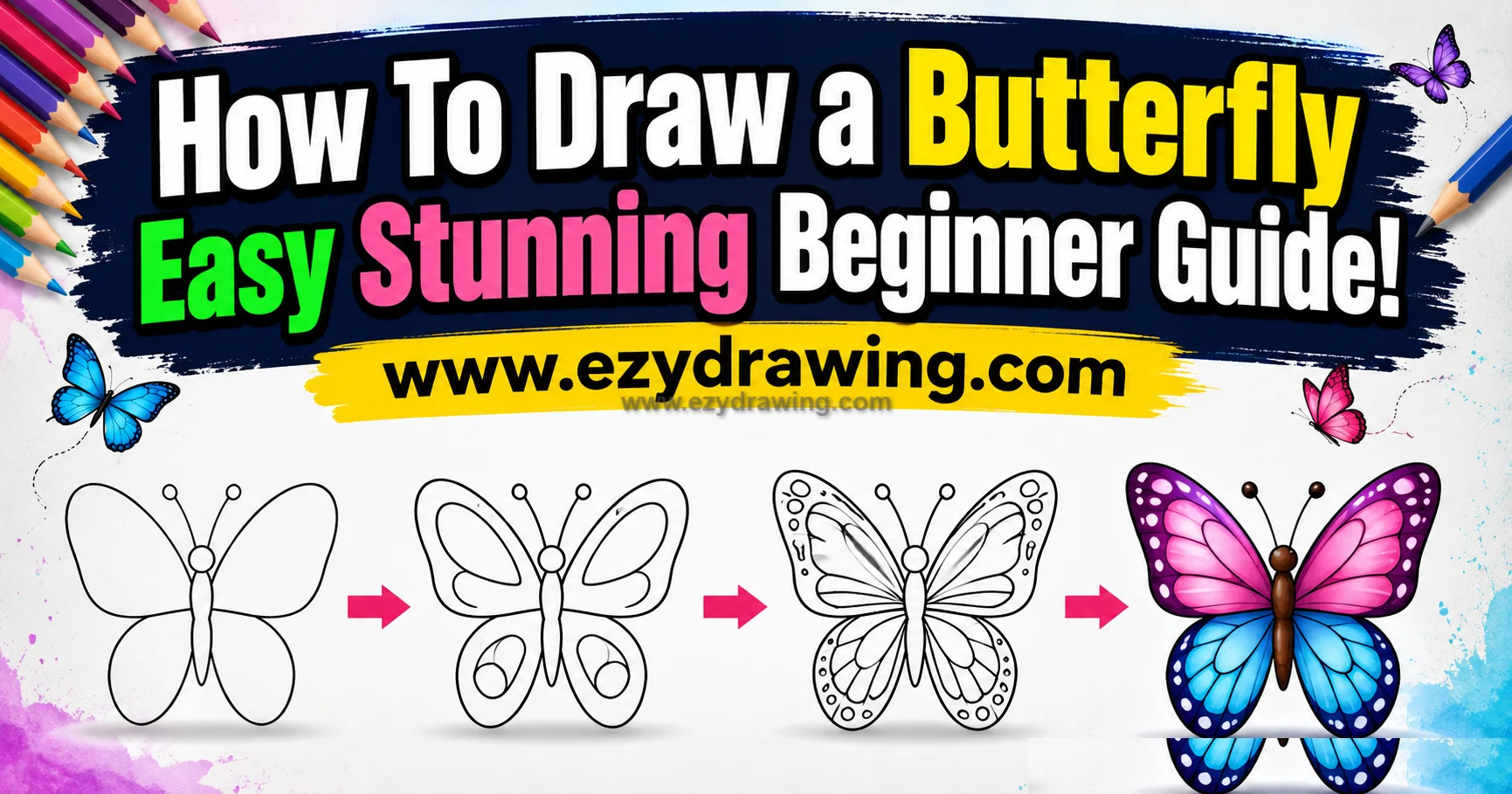
How To Draw a Butterfly Easy Step By Step Guide helps beginners create a beautiful butterfly sketch by starting with simple shapes, then adding wings, body details, antennae, and soft patterns. This easy method is great for kids, students, and new artists who want a clean butterfly drawing that looks cute, balanced, and fun to color.
The 6 Steps to Draw a Butterfly
The 6 steps how to draw a butterfly make the process simple by starting with the body shape, then adding the upper wings, lower wings, wing veins, decorative patterns, and final shading. Each step helps beginners build a clean, balanced butterfly drawing with easy pencil lines while making drawing butterfly practice feel simple and fun.
Step 1: Establish the Center Axis and Body
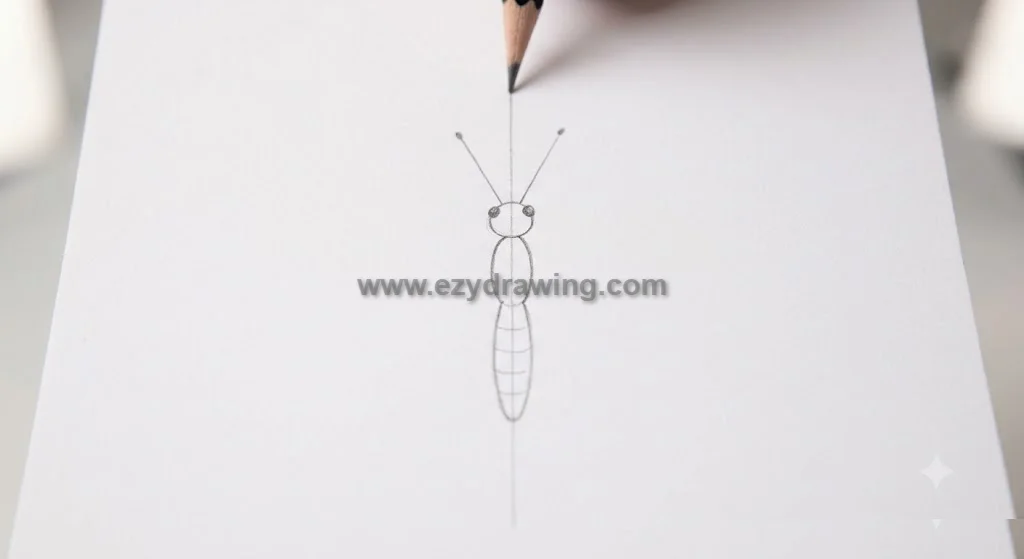
The foundation of any symmetrical drawing is a central guide. We begin by drawing a straight, vertical line. Next, draw a long, thin oval centered on this line; this is the thorax and abdomen. Above this, add a small, perfect circle for the head. Finally, add two small dots for eyes and two simple, curved wires for the antennal shafts.
(Image 1: The foundation structure showing the central axis, head, body, and basic antennae guides.)
Step 2: Outline the Upper Forewings
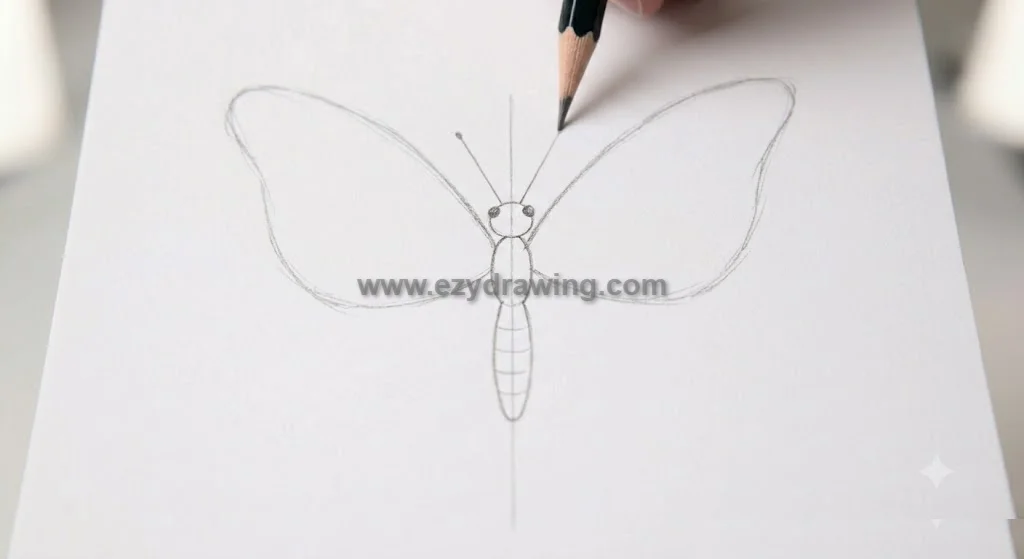
The forewings are the largest and highest pair of wings. Start your pencil near the top of the thorax (the middle body segment). Draw a large, symmetrical, slightly curved shape that sweeps up and outward, resembling a rounded triangle or a large petal. Maintain symmetry as best as you can on both sides of the center line.
(Image 2: The sketch now includes the symmetrical upper forewings attached to the thorax.)
Step 3: Add the Lower Hindwings
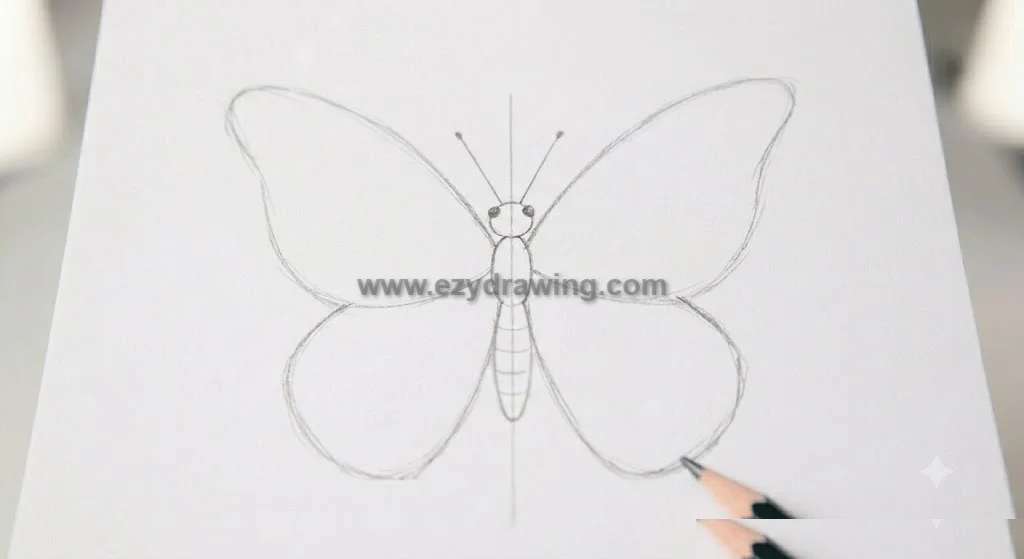
The hindwings are smaller and drop down below the forewings. Start the curve of the hindwing from the side of the thorax (where the forewing ends) and draw a rounded shape that curves down and back toward the abdomen. They often resemble a rounded ‘B’ or a teardrop shape. Ensure both hindwings are identical in shape and size.
(Image 3: The complete silhouette is now visible as the lower hindwings are added below the established forewings.)
Step 4: Map the Primary Wing Veins
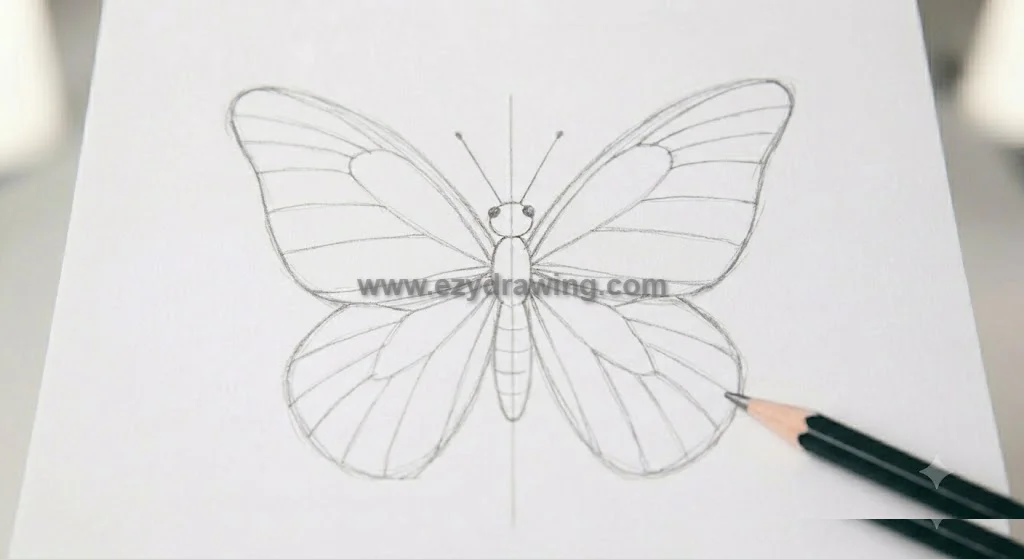
Veins give the wings structure and provide the framework for the future patterns. From the point where the wings meet the body (the “root”), draw several main structural lines that fan outward toward the wing edges. These lines should curve gently, following the overall shape of the wing. This structure is essential for the next step.
(Image 4: Symmetrical vein lines are sketched from the body outward, defining the internal structure of all four wings.)
Step 5: Draw Internal Patterns and Define Edges
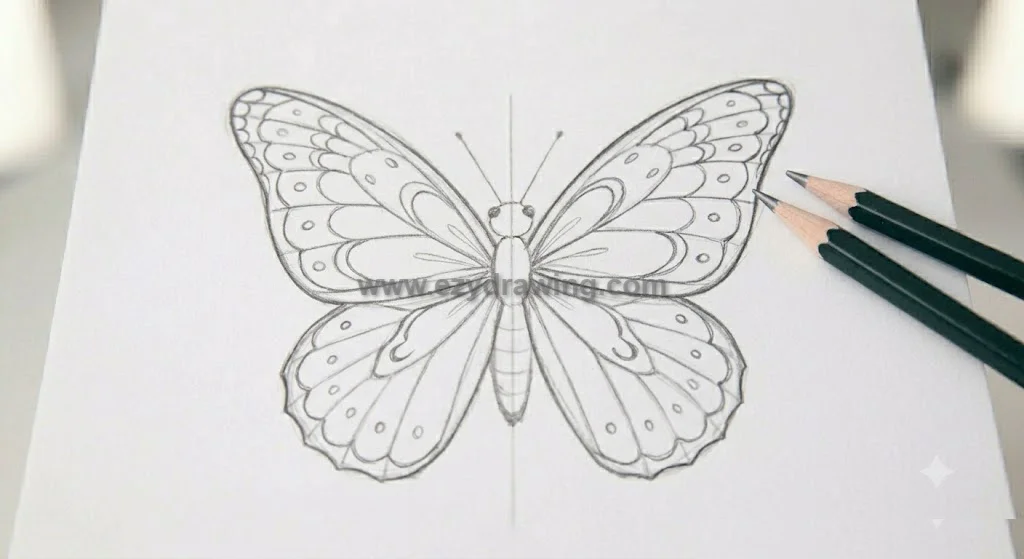
Using the veins from Step 4 as a guide, you can now design the internal markings. Draw symmetrical shapes—like cells, spots, or bands—between the veins. Notice how the patterns often mirror the shape of the wing section they occupy. This is also the stage to refine the outer edge of the wings, perhaps adding slight scalloping or irregularities for a more natural look.
(Image 5: Complex, symmetrical internal patterns and refined outer edges are added using the vein structure as a template.)
Step 6: Shading and Final Contrast
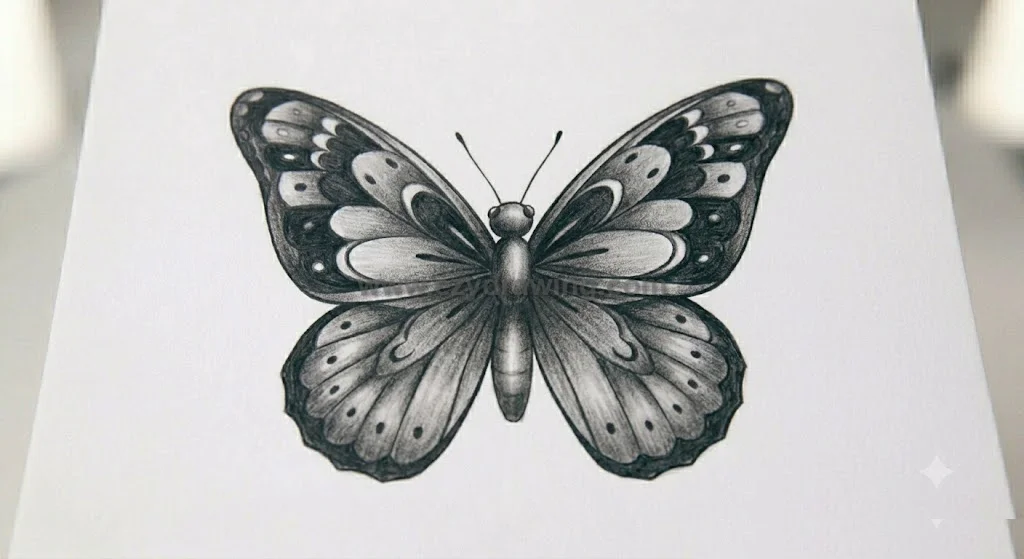
The final step is to add depth and contrast. Identify areas that should be dark (like certain patterns or the body) and use a softer pencil or heavier pressure to fill them in. Use light shading to define the soft volume of the body segments. Gently shade the wings to suggest their delicate, curved surface. Finally, clean up any construction lines with an eraser to reveal your finished, symmetrical drawing.
(Image 6: The finished drawing, showing deep graphite contrast, symmetrical rendering, and the completed, elegant form.)
Tutorial Summary: 6 Steps to a Butterfly
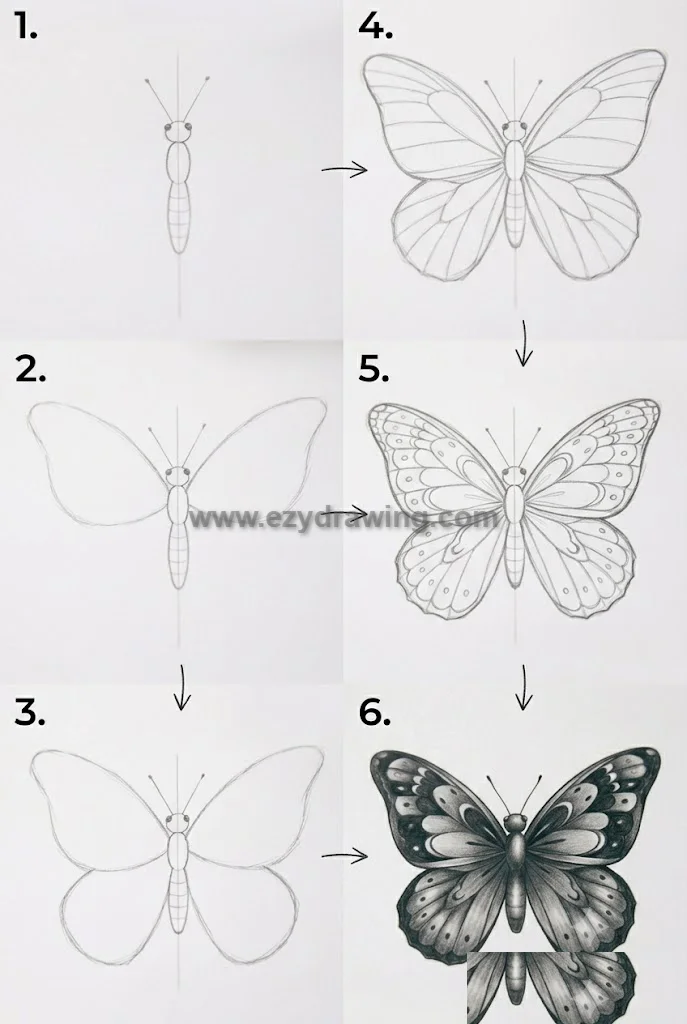
This composite image summarizes the entire progression, from the initial axis to the final shaded artwork.
Conclusion
By following these six steps, you have successfully mastered the basics of How To Draw a Butterfly. Remember that complexity is built upon simple foundations: once you are comfortable with the symmetrical structure and vein placement, you can design any pattern you can imagine. Keep practicing, and enjoy capturing the beauty of these insects on paper.