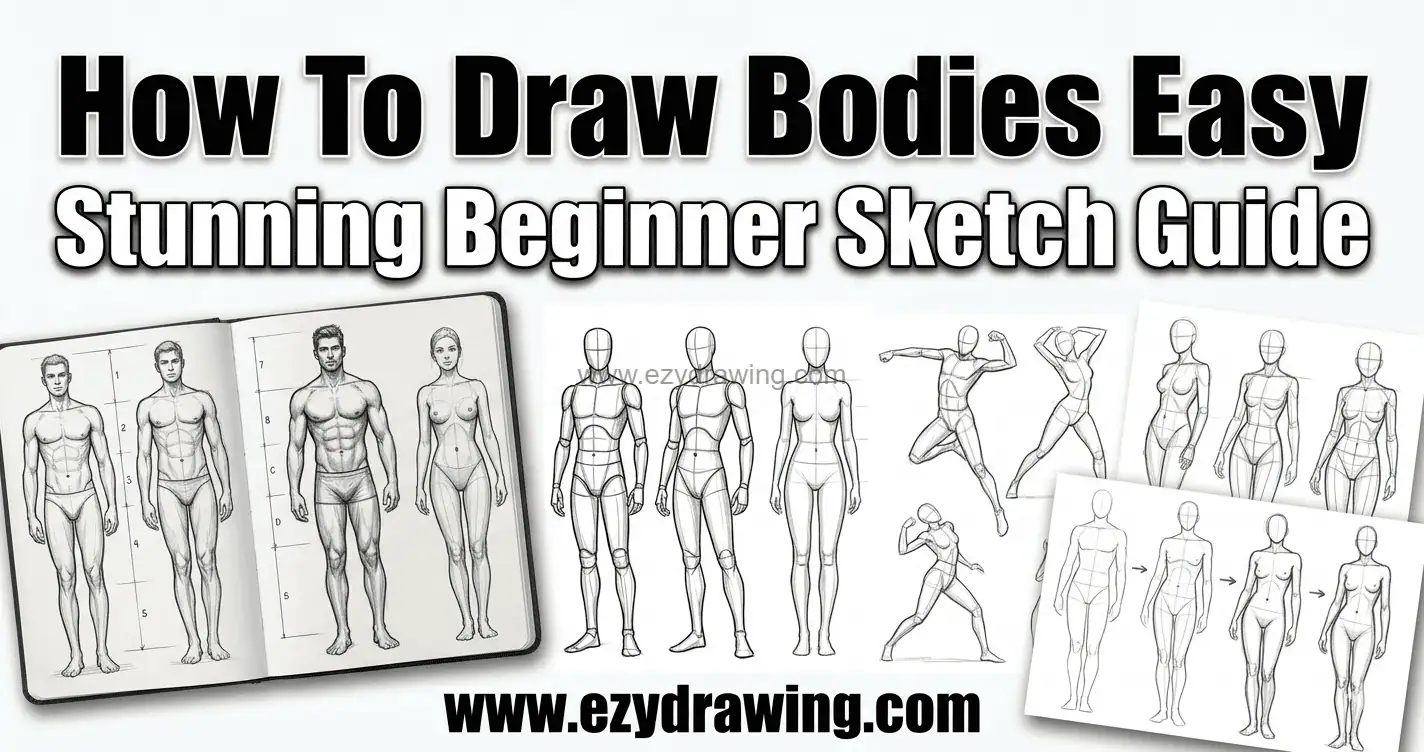
How To Draw Bodies Easy Stunning Beginner Sketch Guide
Hello! Drawing the human form is one of the most rewarding challenges in art. Welcome to this step-by-step tutorial on how to draw bodies.
To create a believable body, we must shift our thinking from “outlines” to “structure.” This mindset also helps you understand how to draw with stronger control. A human body isn’t a flat shape; it’s a dynamic collection of three-dimensional volumes, cylinders, boxes, and spheres, linked together.
In this tutorial, we will focus on building a standard “eight-heads-tall” figure from the front. Let’s begin the foundational journey of how to draw bodies.
Easy Body Drawing Instructions for Beginners
How To Draw Bodies Simple Step By Step Sketches is a beginner-friendly way to learn body proportions, pose structure, and basic figure shapes without feeling overwhelmed.
Start with simple guide lines for the head, torso, arms, and legs, then build the body using easy shapes like cylinders, boxes, and circles. With each step, your sketch will become cleaner, more balanced, and easier to refine into a full body drawing, especially when practicing how I draw bodies with simple structure first.
Step 1: The Blueprint The Axis and Head
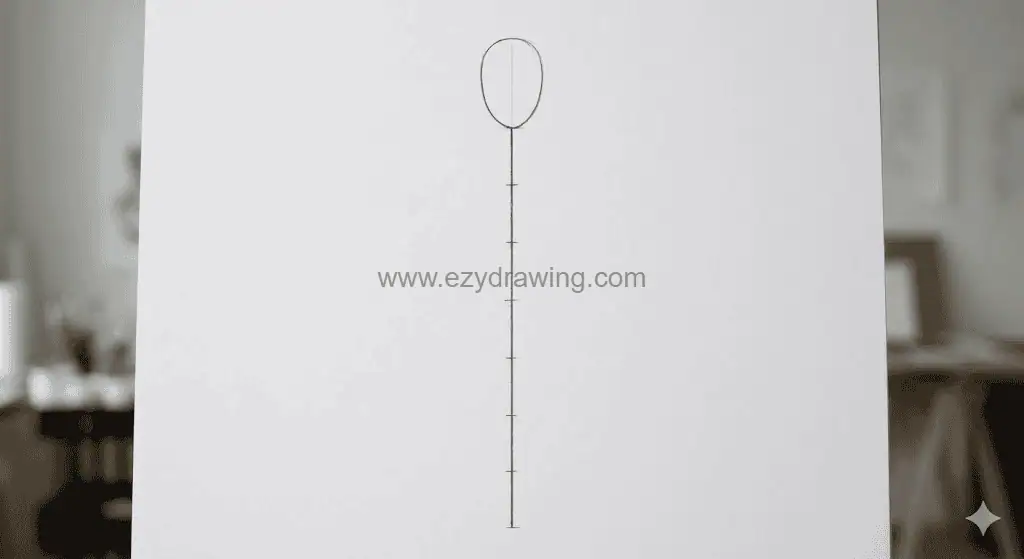
The biggest mistake beginners make is starting with details (like fingers or eyes) before establishing the total height and the vertical axis. We must define the boundaries first.
- Action: Draw a straight vertical line. This is your balance axis. Next, draw a simple oval at the top. This oval (the head) is now our unit of measurement. Mark seven more equal head-lengths down the axis. Your paper is now mapped.
Step 2: The Torso Masses (Ribcage and Pelvis)
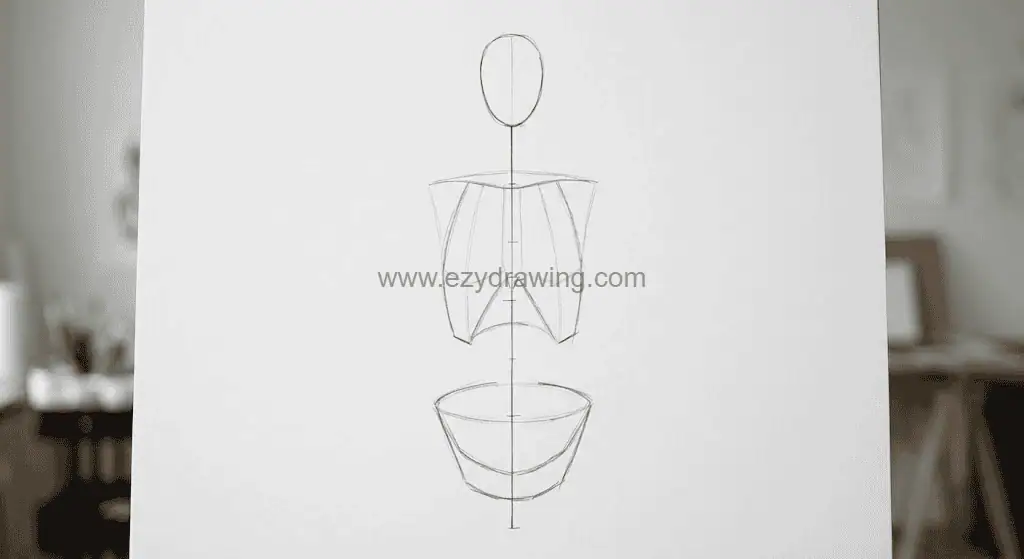
The weight of the body is held by two major skeletal masses: the ribcage and the pelvis. We will approximate these as rigid geometric volumes.
- Action: Look at image 0. Keep the central axis. Draw a trapezoid (wider at the top) for the ribcage, starting just below the head. Leave a small gap (the waist) and then draw a second, slightly wider trapezoid for the pelvis. The bottom of the pelvis should hit your measurement mark for ‘Head 4.’
Step 3: Establishing the Joints
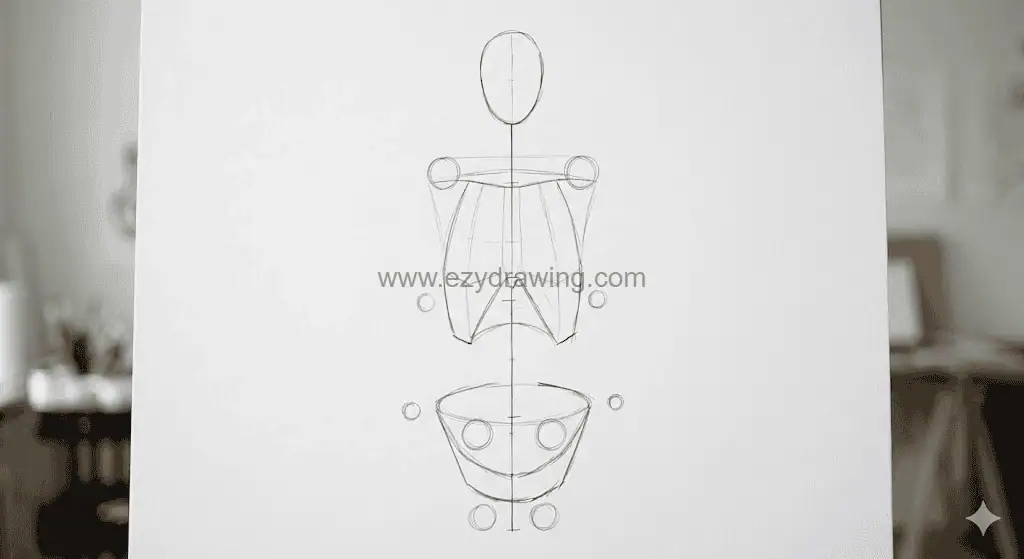
Before adding the limb segments, we must locate the pivot points. When learning how to draw bodies, thinking of joints as simple spheres is essential for maintaining structure during movement.
- Action: Starting from the structural sketch in image 1, we add simple spheres. Draw spheres for the shoulders (located at the top corners of the ribcage trapezoid), the hips (within the lower corners of the pelvis), the knees, and the ankles. Note that the elbows often align near the bottom of the ribcage/waist. Keep all existing structure lines.
Step 4: The Wireframe (Limb Connections)
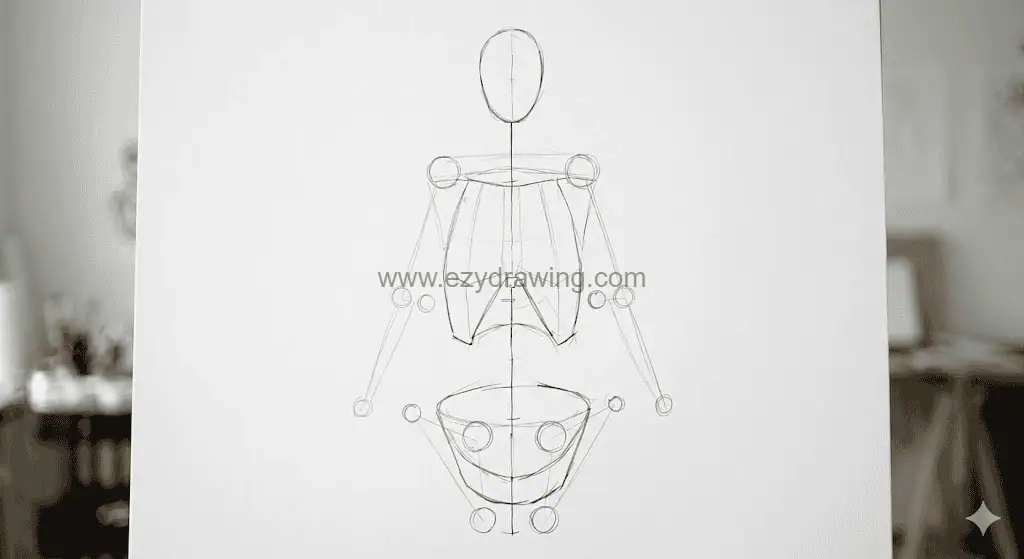
Now we connect the volumes using simple stick-figure lines. This ‘wireframe’ establishes the gesture and the length of the limbs before we commit to volume. It prevents the arms or legs from becoming unequal lengths.
- Action: Build upon the drawing in image 2. Draw simple lines connecting the shoulder sphere to the elbow, and the elbow to the wrist. Repeat for the legs: connect the hip to the knee, and the knee to the ankle. These lines must be light; they are just placeholders for the cylinders we will draw next. This is a critical stage in how to draw bodies.
Step 5: Adding Volume (Cylinders and Taper)
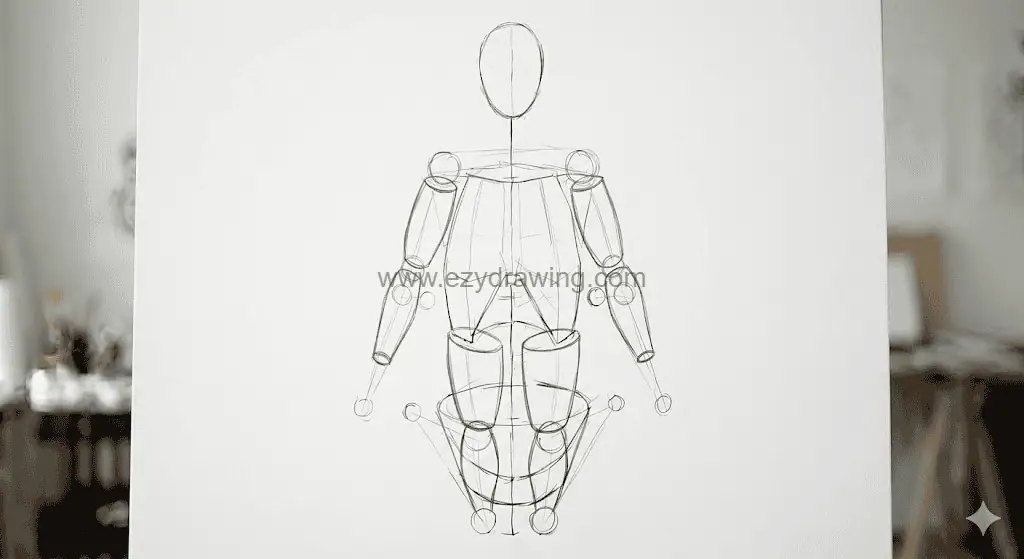
This is the main construction phase. We are now replacing the thin wireframe lines from image 3 with 3D volumes. We will use simplified cylinders and “ovals” that taper, imitating the flow of muscle.
- Action: Build on image 3. For the upper arm (shoulder to elbow), draw a taper (wider near the shoulder, narrower at the elbow). Draw the forearm similarly (tapering to the wrist). For the thigh (hip to knee), create a strong, volumetric taper. Finally, draw the lower leg (tapering to the ankle). Keep the geometric torso masses, but notice how the new limbs make the figure look muscular and dimensional.
Step 6: Contours and Definition
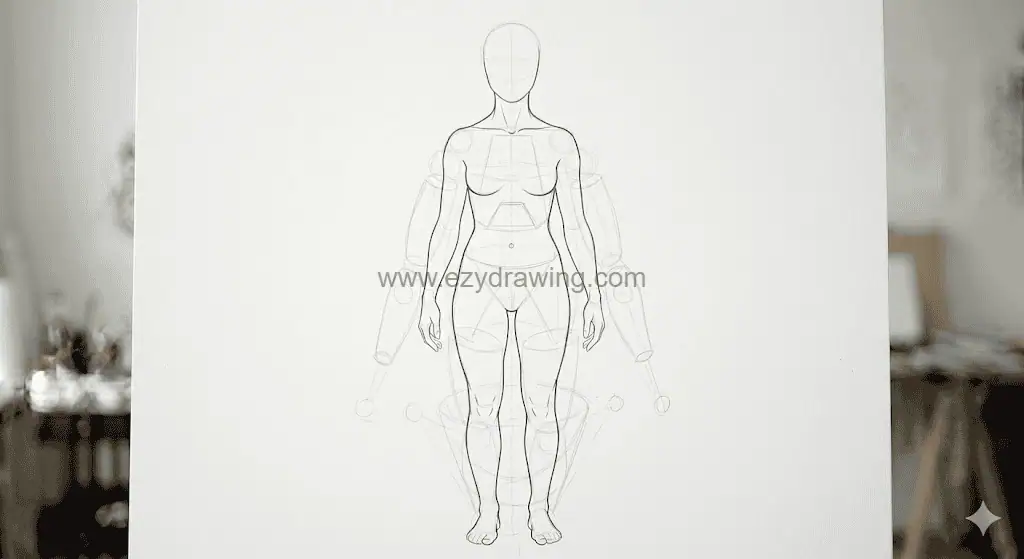
We have established the 3D construction. Now we will “shrink-wrap” a final, clean outline over the underlying anatomy (image 4). We merge the volumes.
- Action: Take a fresh piece of paper or a darker pencil. Use the geometric structure (image 4) as a guide. Do not trace the blocks. Instead, draw smooth, continuous curves that flow over the volumes. Define the curve of the neck, the swell of the chest, and the silhouette of the muscles. Define simple shapes for hands and feet. The final line should feel organic, hiding the construction lines underneath.
Congratulations! You have completed the foundation. Let’s review the journey from axis line to finished form.
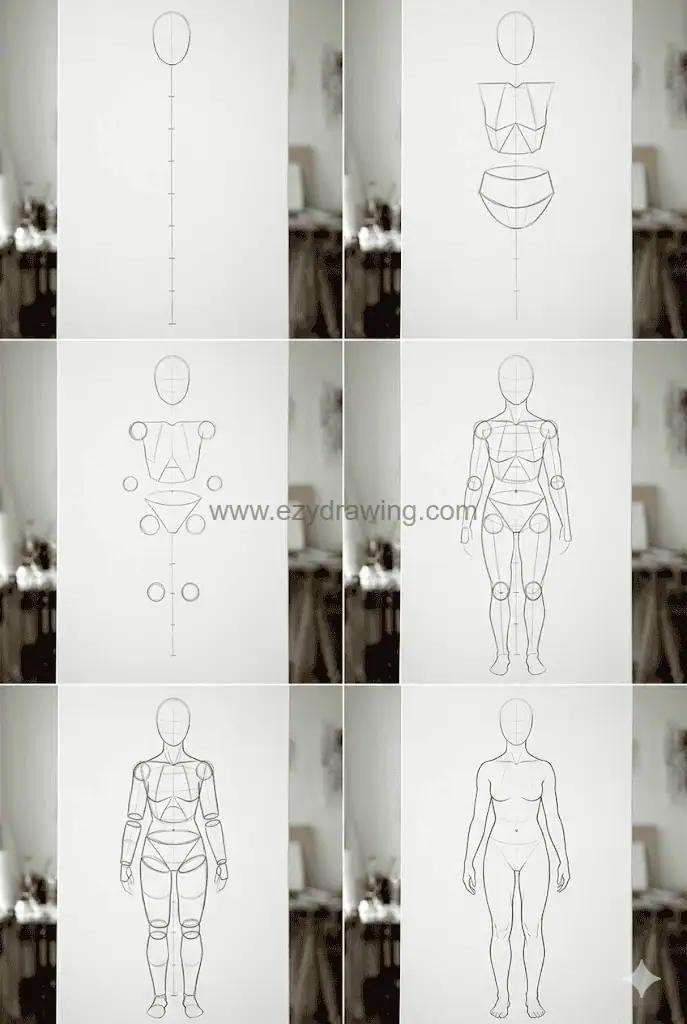
Here is a 2:3 composite image showcasing all six steps, demonstrating how the simple measuring blueprint (Step 1) was sequentially built up with geometric masses (Step 2-3), structured into a wireframe (Step 4), filled with volumetric muscle (Step 5), and finally refined into a clean human contour (Step 6).
By referencing this sequence, you will always know how to draw bodies.