How To Draw Leaf Creative Drawing Guide
Here is a step-by-step tutorial on How To Draw Leaf. Learning this simple technique will open up endless possibilities for adding realistic foliage to your artwork. We will focus on a simple, classic maple-style leaf, using an easy building-block method.
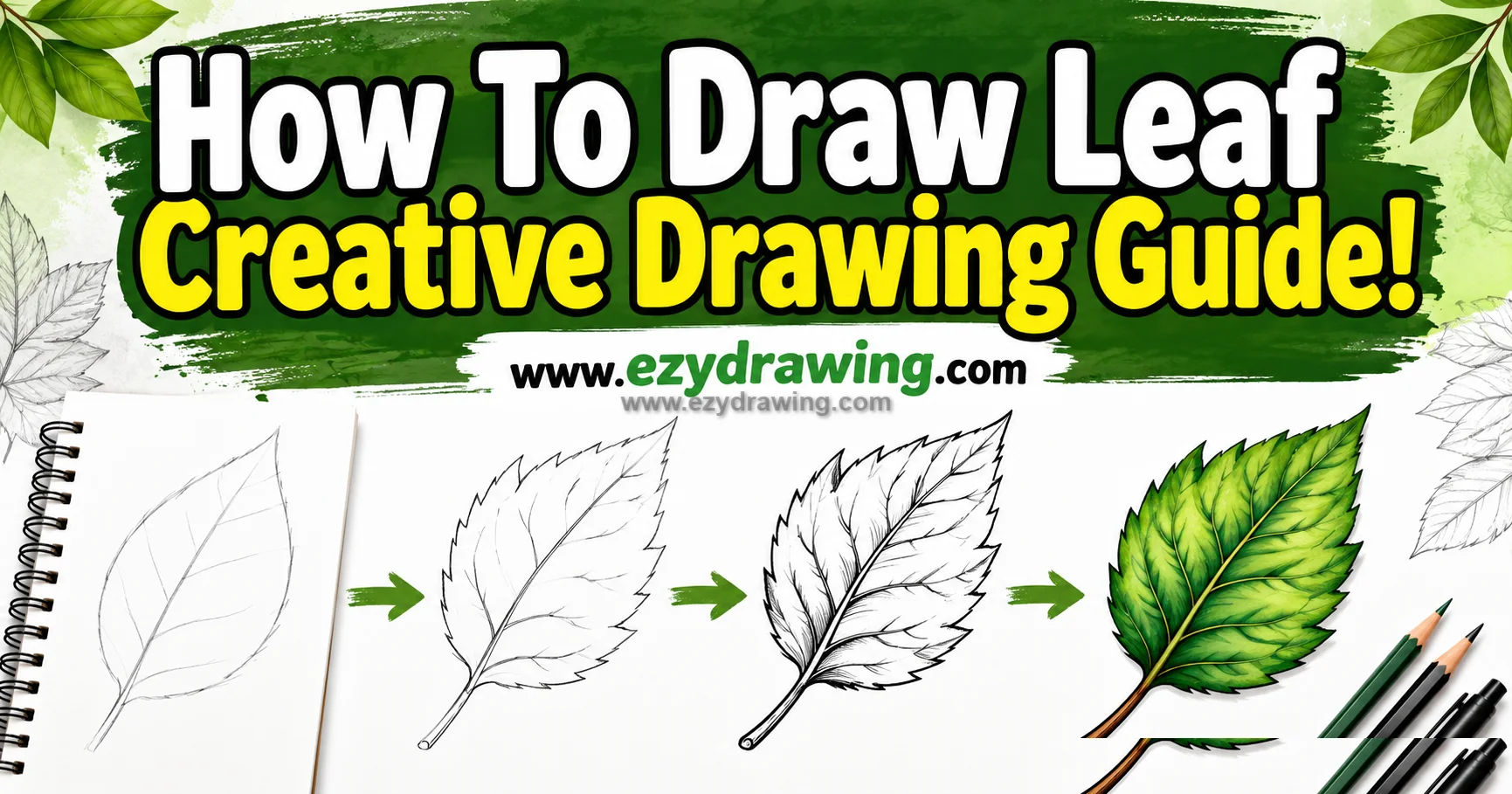
This guide uses clean graphite lines on textured paper, perfect for beginners. As you practice how to draw each curve, vein, serrated edge, and soft shaded detail, you will build better control over your pencil strokes and create a more natural leaf sketch with confidence.
Learn Simple Techniques for Drawing a Realistic Leaf
How To Draw Leaf for Beginners Step by Step is a simple and fun drawing guide that helps you create a neat leaf using easy lines and basic shapes. This tutorial is perfect for learning how to sketch the leaf outline, add a center vein, draw small side veins, and finish the design with clean details.
With each step, you can improve your drawing skills and create a beautiful leaf sketch with confidence, making easy leaf drawing practice more enjoyable and simple for new artists.
Step 1: The Initial Gesture The Vein
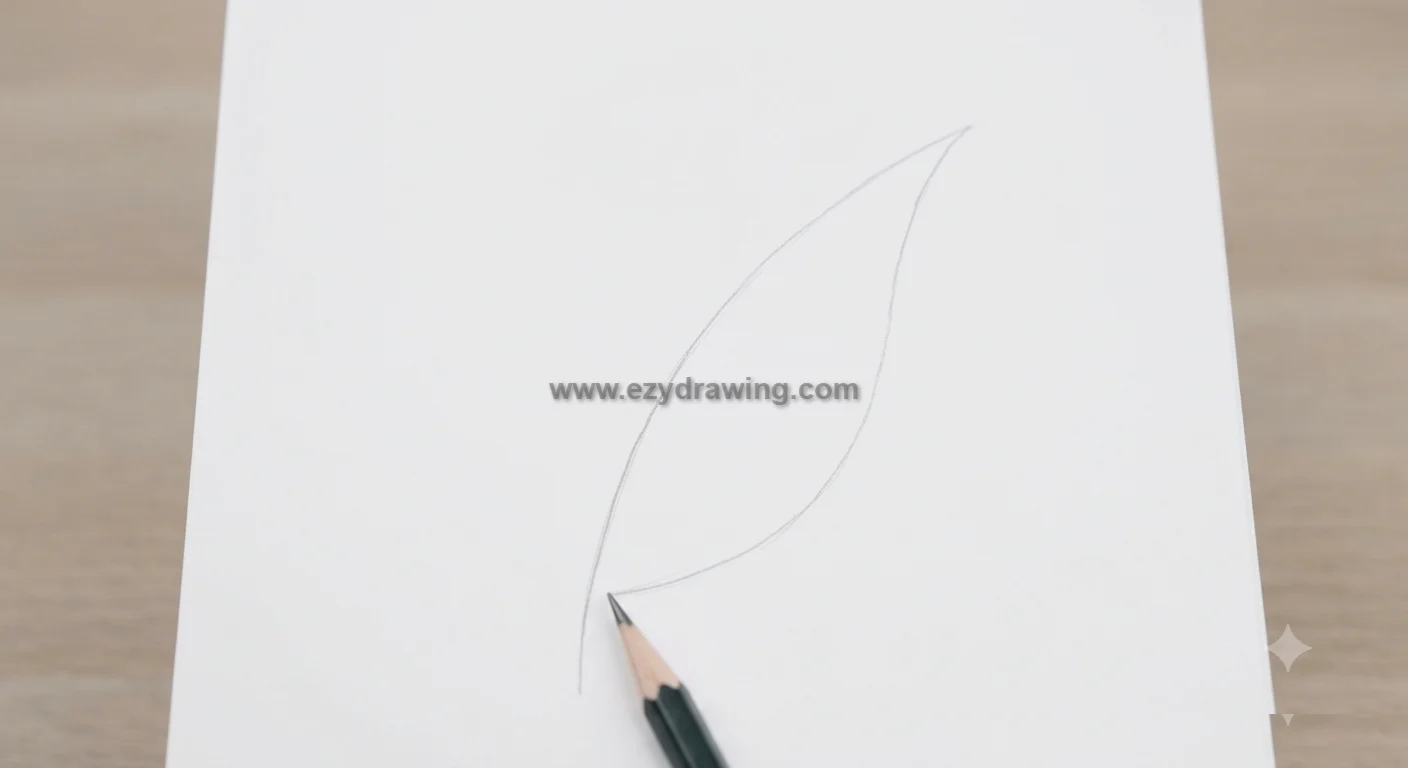
The first step in learning How To Draw Leaf is to establish its main structure. We start not with an outline, but with the ‘spine’ of the leaf. This single, curved line defines how the leaf is sitting and its overall flow.
Action: Draw a light, graceful, upward-sweeping curve. This will become the central vein and stem. Remember to keep this line subtle; we are building a skeleton that we will later refine.
Step 2: Defining the Boundary The Silhouette
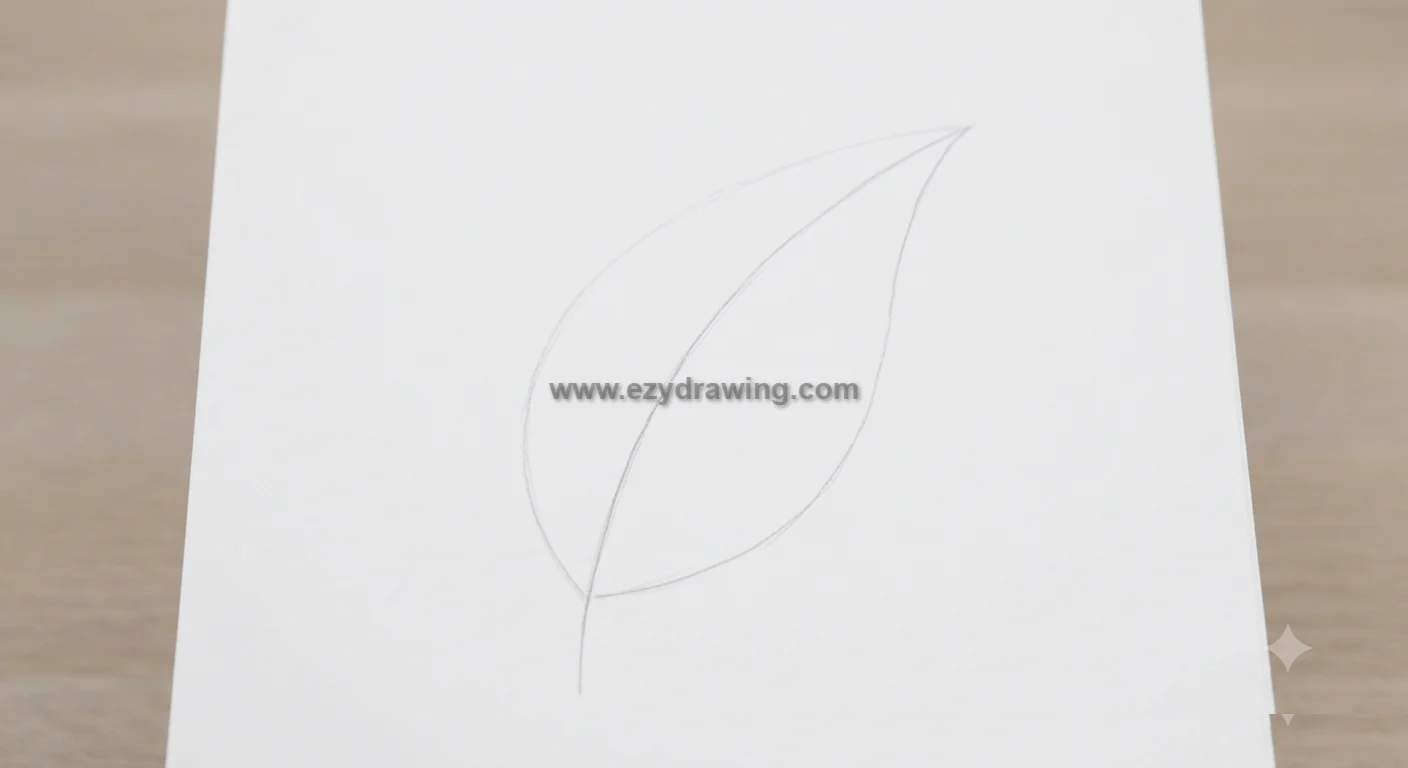
Now we will establish the overall footprint of the leaf. We aren’t drawing jagged edges yet; we are capturing the simple shape that contains the leaf. For this specific leaf, that shape is like an inverted teardrop.
Action: Starting near the base of your initial vein, draw a smooth, light, symmetrical curve that swells outward and then tapers back, meeting the main vein precisely at its top point. This creates the overall silhouette. It is critical that this is drawn very lightly.
Step 3: Establishing the Lobes The Points
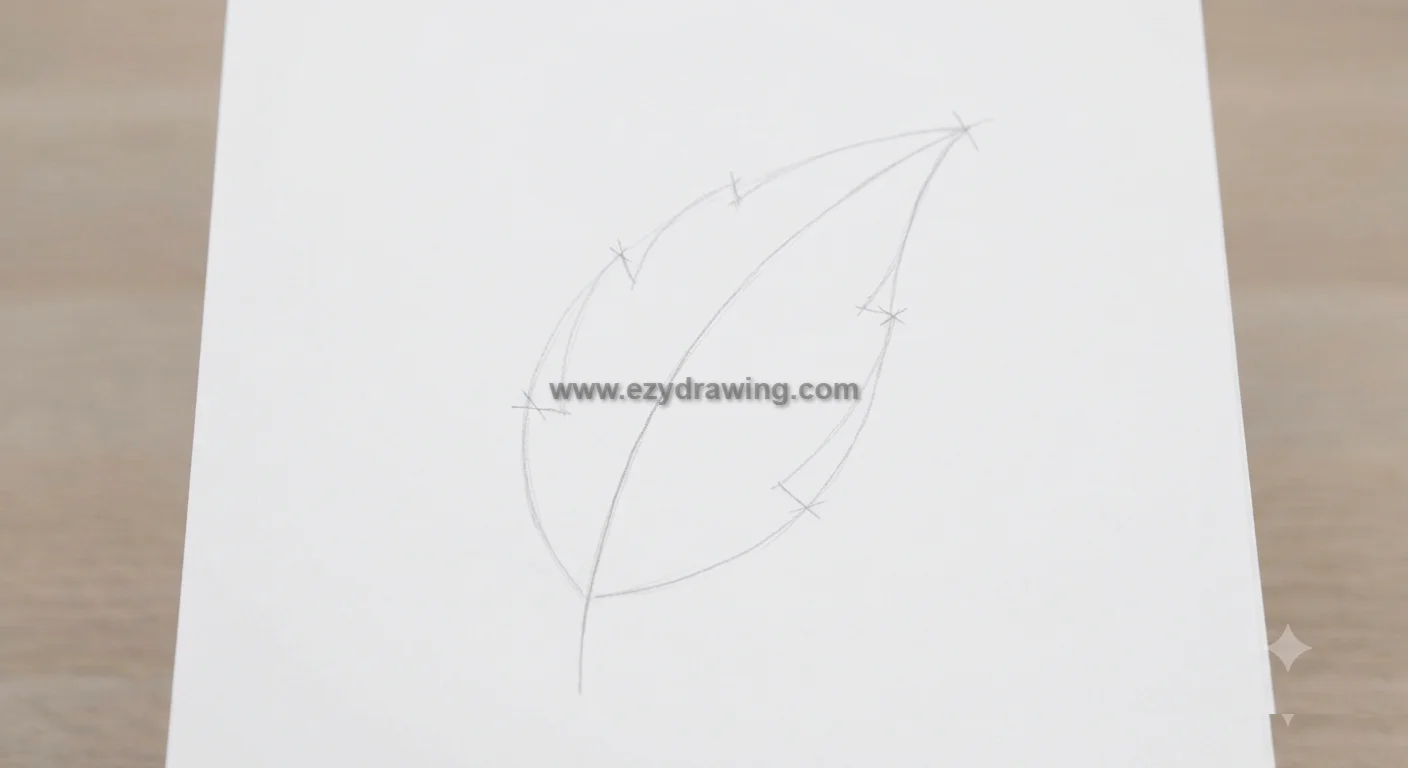
This step transitions our simple shape into a specific type of leaf. We are going to map out the lobes (the large points) of the maple shape. We still aren’t finalising the edge, but we are marking where the peaks will be.
Action: Look at your silhouette. On the left side, draw two small ‘ticks’ or marks on the curve to indicate where a major lobe will spike out. Draw two corresponding marks on the right side. The top point of your silhouette is already the final peak. We are now mapping the structure.
Step 4: Connecting the Structure
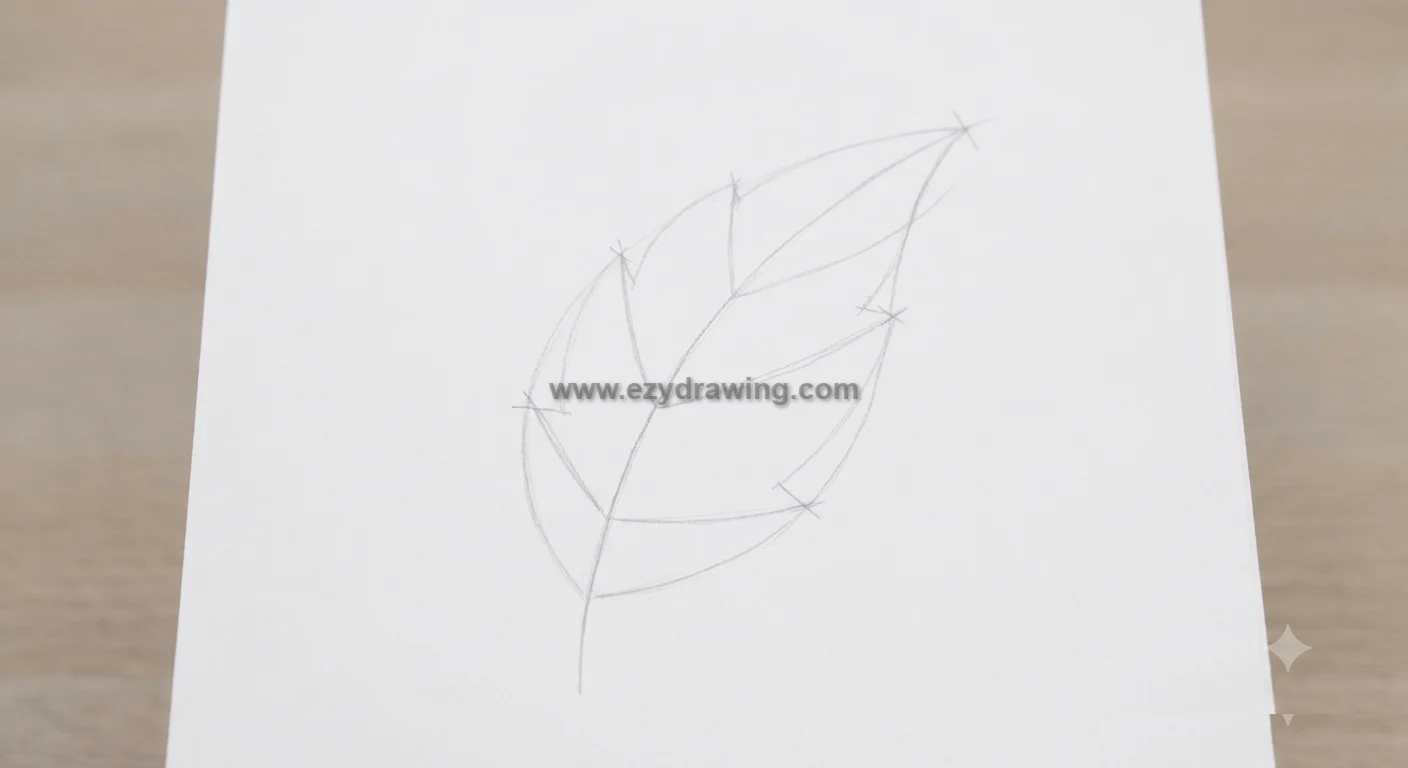
This is the key structural step. We will connect the main vein to the points we just mapped. This transforms our drawing from a simple shape into a structural skeleton. This is the moment “How To Draw Leaf” begins to show its complexity.
Action: From the main central vein (from Step 1), draw four light, straight lines (secondary veins) extending outward. One goes to each of the marks you created in Step 3. You now have a central spine with four ribs reaching towards the established boundary marks.
Step 5: Finalizing the Outline The Serration
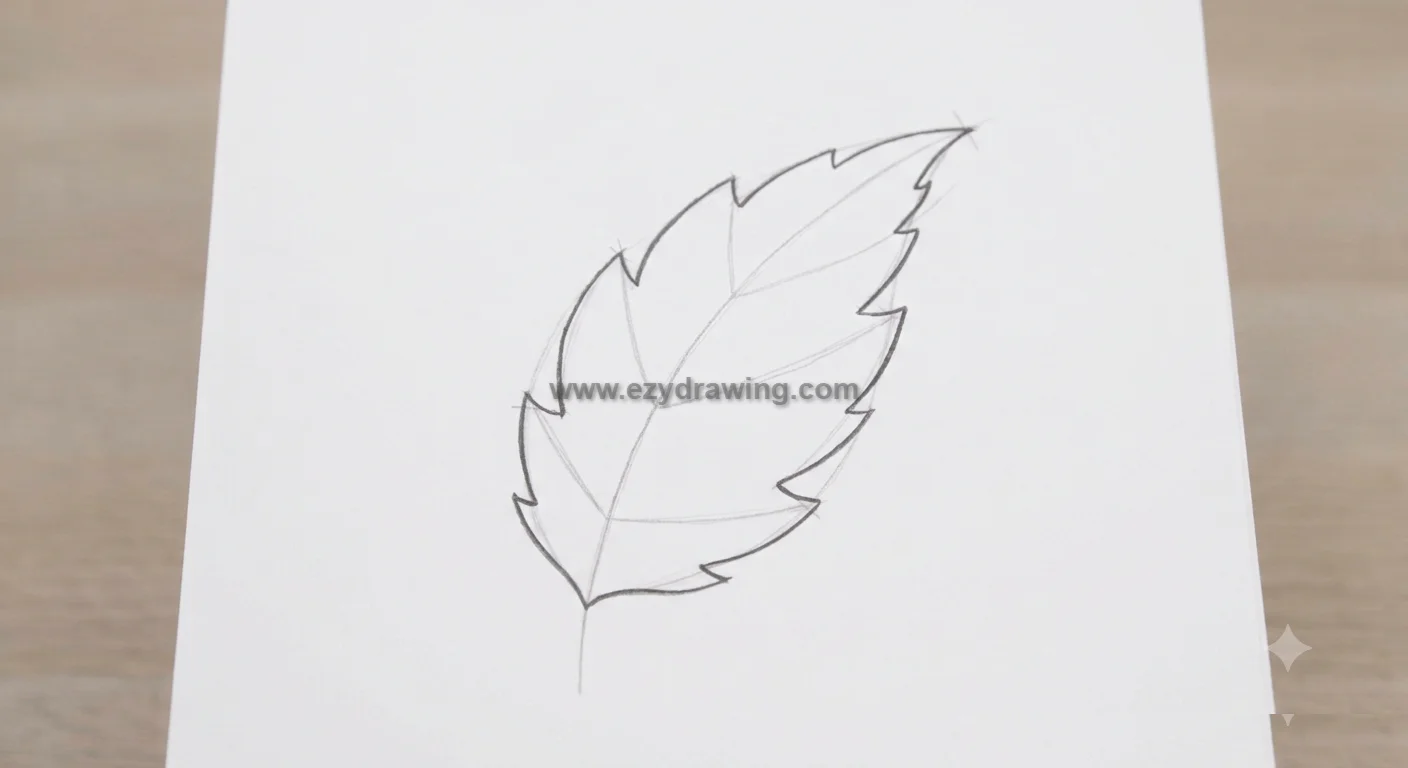
Now we define the actual edge. We will use the guides we have built: the silhouette (Step 2), the structural veins (Step 4), and the established points (Step 3).
Action: Starting at the stem, use a slightly darker, more confident line. Follow the structural veins outward to the established points. As you move between the points, draw small, irregular zig-zag or ‘teeth’ marks along the faint silhouette guide. These serrations give the leaf its realistic, jagged edge. Notice how the internal veins (from Step 4) help you keep the shape symmetrical.
Step 6: Shading and Depth
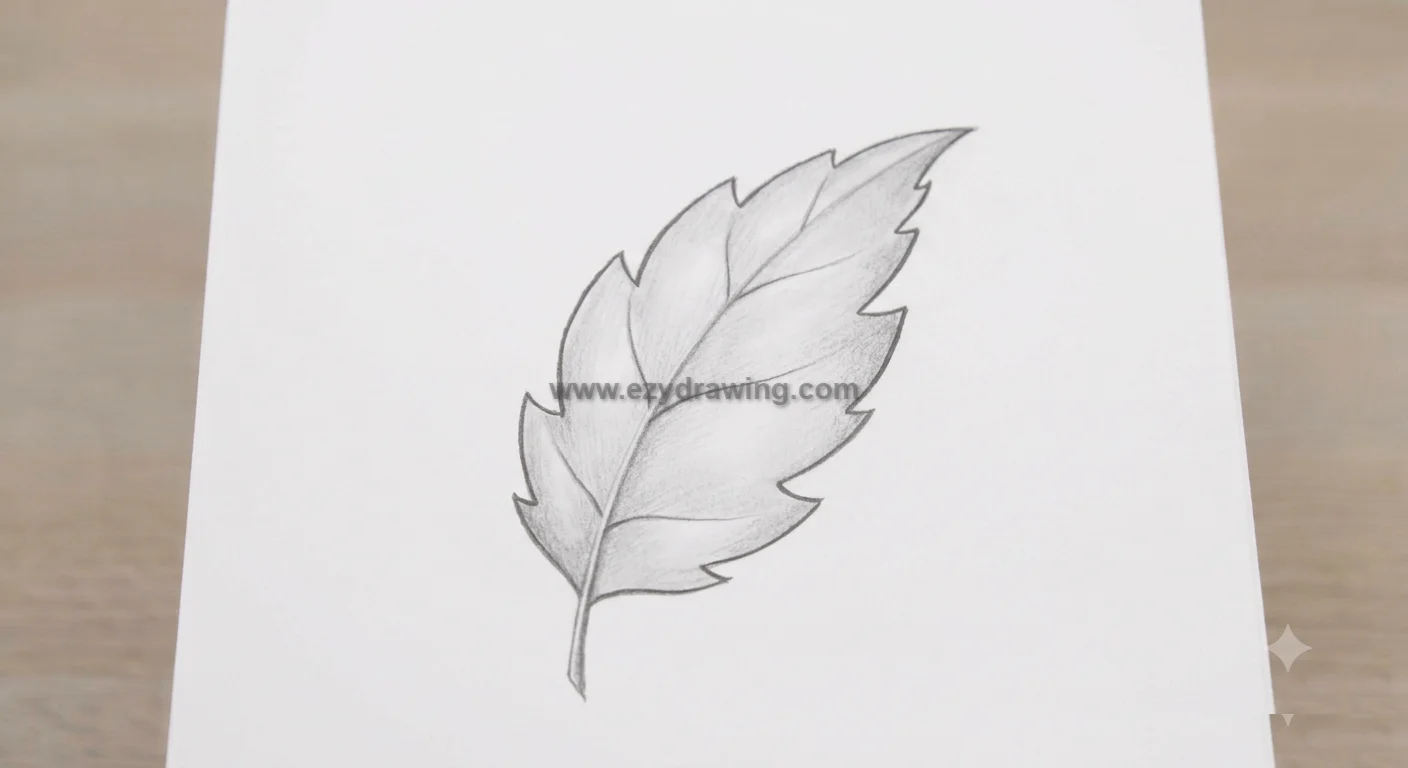
The final step is to add realism. Right now, the drawing is flat. We need to introduce form using light and shadow.
Action: First, use an eraser to remove any stray, light guide lines that are still visible (from Steps 2 and 3). Now, imagine light hitting the leaf from the top-left. Using very soft, light pencil strokes (cross-hatching or blending), apply shading to the right side of the main vein and underneath the minor veins. Apply a soft shadow near the stem and where the leaf might curve away from the light. This contrast creates depth, finishing your tutorial on How To Draw Leaf.
Summary: The 6 Stages of Progress
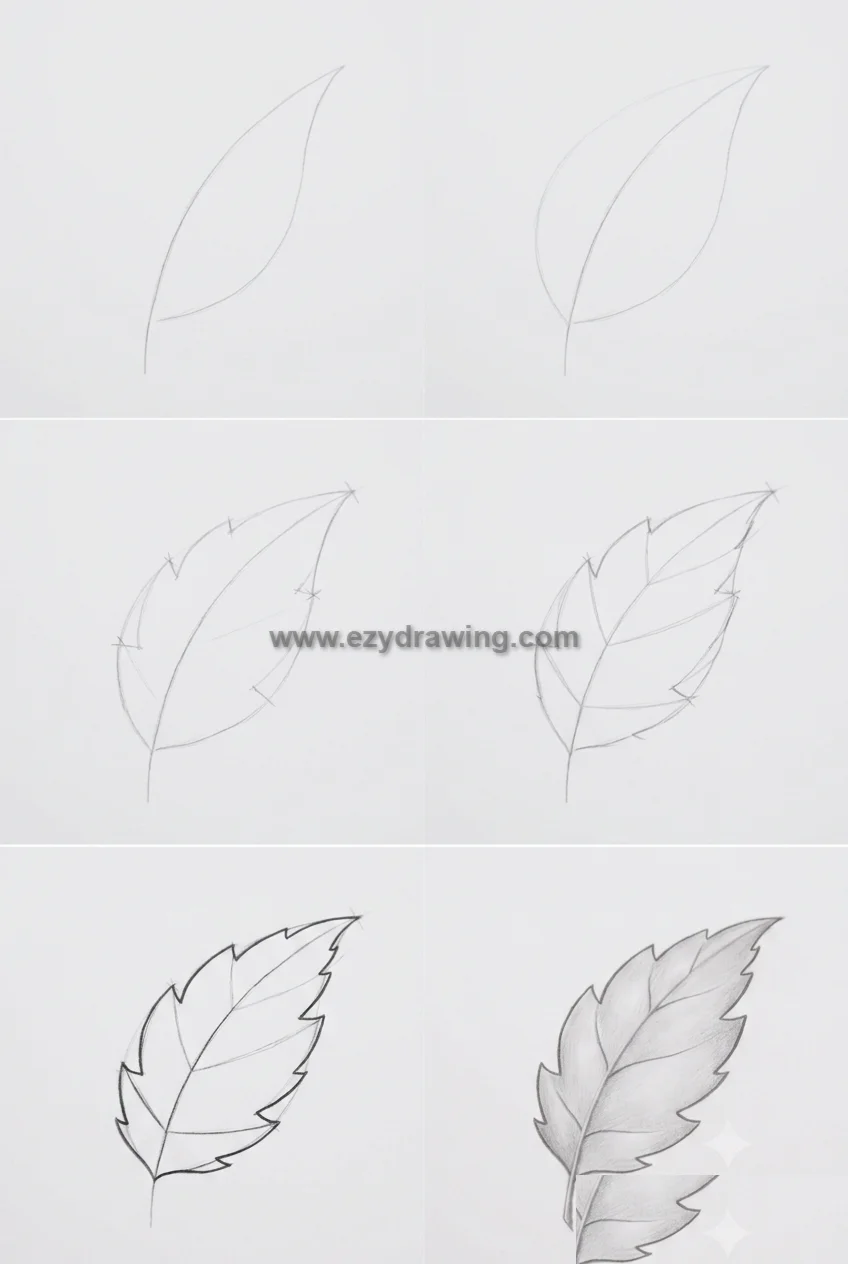
Here is a visual summary of the entire 2:3 tutorial, showing how the light initial gesture evolves into the final, shaded botanical drawing.
Conclusion
By following these simple structural steps, you have successfully learned How To Draw Leaf. This structured approach—starting with a gesture, defining the boundary, and building the internal skeletal structure before adding the final details—is the secret to drawing any complex organic form. Once you master this process, you can adapt it to any leaf shape or type, allowing you to add realistic texture and life to your botanical illustrations or landscapes. Keep practicing this method, and soon drawing foliage will be second nature.