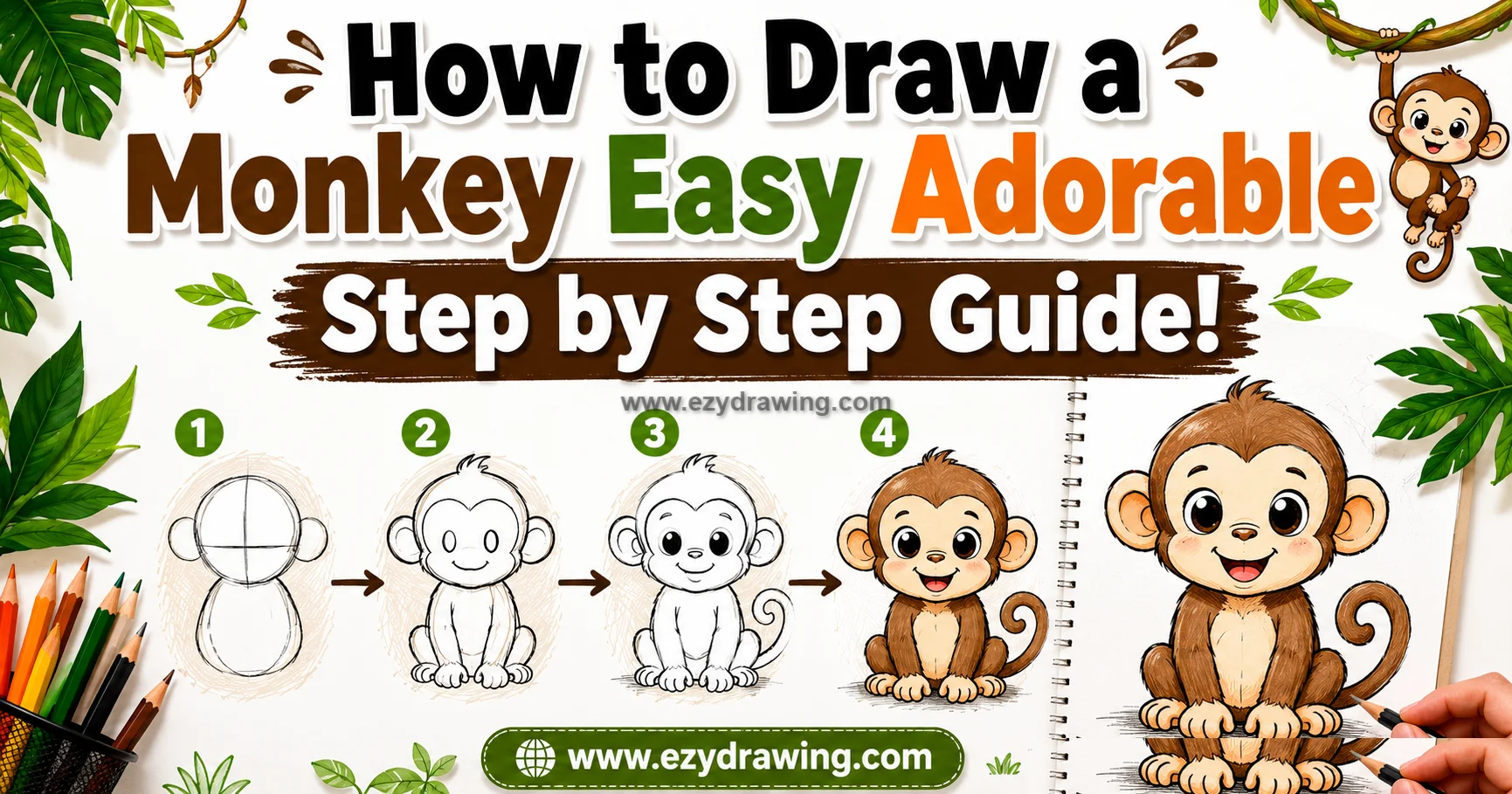
How to Draw a Monkey Easy Adorable Step by Step Guide
Welcome to this comprehensive tutorial on how to draw a Monkey! Monkeys are dynamic creatures, but breaking their anatomy down into simple, manageable shapes makes the process surprisingly easy. This how to draw practice is designed to keep each part simple and beginner-friendly.
This guide is designed for beginners, guiding you through six clear steps. We will start with fundamental geometry and gradually refine the structure, ending with a complete, front-facing character.
We will focus on establishing clear proportions and a friendly, classic cartoon style. Let’s begin building our primate.
Simple Steps to Sketch a Cute Monkey
Learning with How to Draw a Monkey Cute Step by Step Art Guide is a fun and simple way for beginners and kids to create an adorable monkey drawing.
This easy guide helps you start with basic shapes, then slowly add the face, ears, body, arms, legs, and tail. This drawing monkey activity also makes the process more creative and enjoyable for young artists. With each step, your monkey sketch becomes more cute, clear, and playful.
Step 1: The Blueprint Head and Torso
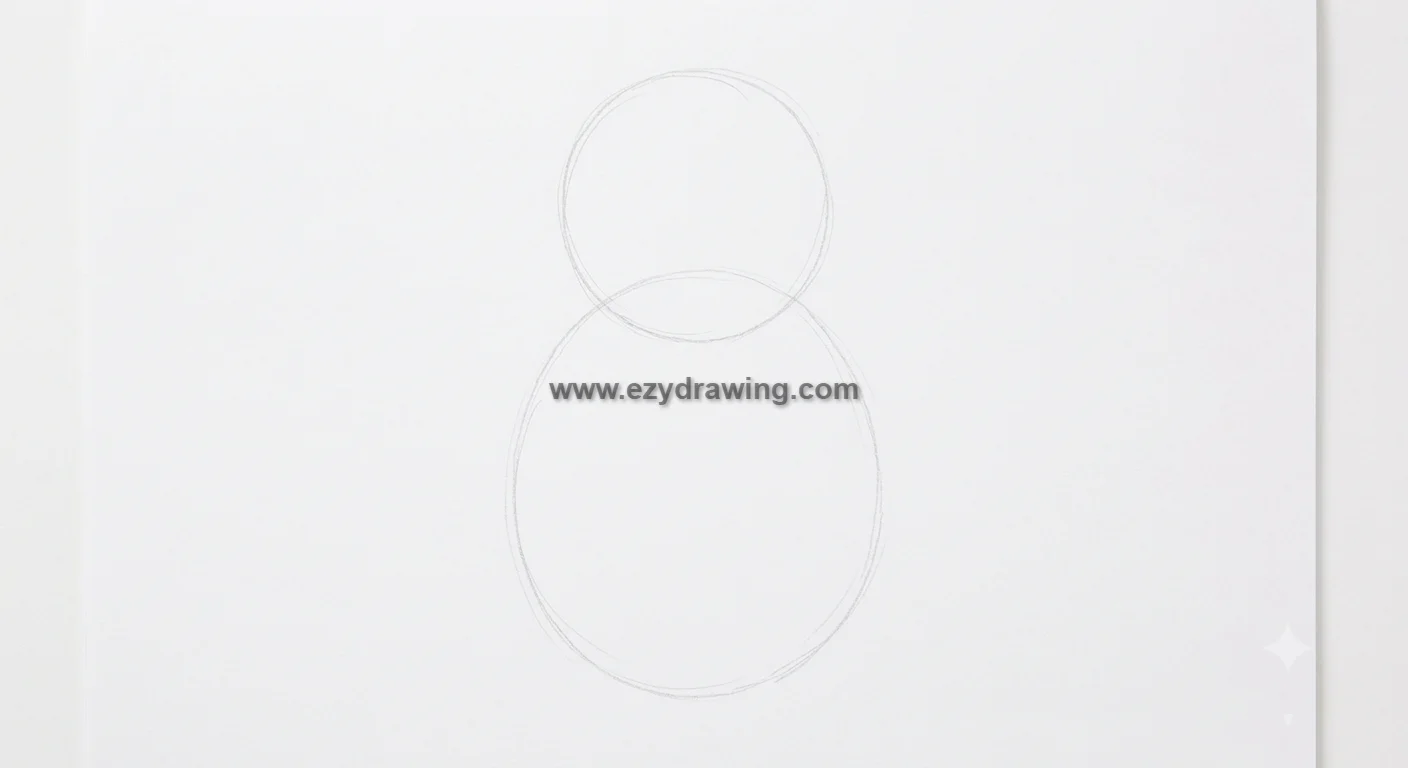
We start all drawings by defining the core masses. This step establishes the monkey’s posture and primary volume. Think of this as the “skeleton” layer.
The Action: Draw two large, overlapping circles. The top circle will become the head. Draw a slightly larger, elongated oval directly beneath and overlapping it; this is the main mass of the torso. These shapes must be aligned vertically. Use light, easy-to-erase lines for these guides. This first shape step makes how to draw a monkey easier for beginners. Do not add facial details yet.
(Image 1: The structure is initiated using only two simple, overlapping geometric guides: a circle for the head and an oval for the torso.)
Step 2: Mapping the Face and Adding Ears
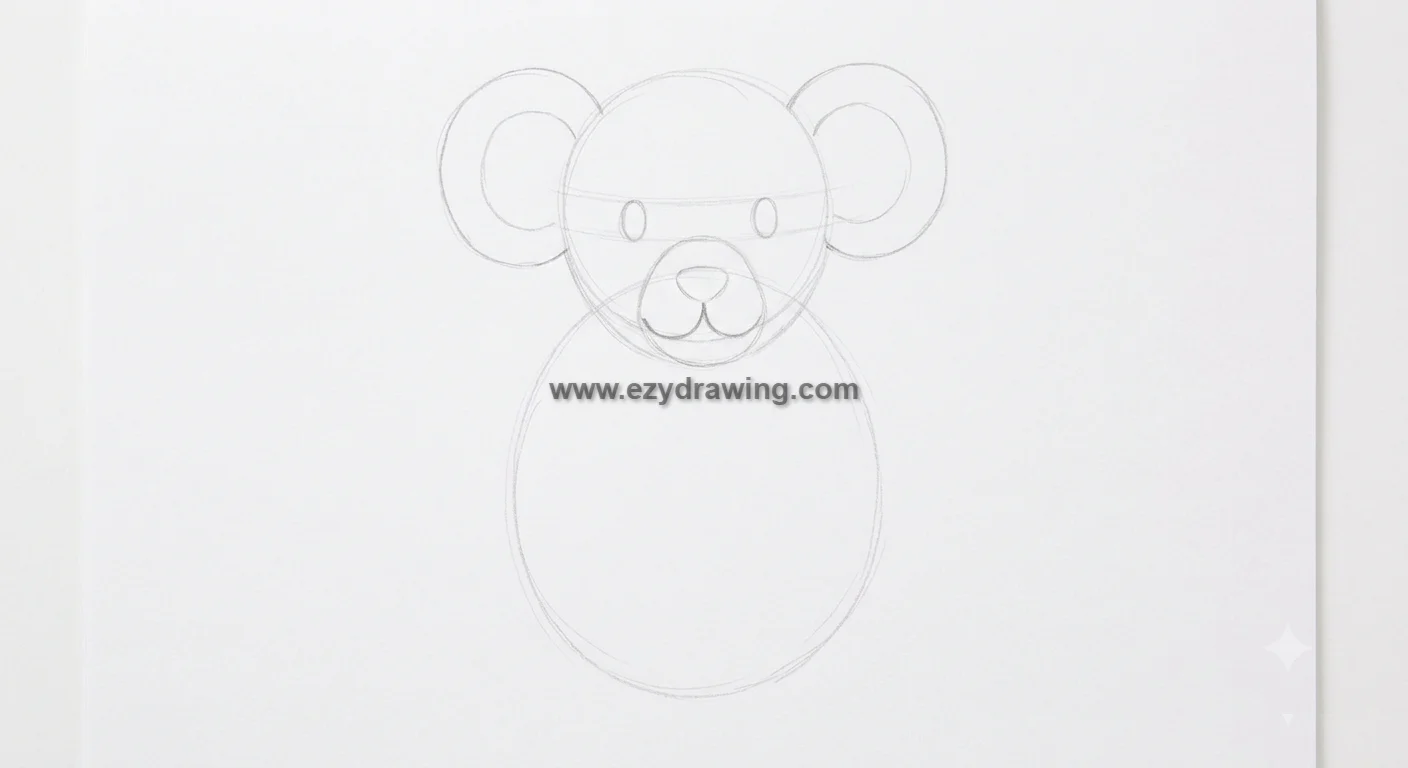
With the basic structure in place, we will now define where the monkey’s facial features will sit and add the iconic large ears.
The Action: Referencing the top circle, establish a light horizontal structure line (the brow line) and a vertical centerline. Draw the two outer arcs of the large, C-shaped ears, attaching them to the sides of the head circle. On the face, draw the rounded, M-shaped mask that defines the muzzle (this mask resembles a heart shape or a simplified ‘3’ on its side). This face mapping step helps beginners understand how to draw a monkey with clear guidelines. Finally, map the placement of the large eyes and the small nose with light ovals.
(Image 2: Building upon the base in image_0.png, the large ears are attached, the facial muzzle guide is added, and horizontal structure lines now define where the eyes will sit.)
Step 3: Defining the Face and Adding Limbs
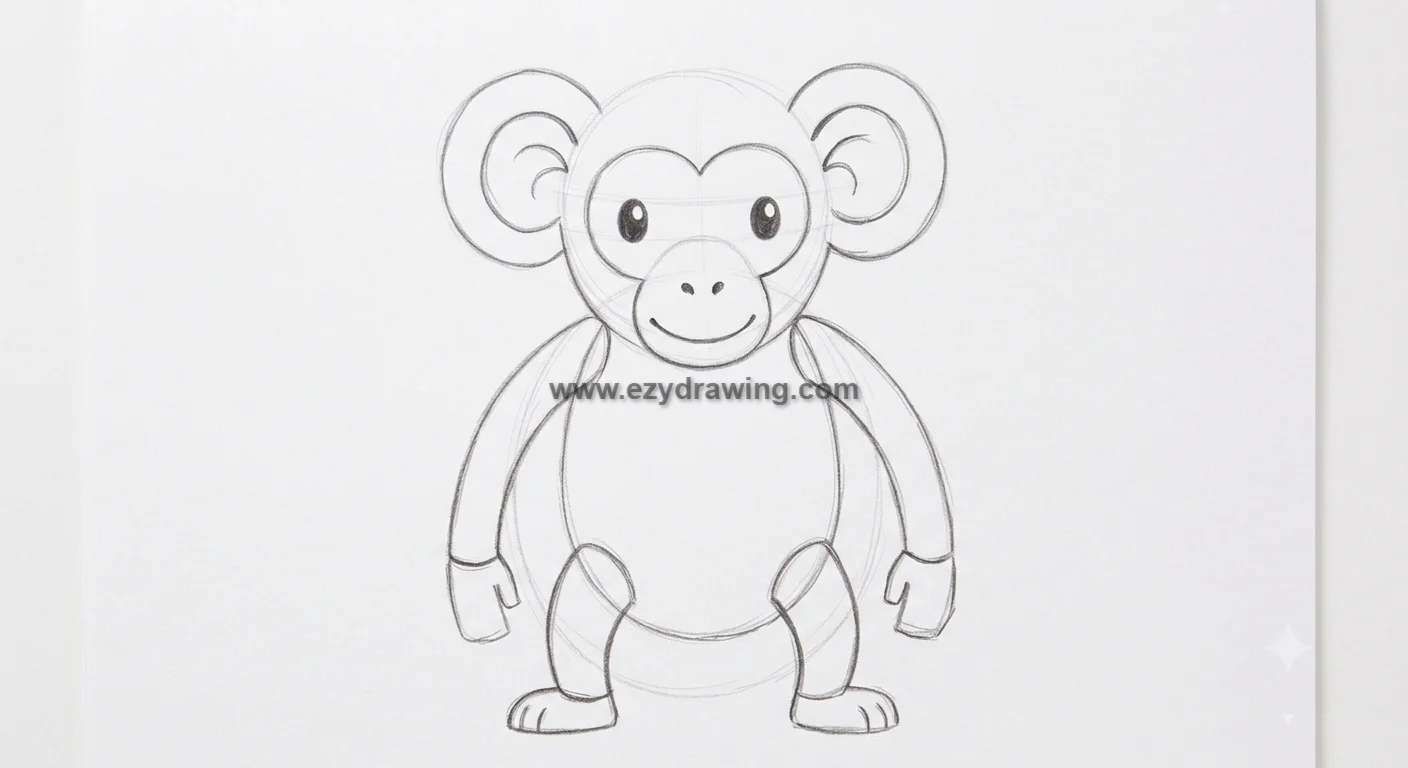
This is the key step where the drawing starts looking like a monkey. We will refine the head features and attach the four limbs using simple joint guides.
The Action: Inside the ear arcs, draw the smaller inner C-curves. Refine the shape of the large eyes (adding pupils) and the nose on the guides established in Step 2. Define the smiling mouth line below the muzzle mask.
This limb-building stage makes how to draw a monkey easier by connecting the face and body structure clearly. Now, focus on the torso (from Step 1). Use simple, light circles or ‘ovals’ to mark the shoulder and hip joints. Attach simple, bent tubes (for arms and legs) and basic paddle shapes (for hands and feet) to these joints, defining the pose.
(Image 3: Proceeding from image_1.png, the construction lines fade as features are detailed. The face now has eyes, a nose, and a smile. Simplified arms and legs are attached to the torso oval, defining the pose.)
Step 4: Refinement and Details Fur and Structure
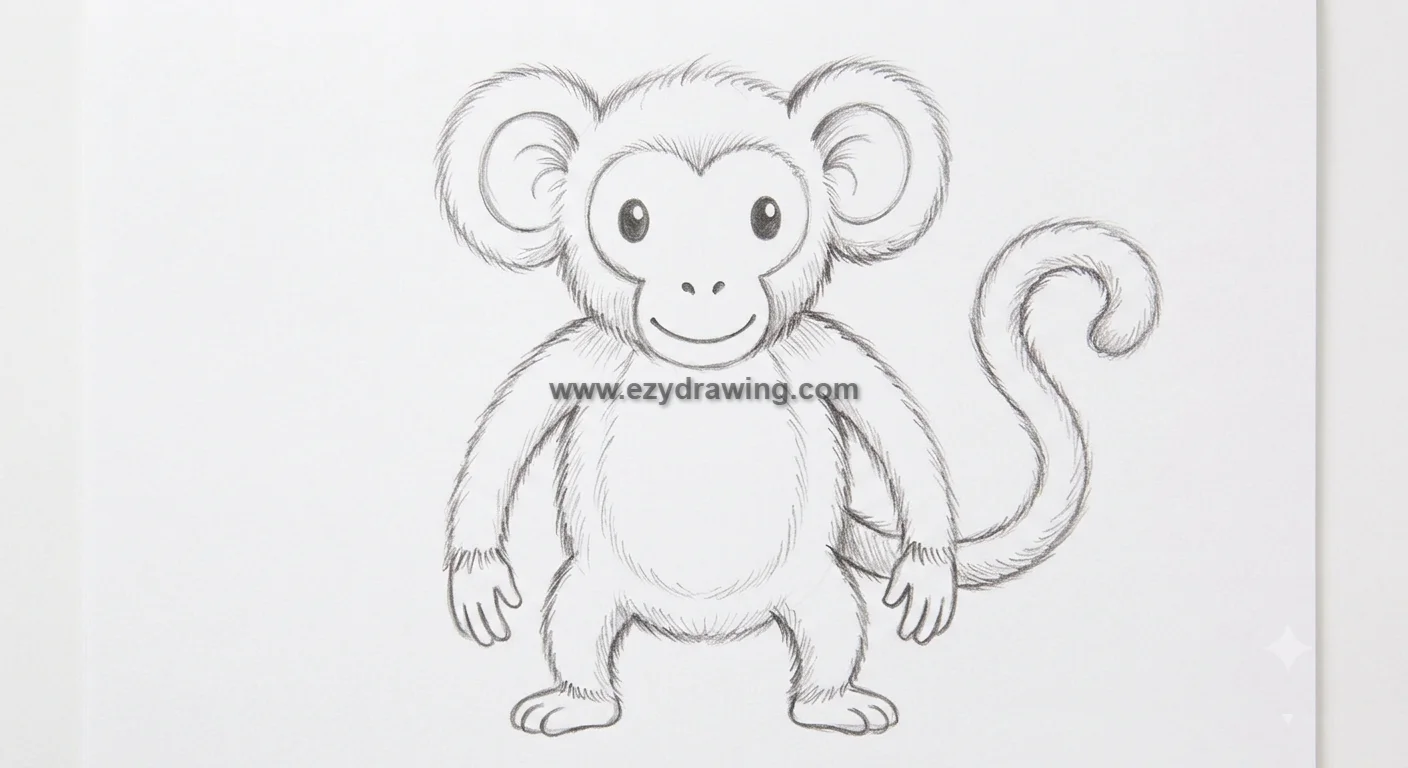
We now move from structure to texture, cleaning up the guide lines and defining the specific anatomy. We also introduce the iconic tail.
The Action: Lightly erase the original overlapping circle and oval lines where they are no longer needed (like inside the limbs). Refine the blocky hands and feet into digits and simple fingers. Define the soft, fuzzy outline of the monkey’s body and limbs, replacing the smooth, rigid guides with subtle, short, sketchy lines that imply fur. Crucially, draw a long, elegant, S-shaped curve emerging from the base of the spine: the tail. Draw the belly patch oval on the torso.
(Image 4: Moving beyond image_2.png, the rigid structure lines are erased. The silhouette of the head and body is now composed of short, sketchy pencil strokes, introducing a fuzzy fur texture. The limbs and facial details are defined, and the long S-shaped tail has been added.)
Step 5: Finalizing the Line Work Inking
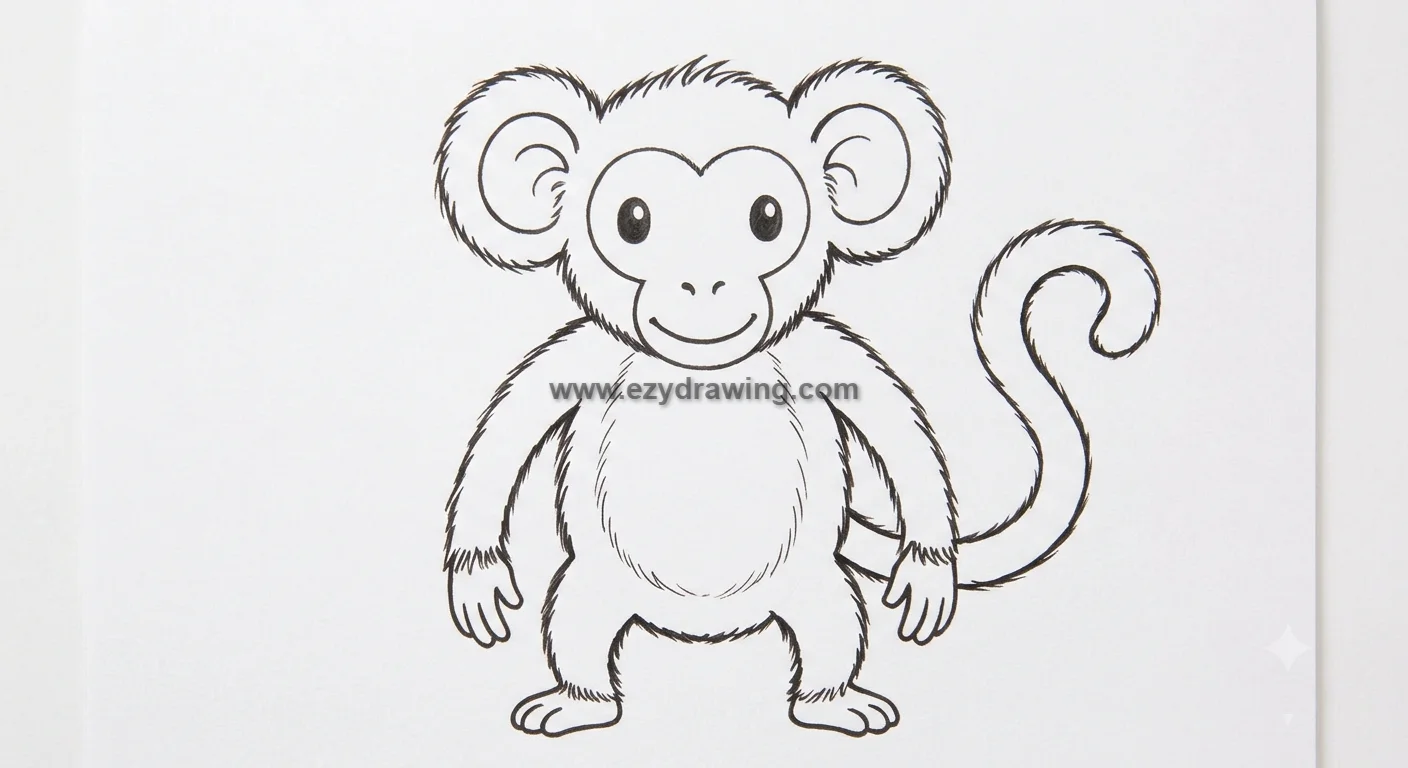
We are almost done. In this step, we will lock in the final design by creating clean, confident outlines, completely separating the final artwork from the sketchy underdrawing.
The Action: Using a dark pencil, a fine-liner pen, or a dark marker, trace carefully over the final, fur-textured lines you established in Step 4. You must ignore all the early geometric guides (the original circles and ovals) that are still faintly visible. Make the final lines crisp and consistent. Add the small whiskers and refine the pupils with a solid dark fill. The result should be a clean, distinct black and white line drawing.
(Image 5: Advancing from image_3.png, all pencil guides are gone. The illustration is defined by a single, clean, confident black line that precisely captures the furry texture and features, creating a finalized outline drawing ready for color.)
Step 6: Full Color and Texture
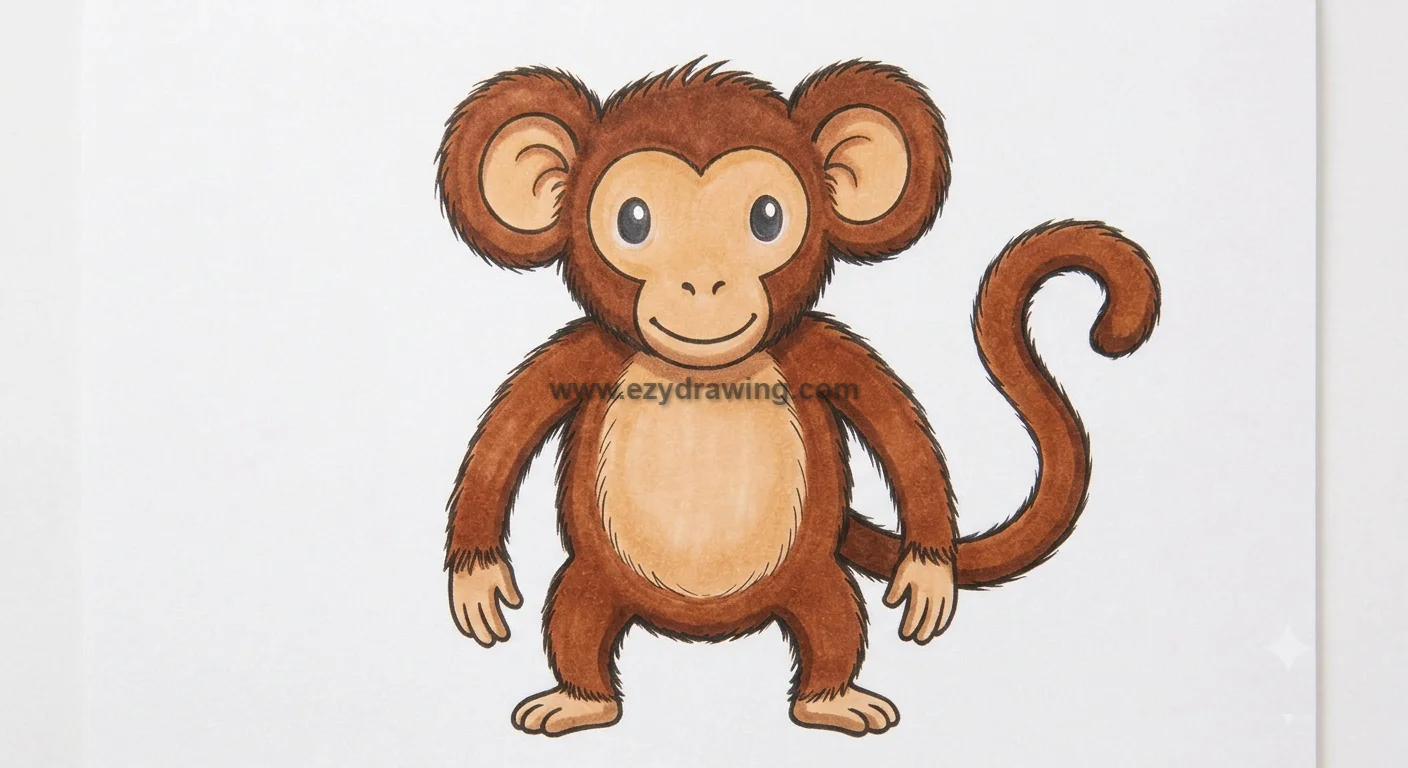
In the final step, we add color and depth to the clean line art from Step 5, bringing the character to life.
The Action: Using your chosen medium (colored pencils, markers, or digital paint), apply color within the clean lines. For a classic look, use a medium brown for the main body and limbs. Use a lighter tan or cream color for the face mask, the inner ears, and the round belly patch. Add a subtle, soft pink inside the mouth. Finally, apply slight shading (a slightly darker brown) beneath the chin and where the limbs overlap the body to give the monkey depth and form. The eyes receive a small white highlight for life.
(Image 6: The clean line art from image_4.png is fully colored. The main body is warm brown, while the face mask, ears, and belly patch are light tan. Shading adds depth, resulting in a finalized, friendly cartoon monkey.)
Here is a complete summary of the entire process from start to finish.
Summary: 6 Steps to Draw a Monkey Visual Guide
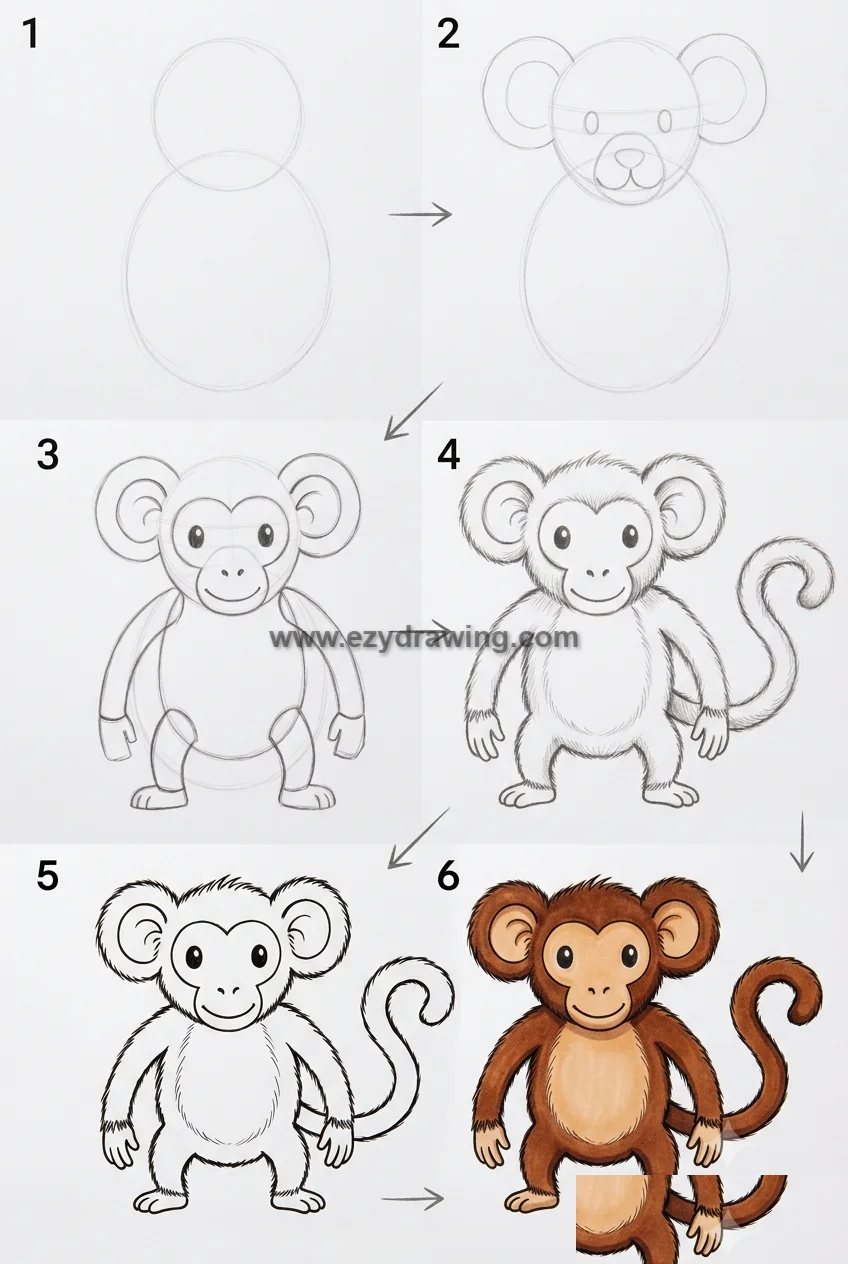
This composite image shows all six steps in sequence, perfectly illustrating the progression from simple geometry (Step 1) to a fully rendered and colored character (Step 6). Note how the base structure established in the first image (the overlapping circles) remains the core volume that supports the final drawing.
(Summary Image: A complete visual guide on 2:3 vertical paper, illustrating all 6 steps in sequence. Starting from simple foundational circles, the process builds volume, details the face and limbs, adds texture, inks the final lines, and applies color to create the finished cartoon monkey.)
Conclusion
Congratulations! You have successfully completed this guide on how to draw a Monkey. By breaking down a complex animal into basic geometric shapes (the foundational circles and ovals), we were able to build the anatomy step-by-step. We moved from structural guides to adding texture (fur), defining the limbs, cleaning up the line work, and finally, adding the color that brings the character to life.
Drawing is about understanding structure, and this technique allows you to draw any animal. Keep practicing these foundational steps!