How to Draw a Panda Cute Easy Beginner Sketch Guide
Welcome to this comprehensive guide on how to draw a Panda! Pandas, with their gentle demeanor and distinctive black and white coats, are beloved worldwide. This tutorial is designed for artists of all levels, breaking down the complex form of a panda into six simple, manageable steps. By following along, you’ll learn to capture the essential characteristics and charm of these iconic bears.
We will focus on a front-facing, seated panda. This classic pose is perfect for beginners and allows us to clearly define the head, body, and limbs as we learn how to draw. Let’s gather our materials and begin.
Beginner-Friendly Panda Drawing Techniques
Learning How to Draw a Panda Easy Step by Step Cute Sketch is a fun and beginner-friendly way to practice simple animal drawing, especially for drawing cute panda art. Start with a round head, add soft ears, cute eyes, a small nose, and then build the body with easy curved lines. This guide helps kids and beginners create an adorable panda sketch with clear steps, simple shapes, and a clean final look.
Step 1: The Initial Gesture and Core Shapes
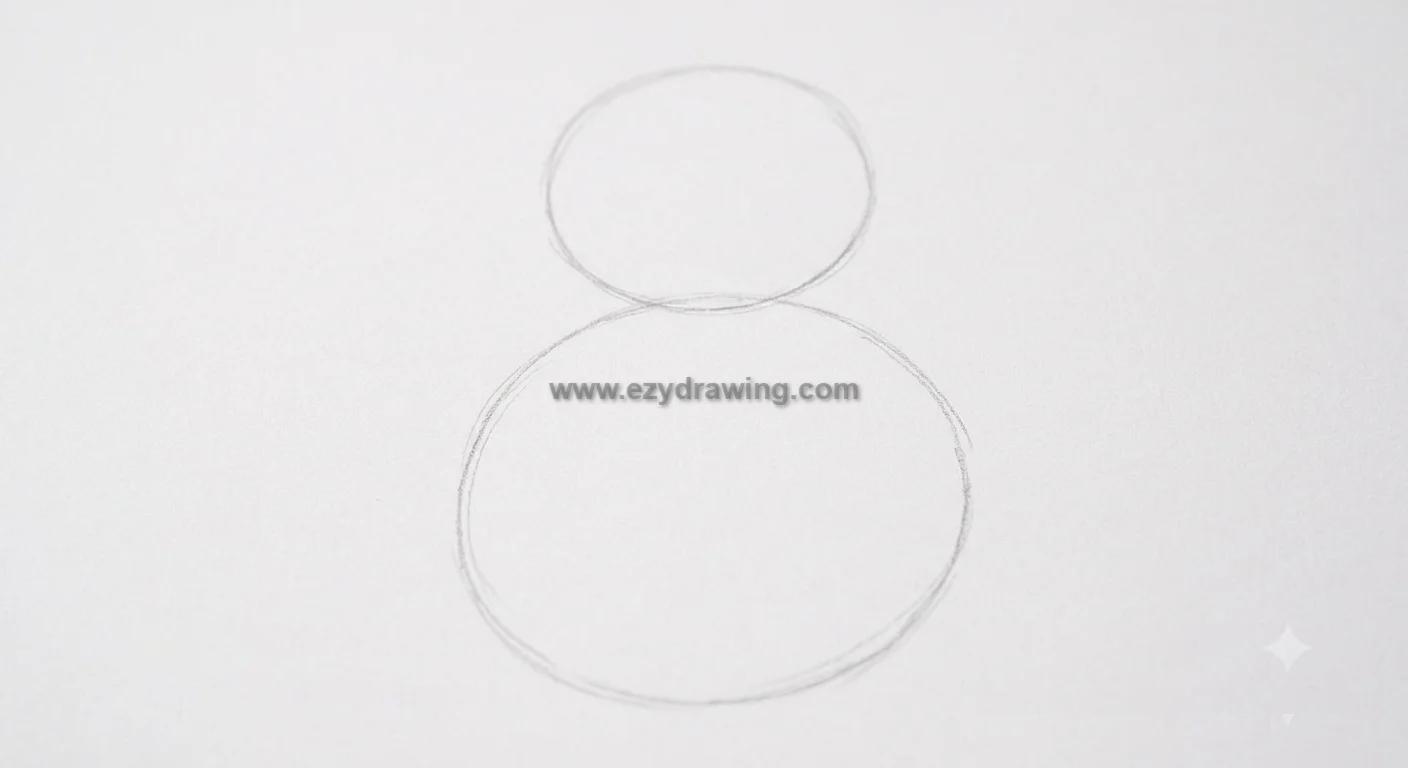
The foundation of any good drawing is a structural skeleton. We start by lightly sketching the largest forms.
Action: Begin with a large oval for the panda’s main body/torso. Stack a smaller circle directly above it for the head. This defines the core vertical alignment and proportions. Keep your lines loose and light, as these are temporary guidelines.
Figure 1: The establishing gesture. A simple circle and oval define the primary structure.
Step 2: Defining the Limbs and Head Volume
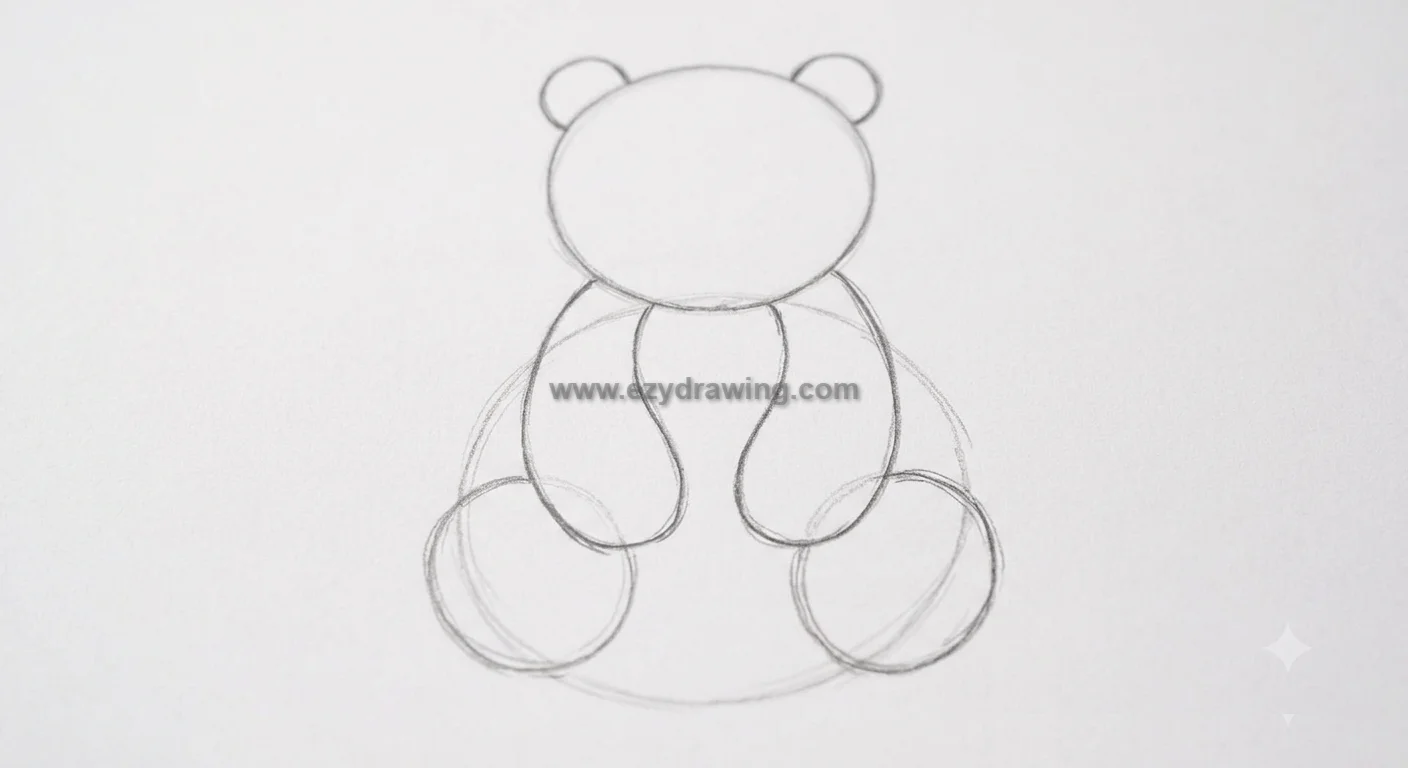
With the core axis established, we now attach the limbs and give the head its initial three-dimensional volume.
Action: Add two smaller circles overlapping the lower oval (these are the ‘knees’ or hips) and two long, pear-shaped forms extending downward from the center (these are the front paws). Next, return to the head circle and refine its outline, attaching two small, rounded “D” shapes for the ears. Note how the basic shapes from Step 1 are still visible.
Figure 2: The volume grows. Ears and preliminary limbs are attached to the core structure established in Figure 1.
Step 3: Positioning the Facial Features The Structure of the Face
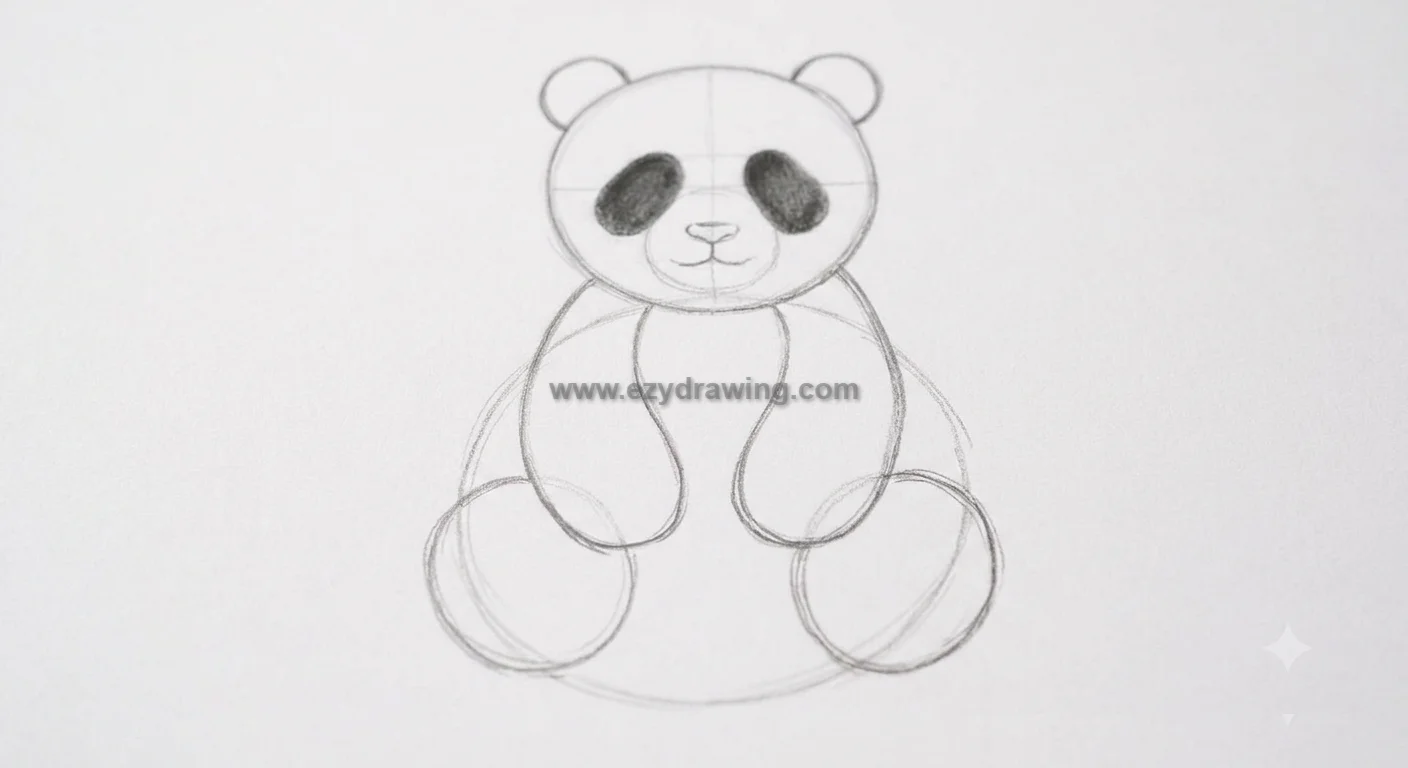
This step focuses entirely on the architecture of the face. Accurate placement here is key to achieving a classic panda look.
Action: Within the refined head shape (from Step 2), lightly sketch a horizontal line just below the center to establish the eye line. Below this, sketch a small, rounded triangular muzzle. Place the centers of the two large, iconic eye patches onto the horizontal guideline. Keep these marks symmetrical and light.
Figure 3: Mapping the face. Guidelines from Step 1 are faint as we define the eye line, muzzle, and the centers of the large eye patches defined in this step.
Step 4: Adding Key Details Defining the Features
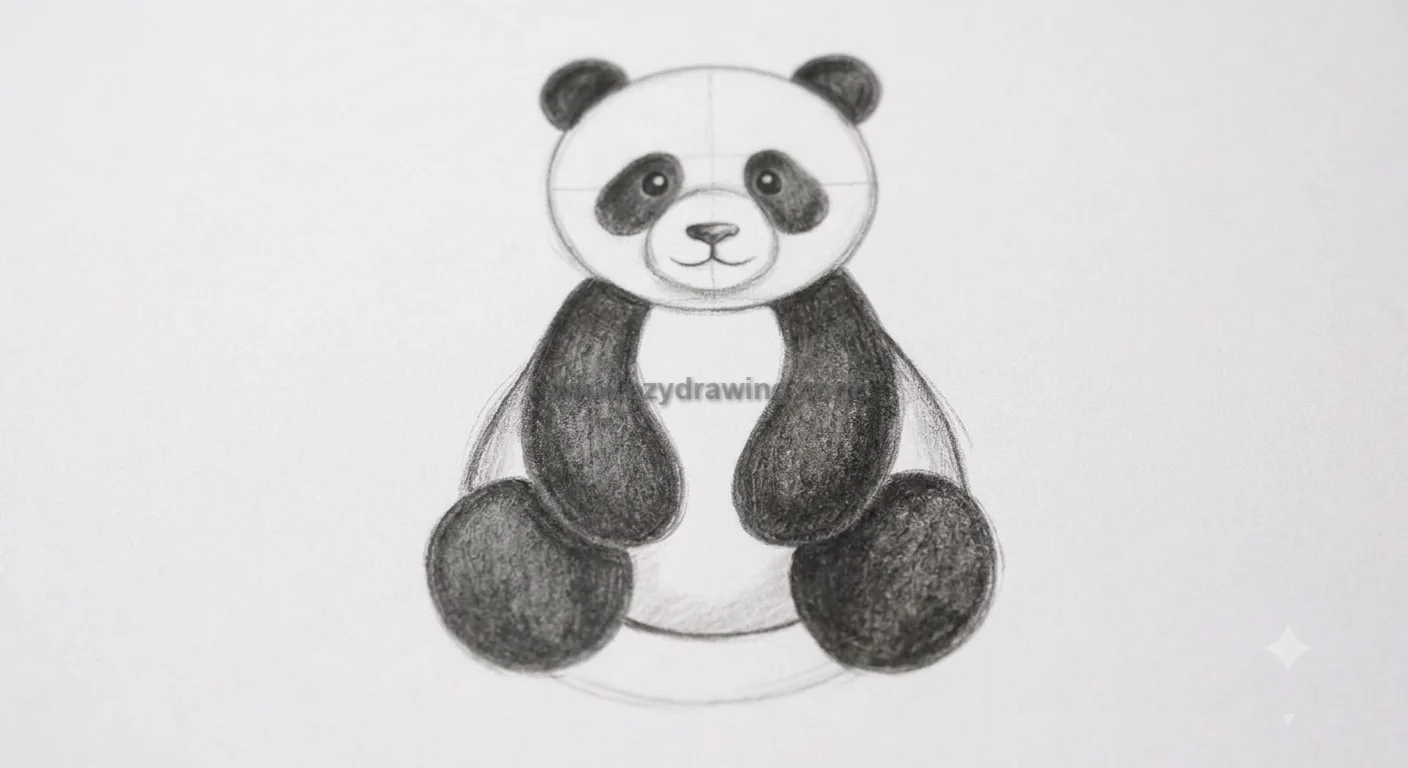
Now we transition from mapping shapes to defining specific features. We make the panda look alive.
Here is the updated paragraph:
Action: Refine the eye patches defined in Step 3, giving them their characteristic slightly irregular shape while learning how to draw a panda. Inside the patches, draw the small, dark, circular eyes. Refine the nose (a small, soft triangle) and define the line of the mouth. The ears and paws (from Step 2) can now be given a soft, initial layer of dark shading to separate them from the body.
Figure 4: Defining features. We refine the eye patches and nose established in Step 3. The small eyes appear within the dark patches. The ears and paws get their first layer of dark graphite.
Step 5: Introducing Texture Fur and Depth
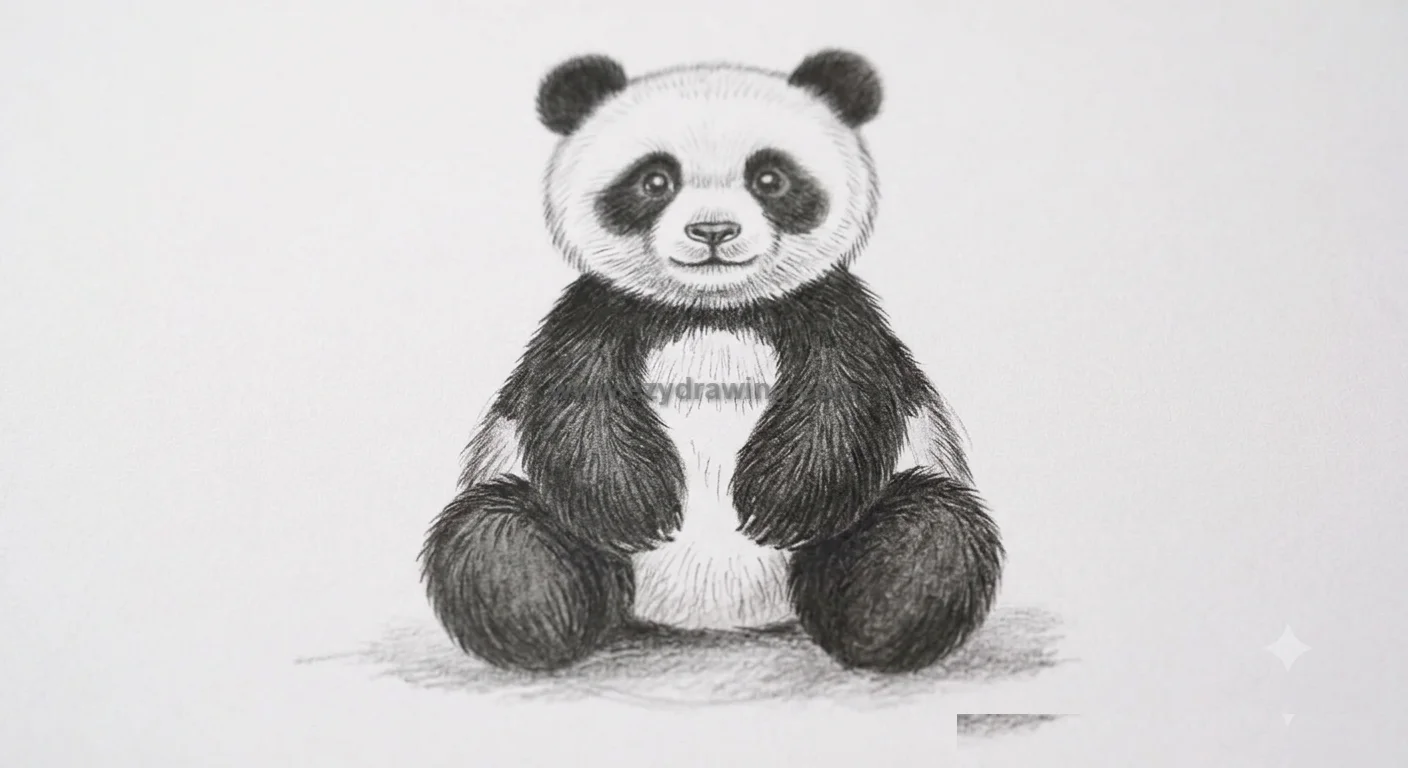
We are now moving from structure to realism. Pandas are not smooth; they are covered in thick fur. This step is about breaking up the flat lines.
Here is the updated paragraph:
Action: Using a sharp pencil, apply short, directional strokes along the contours of the body and head defined in Step 2 while learning how to draw a panda. Do not draw a solid outline; instead, use patches of fur to imply the form. Introduce subtle grey tufts to the white torso. Apply denser, dark fur texture over the shaded areas of the ears and limbs (from Step 4). The foundational shapes from Steps 1 and 2 are now mostly obscured by texture.
Figure 5: Introducing texture. Short directional strokes break up the smooth contours defined in Step 2. Fur pattern and depth are established by layering graphite over the shading from Step 4.
Step 6: Final Refinement and Contrast
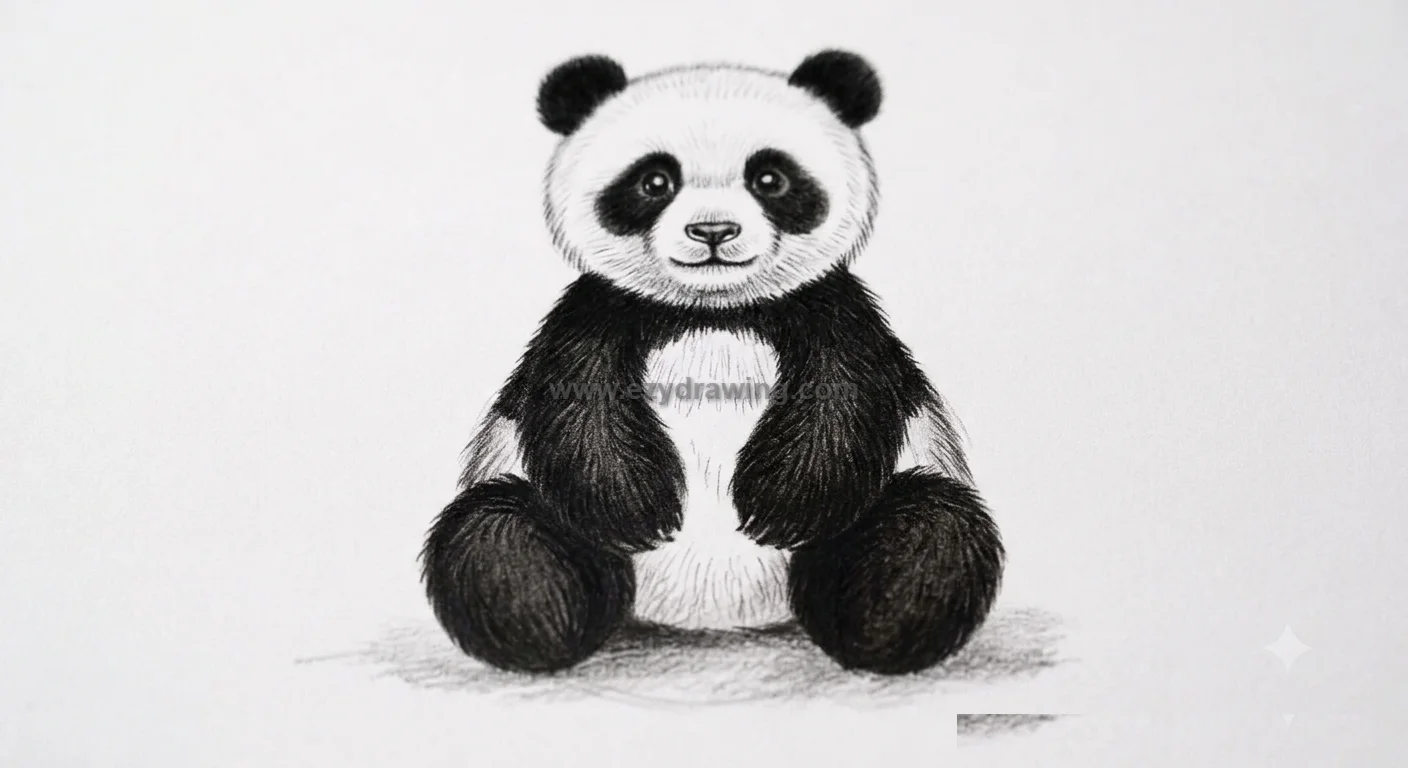
The final step is to maximize the visual impact and contrast of the drawing.
Action: Deepen the blacks. Use a 4B or 6B pencil (or press harder) to make the ears, eye patches, and limbs intensely dark. This high contrast is crucial for a panda. Use a soft eraser to clean up any remaining, unnecessary guidelines from Steps 1-3. Add tiny, bright highlights to the eyes to make them sparkle, and subtle, fine light-grey fur to the white torso for soft detail. The background remains clean white.
Figure 6: Final definition. High contrast is achieved by deepening the blacks from Step 4. Unnecessary guidelines from Steps 1-3 are removed, leaving a clean, textured, powerful image.
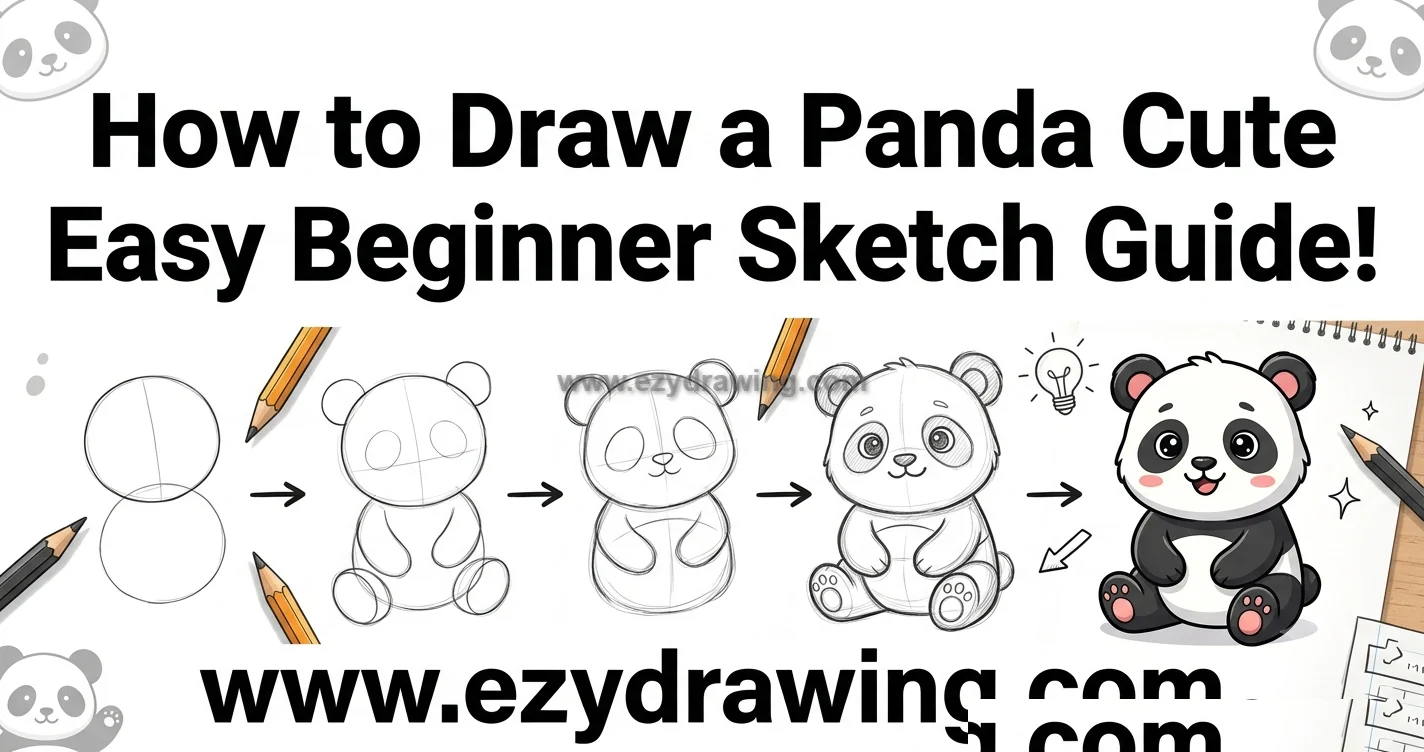
Total Summary: The 6 Stages of Progress
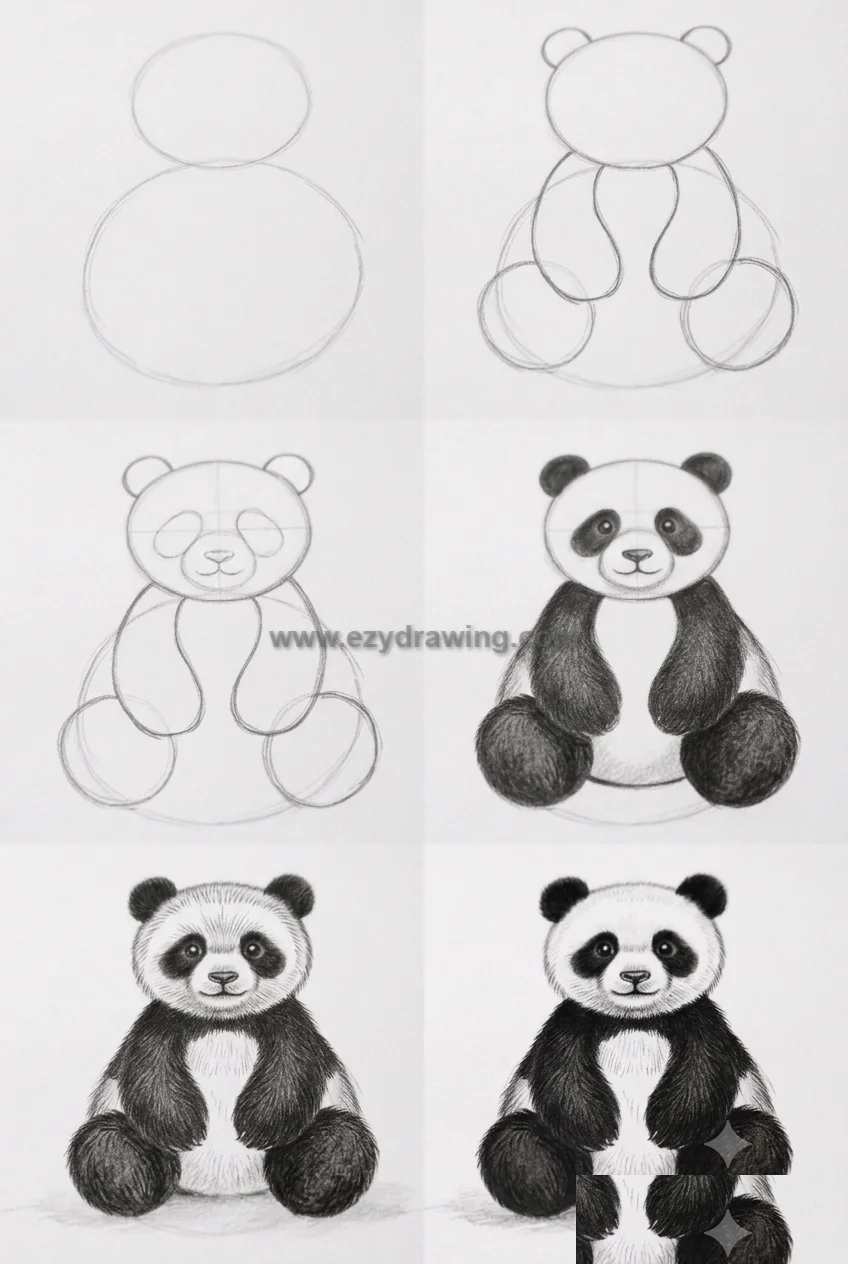
Here is a visual summary showing all six stages of the drawing in sequence, allowing you to see exactly how the panda was built from foundational structure to final definition.
Conclusion
Congratulations! You have completed the tutorial. By breaking the process down into six structured stages—from establishing basic geometric guides to rendering deep contrast and texture—you have learned the essential steps of how to draw a Panda. You started with simple structure (Step 1 & 2), defined the geometry of the face (Step 3), added life with key features (Step 4), applied realistic fur texture (Step 5), and finally, established powerful contrast (Step 6).
Remember that drawing is a skill that improves with patience and repetition. Practice this structured approach, and soon you will be able to draw pandas and other complex subjects with confidence. Keep sketching!