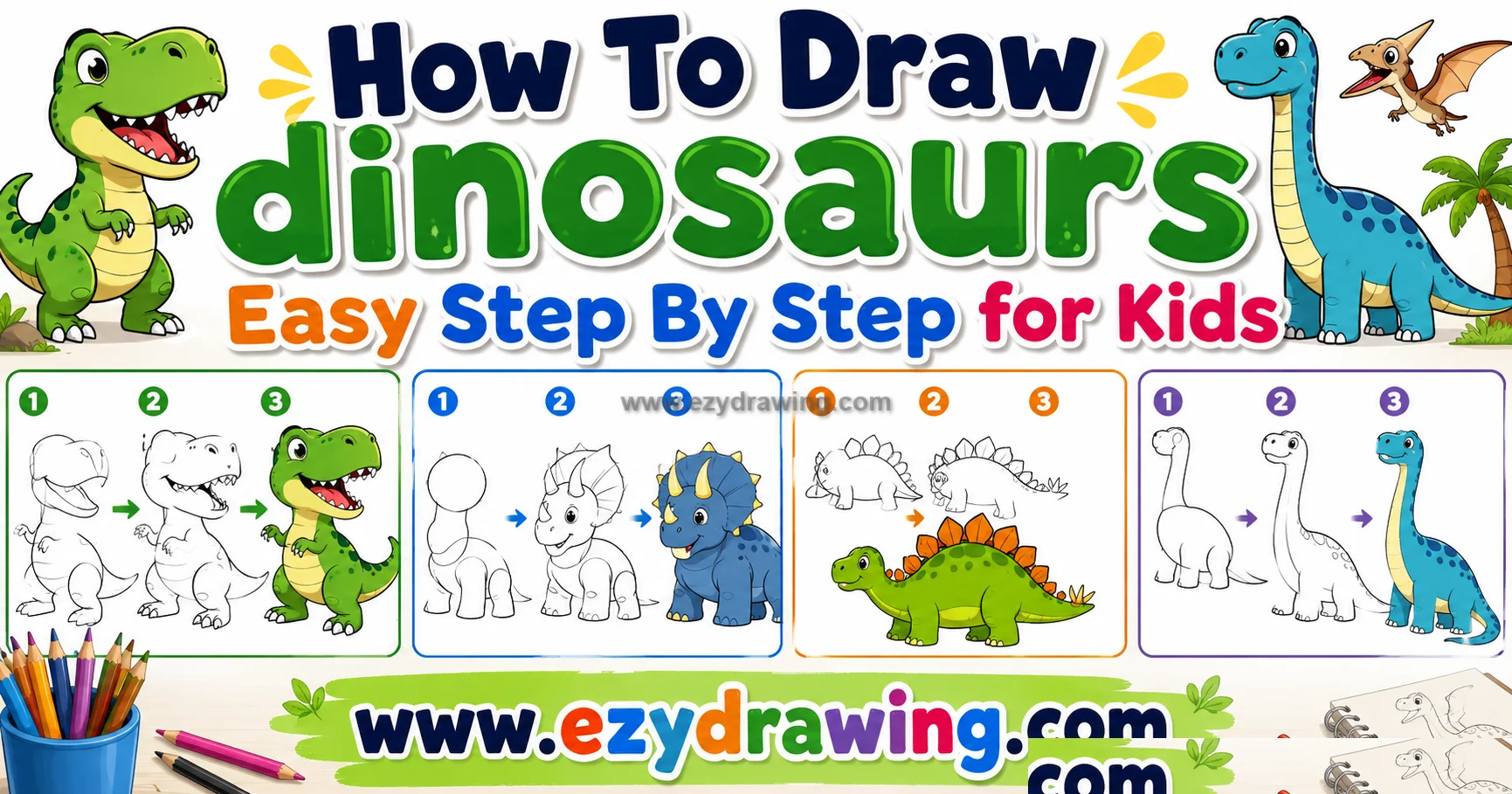
How To Draw dinosaurs Easy Step By Step for Kids
Welcome to this comprehensive tutorial on How To Draw dinosaurs! This how to draw lesson makes the process simple for beginners. Drawing these prehistoric giants is easier than you think, especially when you break them down into simple shapes.
We will focus on a basic, iconic sauropod (long-neck) form, viewed from the front to build a solid foundation. This step-by-step approach ensures you can create a complete drawing from just a few basic lines.
Fun Dinosaur Drawing Instructions for Young Artists
How To Draw dinosaurs Easy Beginner Art Guide is a fun and simple way to learn dinosaur drawing with basic shapes, easy lines, and beginner-friendly steps. This guide is also helpful for drawing easy dinosaurs in a simple and creative way. This guide helps kids and new artists sketch cute dinosaurs without feeling confused, making each step clear, creative, and enjoyable from start to finish.
Step 1: Establish the Core Masses The Torso
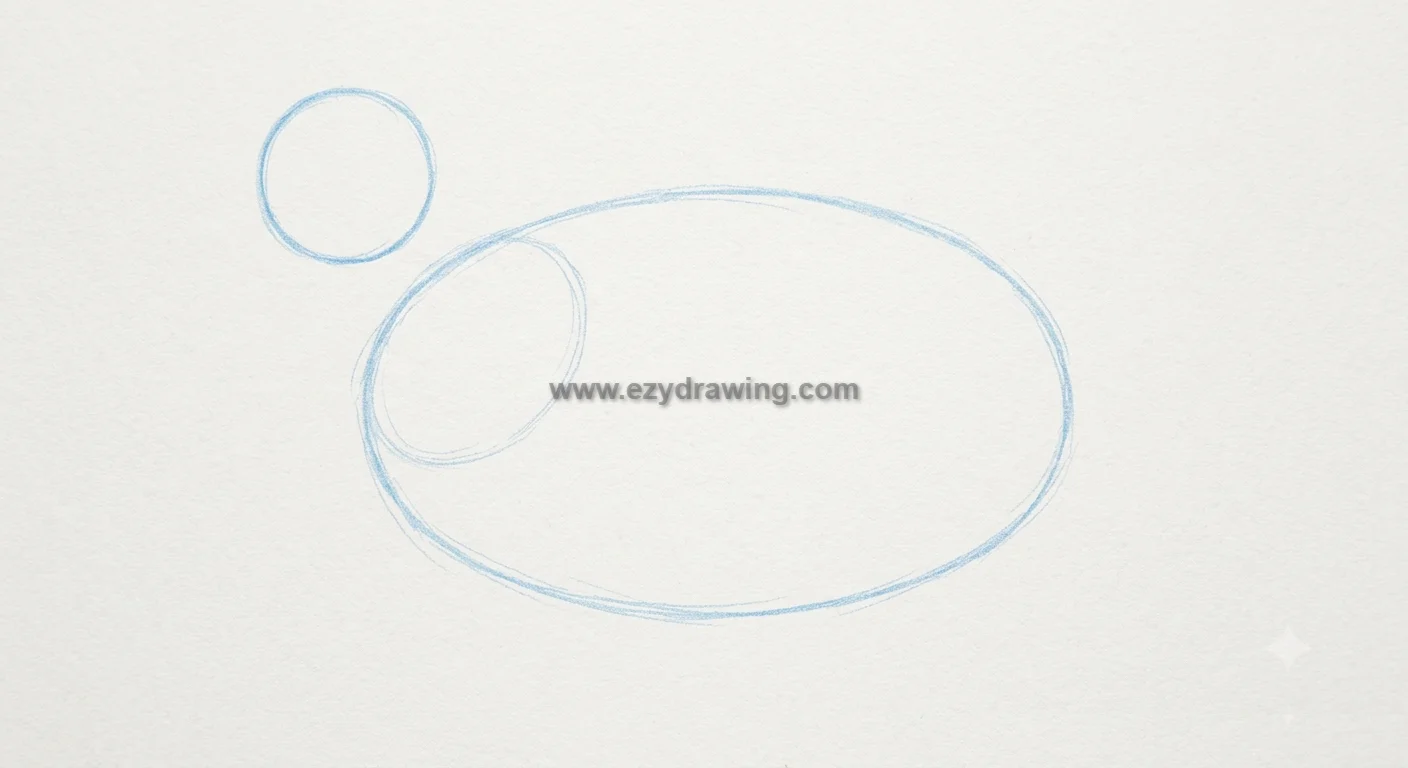
The secret to How To Draw dinosaurs is starting large. Every creature drawing begins with the largest mass. For our sauropod, seen head-on, the main body is a broad, sturdy oval.
We will establish two primary shapes. First, draw a light horizontal oval in the center of your page; this is the main chest and ribcage. Second, place a smaller, perfectly round circle above and slightly to the left of the oval. Connect them with two gentle curves. This forms the foundation for the body and the base of the neck.
Step 2: Add the Foundation Lines for the Limbs
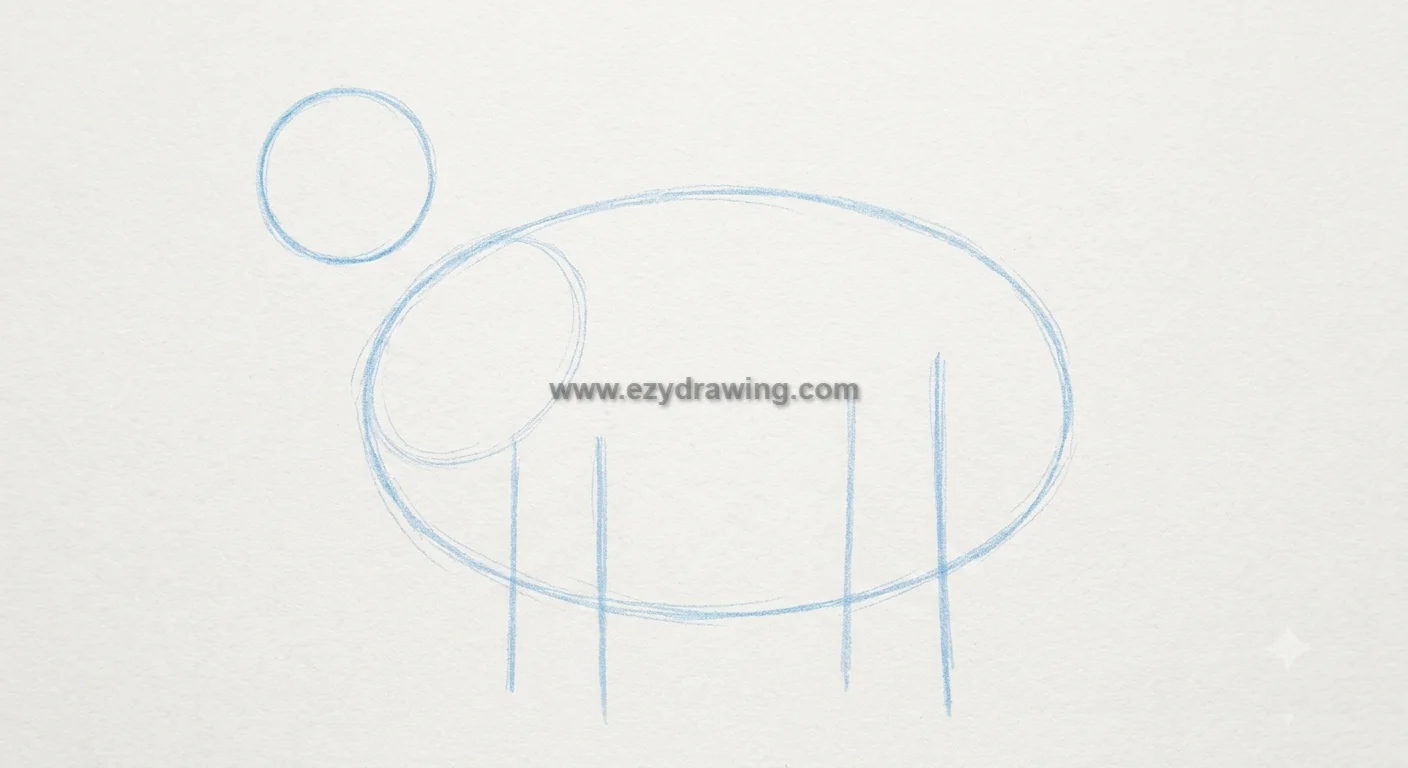
Since we are viewing our dinosaur from the front, the legs must support the massive weight we just sketched. In this step, we add the skeletal structures (the “stick figure” lines) for all four legs, maintaining the perspective established by the torso oval in Image 1.
Extend four straight, light blue vertical lines downward from the primary oval (Image 0). The front pair should be positioned narrower and slightly forward, while the rear pair is slightly wider and positioned further back, defining the pillar-like structure of the sauropod’s stance.
Step 3: Establish the Neck and Tail Volumes
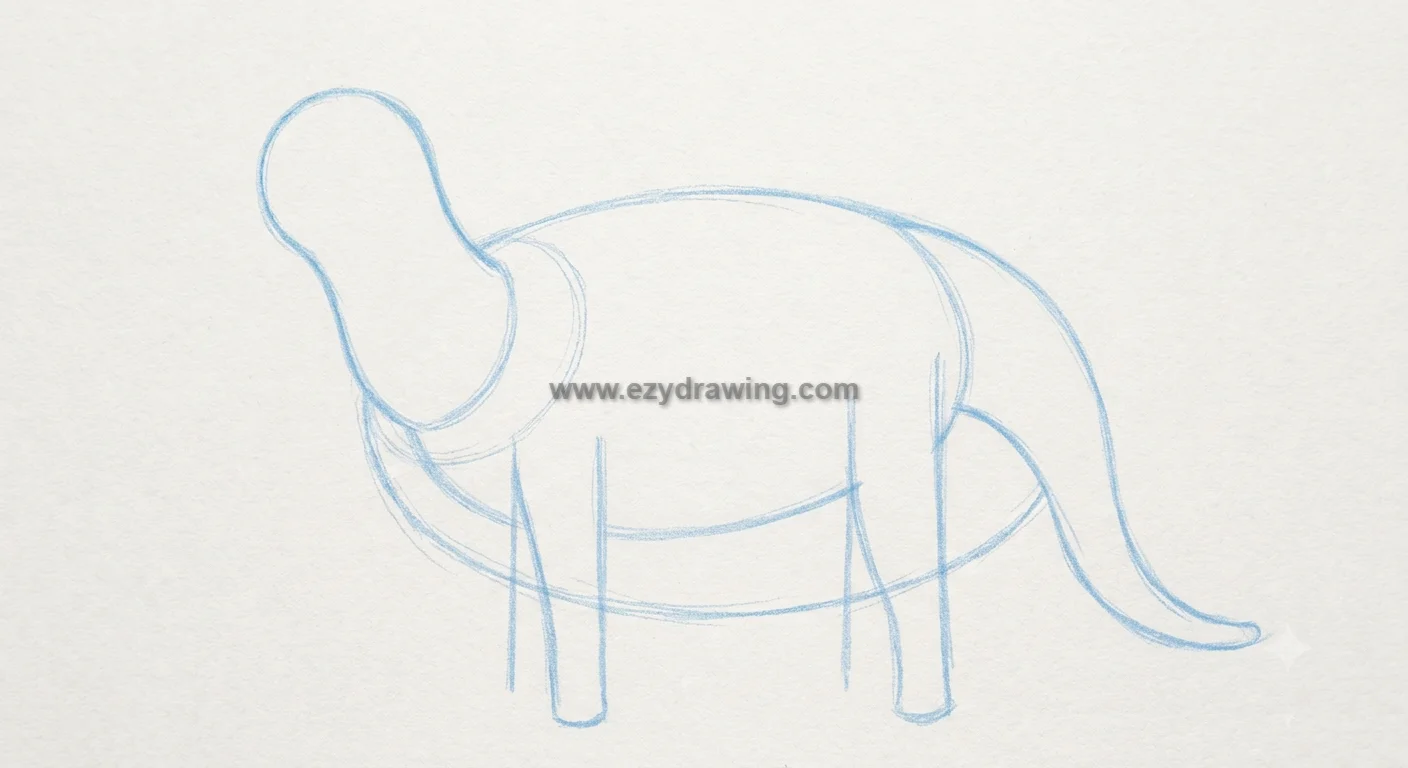
We are now going to transition from the simple skeleton (Image 1) to the basic volume of the dinosaur. This involves defining the massive neck and the counterbalancing tail.
From the top-left circle established in Step 1 (image_0.png), draw a long, thick, light blue S-curve extending upward and slightly toward the viewer. This defines the volume of the neck. Next, from the rear of the main torso oval, add a simpler, thick curve that sweeps down and away to the right; this is the base of the substantial tail, ensuring the creature looks balanced.
Step 4: Flesh out the Head and Limbs Defining the Features
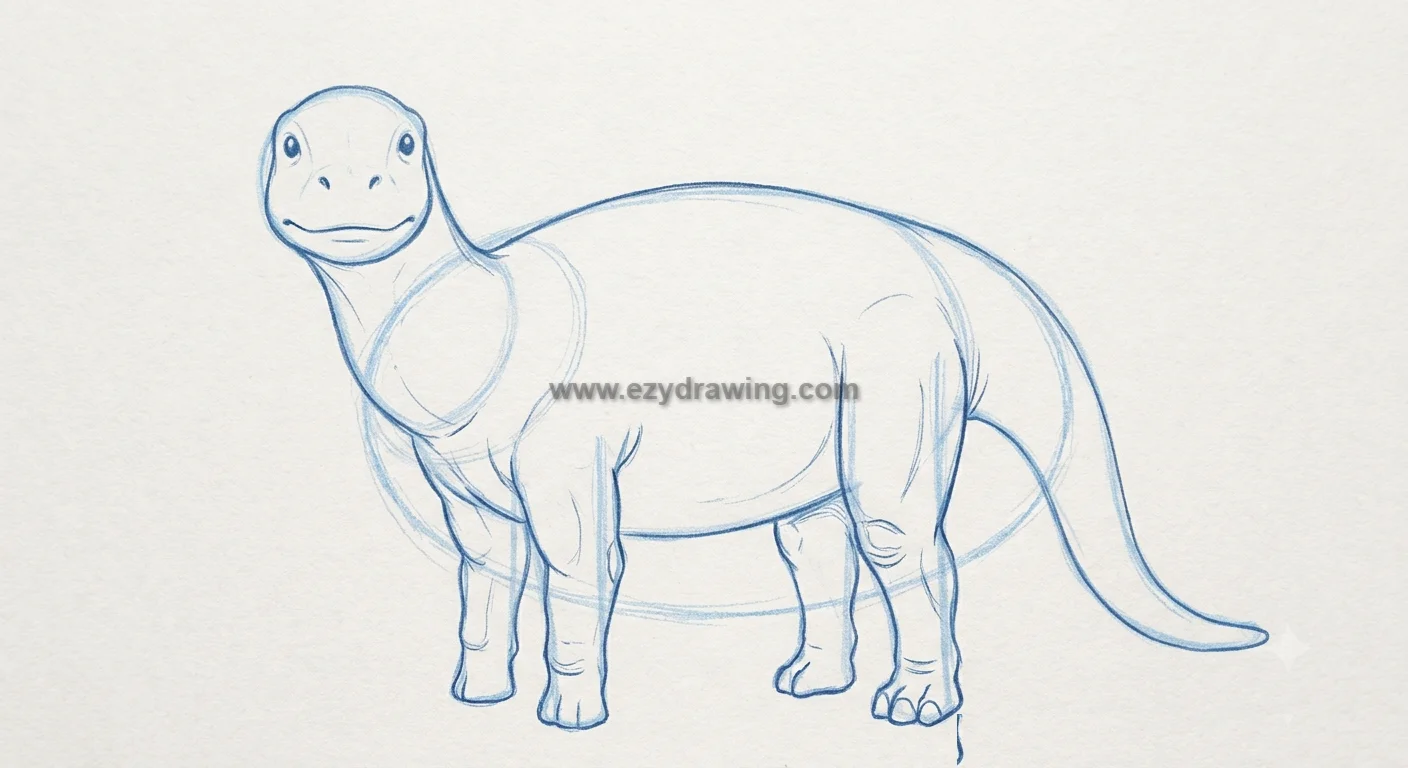
Now that the major volumes (Image 2) are set, we focus on specific features. In this step, we transform the simple ‘stick legs’ and generic neck volume into defined limbs and a recognizable head, viewed head-on.
At the very top of the neck, refine the light blue mass into a small, distinct, rounded head. Add two small bumps for the eyes (facing forward) and a simple line for the mouth. More importantly, using the skeletal lines from Image 1 as a guide, build thick, pillar-like muscles and forms around those lines. The front legs should now have defined “knees” (wrists) and the hint of broad feet, and the back legs should show the thick thighs starting to form.
Step 5: Refine Contours and Introduce Texture
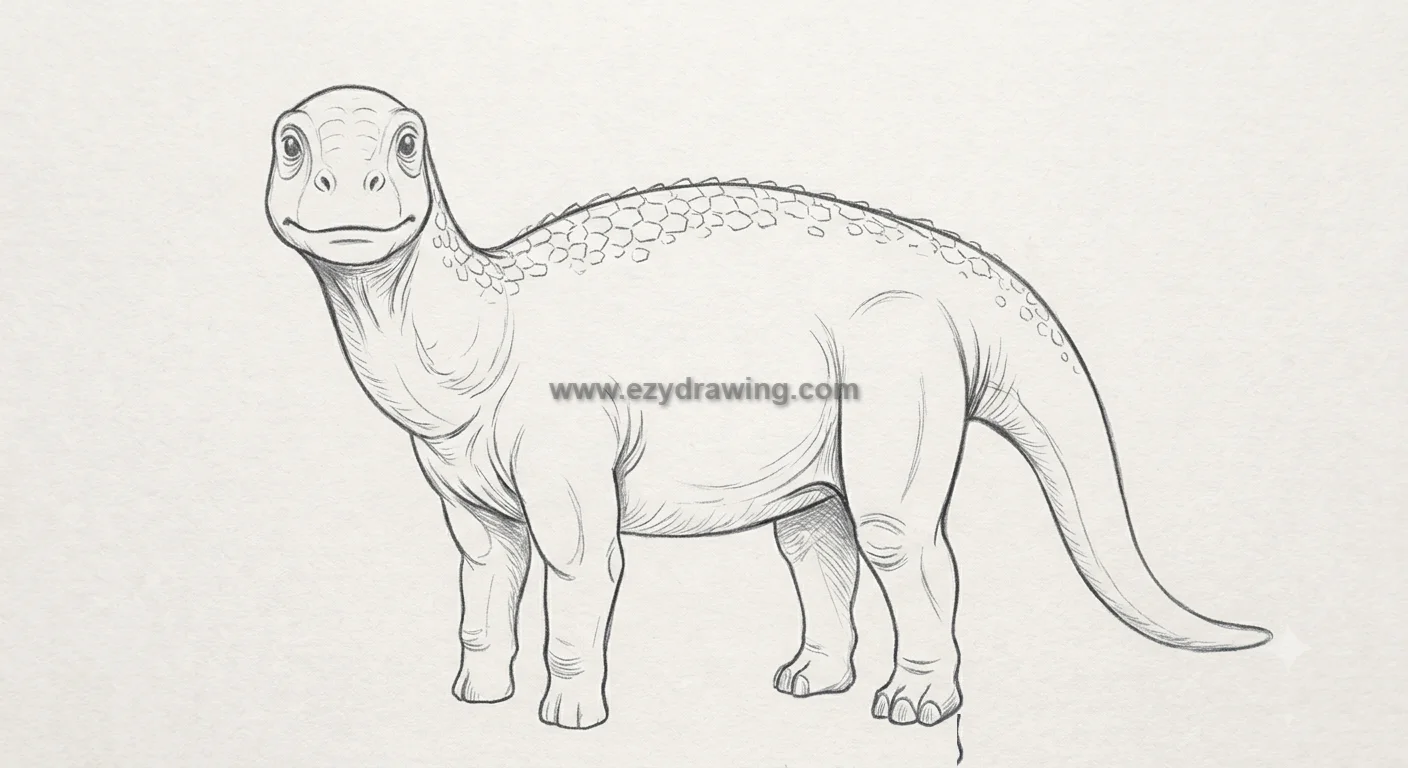
We are moving away from sketch lines and toward the final image. Now that the head, body, and limbs are formed (Image 3), it’s time to refine the outline and add the characteristic texture.
Using a darker pencil (like a dark blue or soft graphite), create clean, confident contour lines, defining the final shape of the dinosaur based on the structure established in image_3.png. Now, lightly add initial texture. Draw small, rough, hexagonal scales along the top of the neck, and define heavy, folded skin wrinkles where the legs join the body and under the throat, emphasizing the front view.
Step 6: Final Shading and Depth
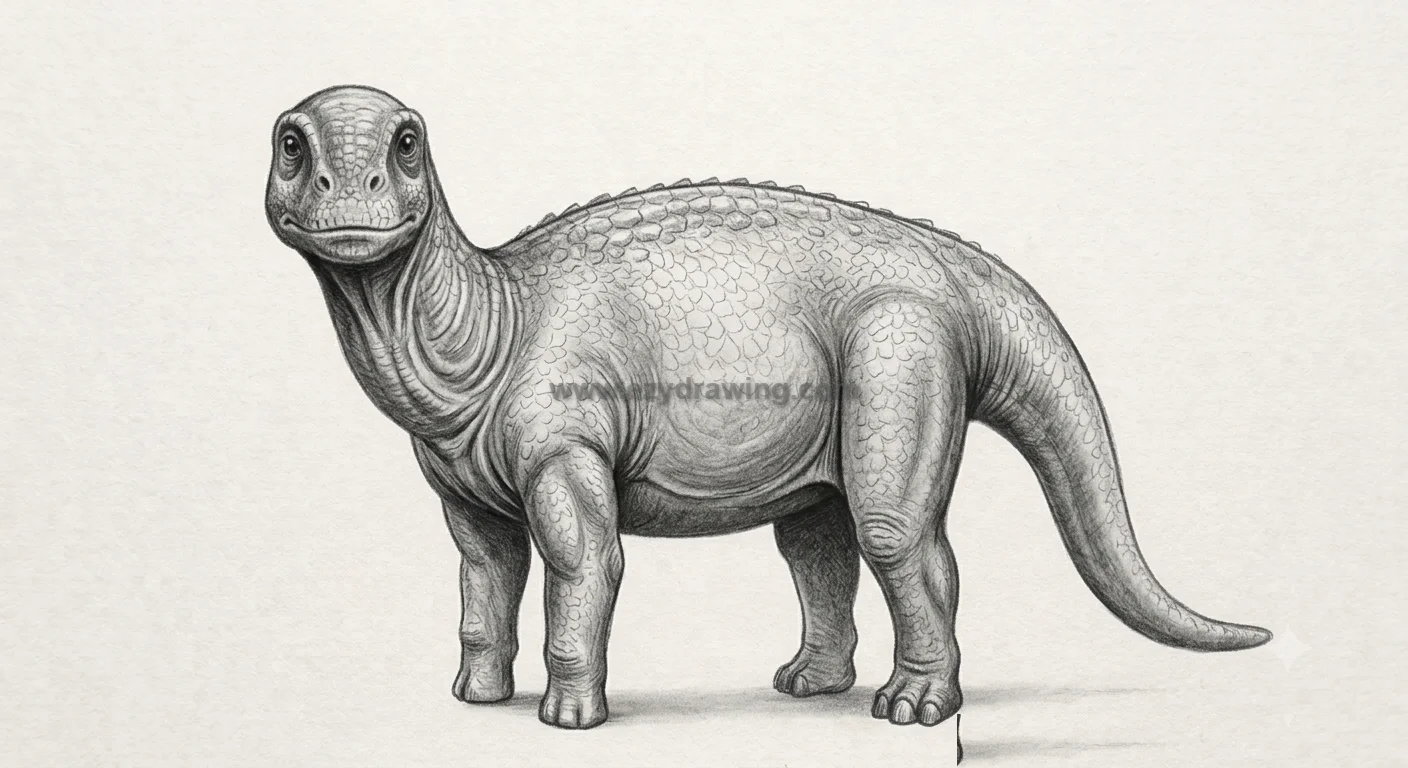
The final step is to add depth and volume, transforming the line drawing (Image 4) into a powerful, three-dimensional subject.
Using heavy graphite or a soft black pencil, define your light source (in this front view, let’s assume it’s slightly to the front-right). Apply deep shadows under the dinosaur’s chin, beneath the massive belly (casting a shadow on the back legs), and on the left side of all four limbs to define their roundness. Darken the eye sockets and the skin folds. Contrast these deep shadows with highlights on the chest and the front edges of the legs to complete the form.
We have summarized the entire progression below in a handy reference guide.
Summary: The 6 Stages of Sauropod Drawing
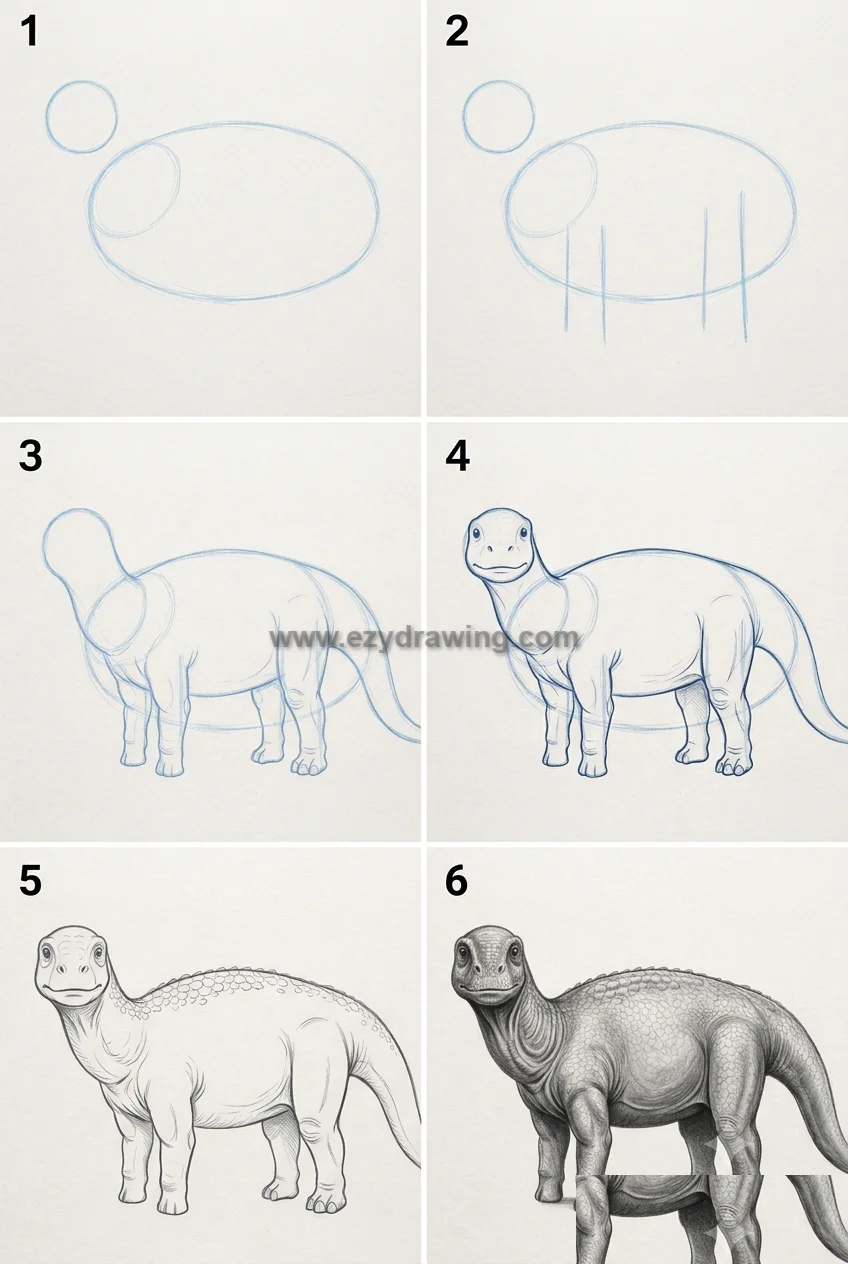
Here is a visual summary of the tutorial, displayed in a vertical 2:3 aspect ratio, showing all six steps from initial oval to final shaded rendering, all from the front perspective:
- Skeleton 1 (Torso): A basic oval and upper circle.
- Skeleton 2 (Legs): Four simple vertical stick lines are added for support.
- Volume 1 (Neck/Tail): Thick volumes define the neck and the balanced tail.
- Structure (Head/Limbs): The head is formed, and muscle structure is wrapped around the stick legs.
- Detail (Texture): Contour lines are finalized, and skin folds/initial scales appear.
- Render (Shading): Final, deep graphite shading provides 3D depth and definition.
Conclusion and Summary
Congratulations! You have navigated the foundational steps of How To Draw dinosaurs. By breaking the process down into manageable stages—starting with abstract geometry and slowly layering on structure, volume, and detail—you can master this complex subject.