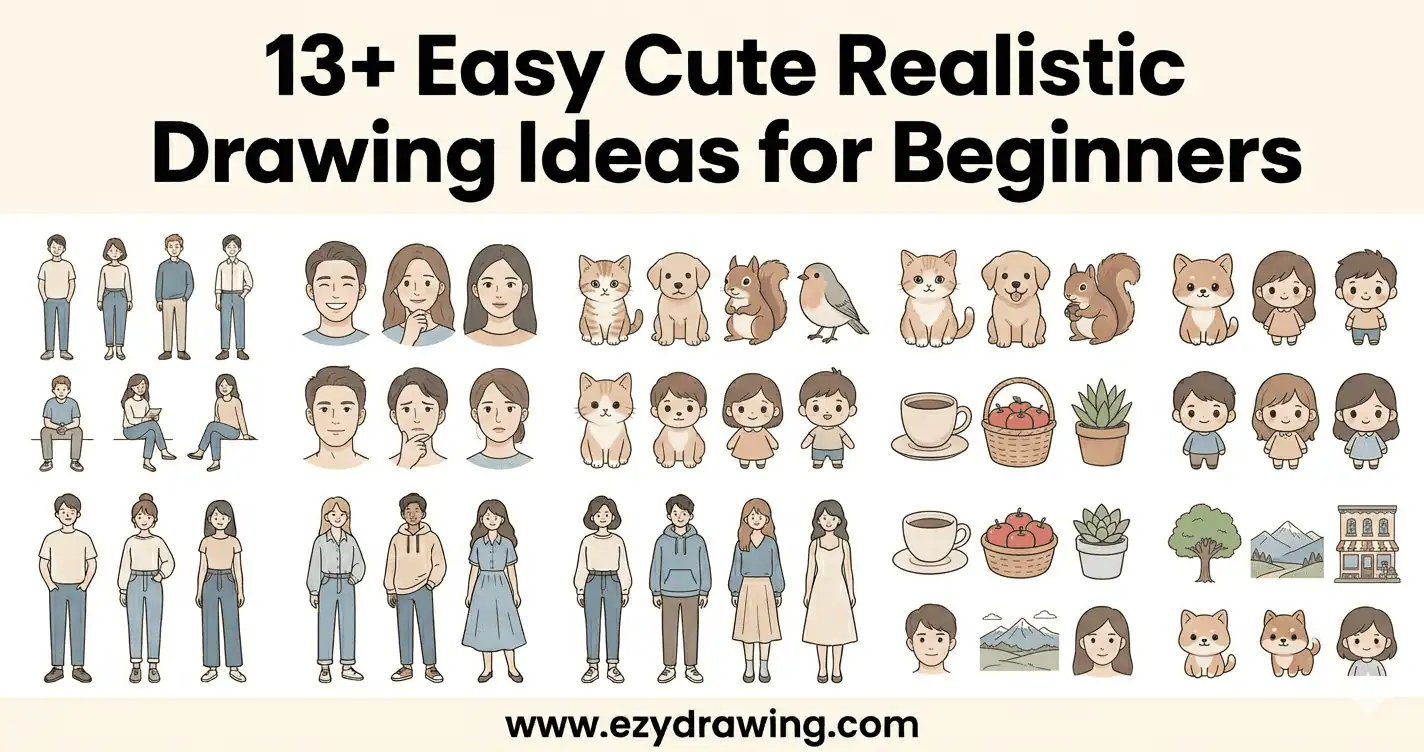
13+ Easy Cute Realistic Drawing Ideas for Beginners
Realistic drawing is one of the most deeply satisfying and genuinely transformative artistic skills you can develop — the moment your pencil marks begin to convincingly describe the actual texture of fur, the specific shine of an eye, the complex folds of fabric, or the delicate structure of a flower petal, something magical happens and drawing stops being mark-making and becomes genuine seeing! 🎨
Exploring different realistic drawing ideas helps you train your observation skills and understand fine details more clearly. It’s also one of the most effective forms of practice drawing, as each sketch improves your control, shading, and perception of light and form.
Whether you love the meditative focus of detailed botanical illustration, the emotional depth of realistic portrait work, the tactile satisfaction of drawing fabric and textures, or the technical challenge of capturing light and shadow on three-dimensional objects, realistic drawing rewards every hour of patient practice with visible and genuinely exciting improvement.
The secret is simple — realistic drawing is really just learning to see more carefully than you ever have before! Grab your pencil and let’s begin seeing the world with new eyes!
Realistic Drawing Ideas Tips for Beginners & Skill Improvement
- Realistic drawing lives and dies by observation — spend at least as much time looking at your subject as you spend drawing it, and you will always produce more convincing results
- Value — the range from lightest light to darkest dark — is more important than line in realistic drawing, so practice your shading gradients before attempting complex subjects
- Break every complex subject into simple shapes first — even the most intricate realistic drawing begins with basic circles, cylinders, and planes before any detail is added
- Texture is created by mark variety — change the pressure, direction, and spacing of your marks to suggest different surface qualities like smooth skin, rough stone, or soft fur!
1. Realistic Eye Close Up
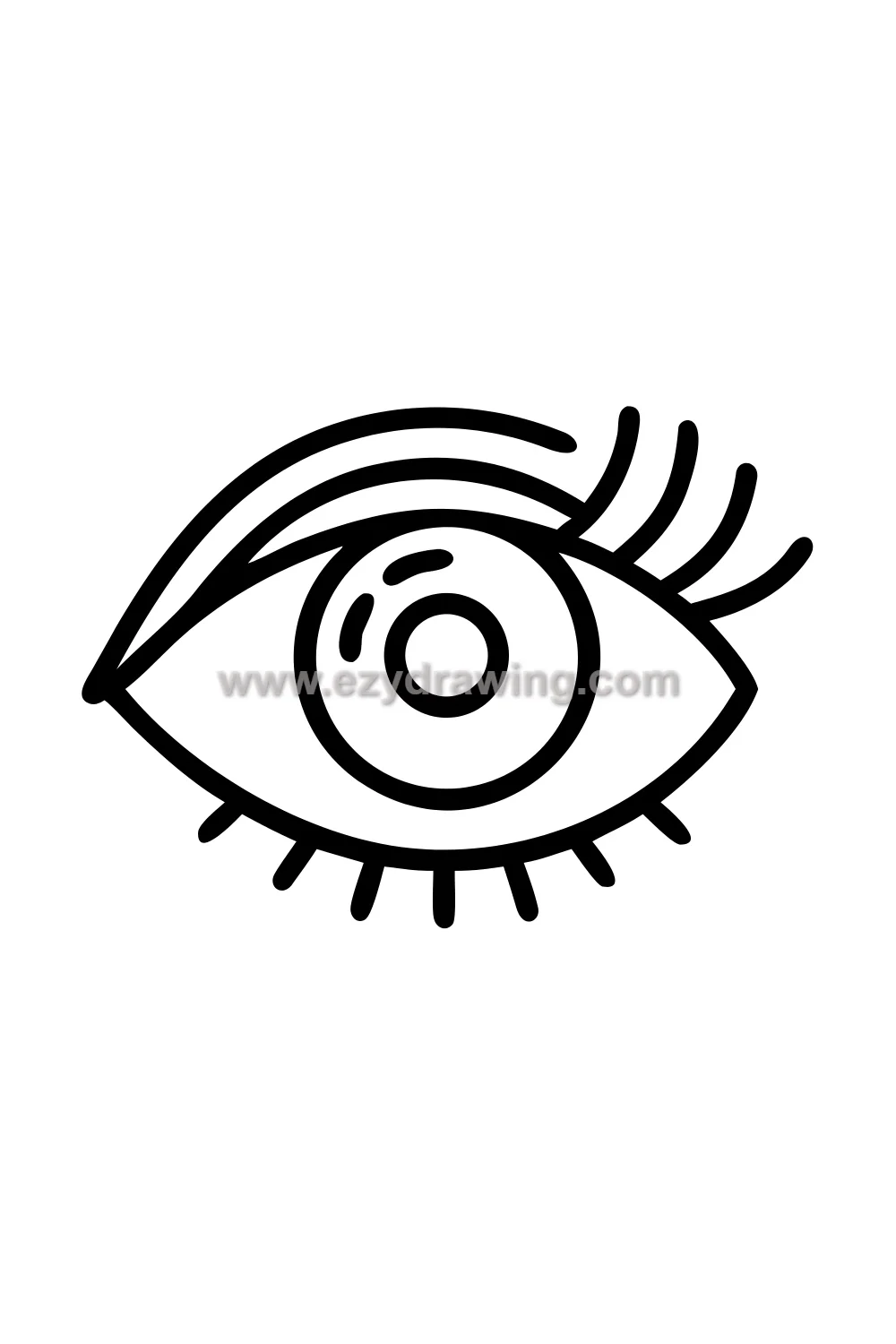
A realistic eye close up is the most foundational and most rewarding single subject in all of realistic drawing — the iris with its extraordinary radiating fiber texture spreading outward from the dark pupil, the catchlight reflections that give the eye its sense of life and moisture, the individual eyelashes each following their own specific direction and curve, and the subtle value shifts of the skin around the eye socket that describe its three-dimensional form.
The iris texture is the technical centerpiece of this drawing — short radiating lines extending outward from the pupil edge, varying in length and grouping to create the characteristic organic pattern of a real iris. The darkest ring at the outer edge of the iris, the medium tones in the middle, and the slightly lighter area around the pupil create the depth that makes the eye feel genuinely spherical.
This eye study is the single most educational realistic drawing exercise for beginners — and incorporating people drawing alongside it helps you apply those skills in real contexts, making every other realistic drawing dramatically more achievable. An absolutely essential realistic drawing idea! 👁️
2. Realistic Rose in Full Bloom
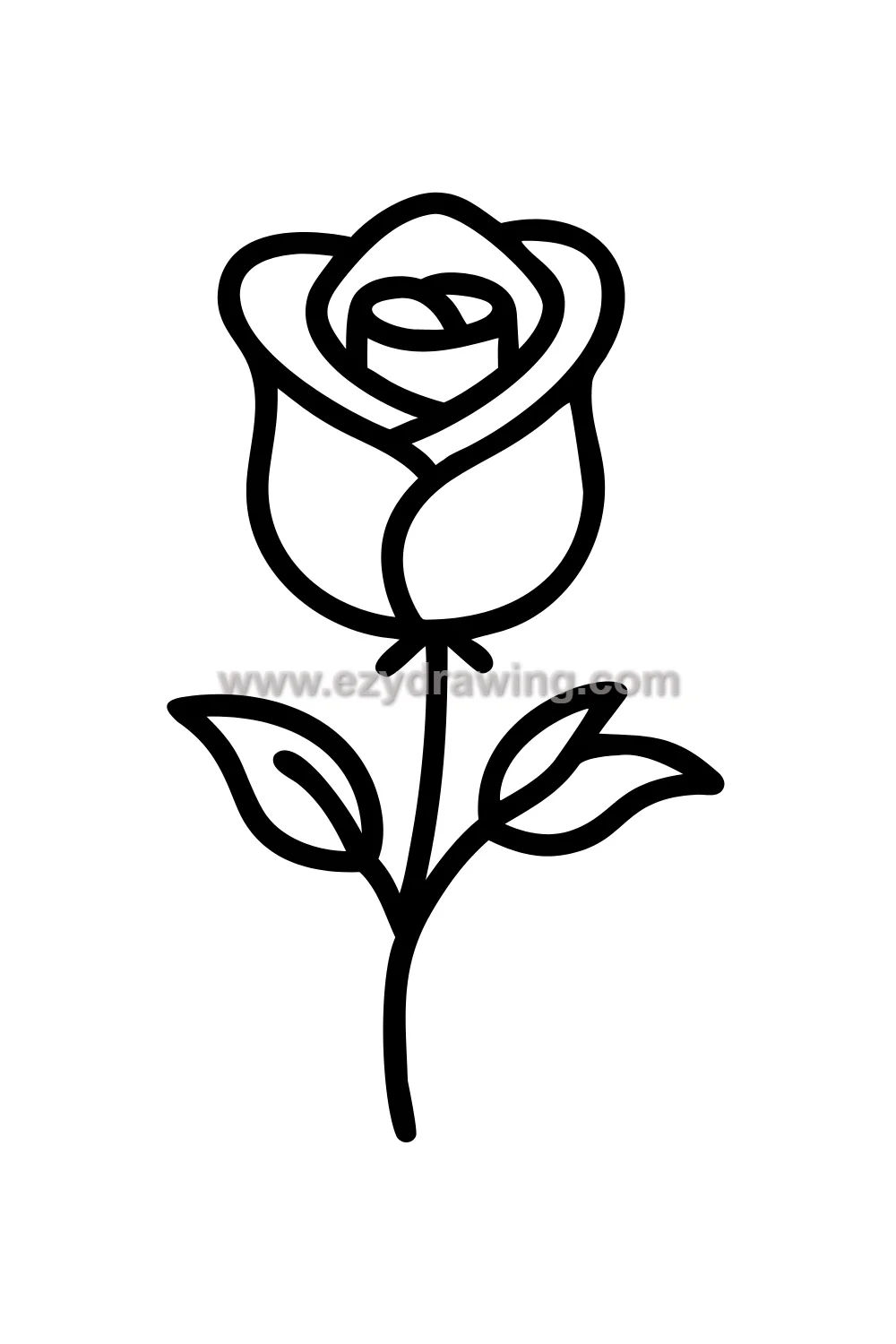
A realistic rose in full bloom is one of the most beautiful and technically instructive subjects in all of botanical drawing — the tight central spiral of innermost petals gradually opening to the generous curves of the fully open outer layers, each petal described with its specific characteristic shape and the delicate vein lines that run through it, soft shading creating the beautiful three-dimensional curve of every individual petal surface.
The key to realistic rose drawing is understanding the petal layering system — starting from the tight central bud and working outward, each ring of petals is slightly more open than the one before it. The darkest shading lives in the deepest shadows between overlapping petals, the lightest areas on the forward-facing curved surfaces of each petal catching the light.
This rose study connects the artist to the centuries-long tradition of botanical illustration, while exploring elements like architecture drawing can further expand your artistic perspective. A gorgeously detailed realistic drawing idea! 🌹
3. Realistic Cat Portrait
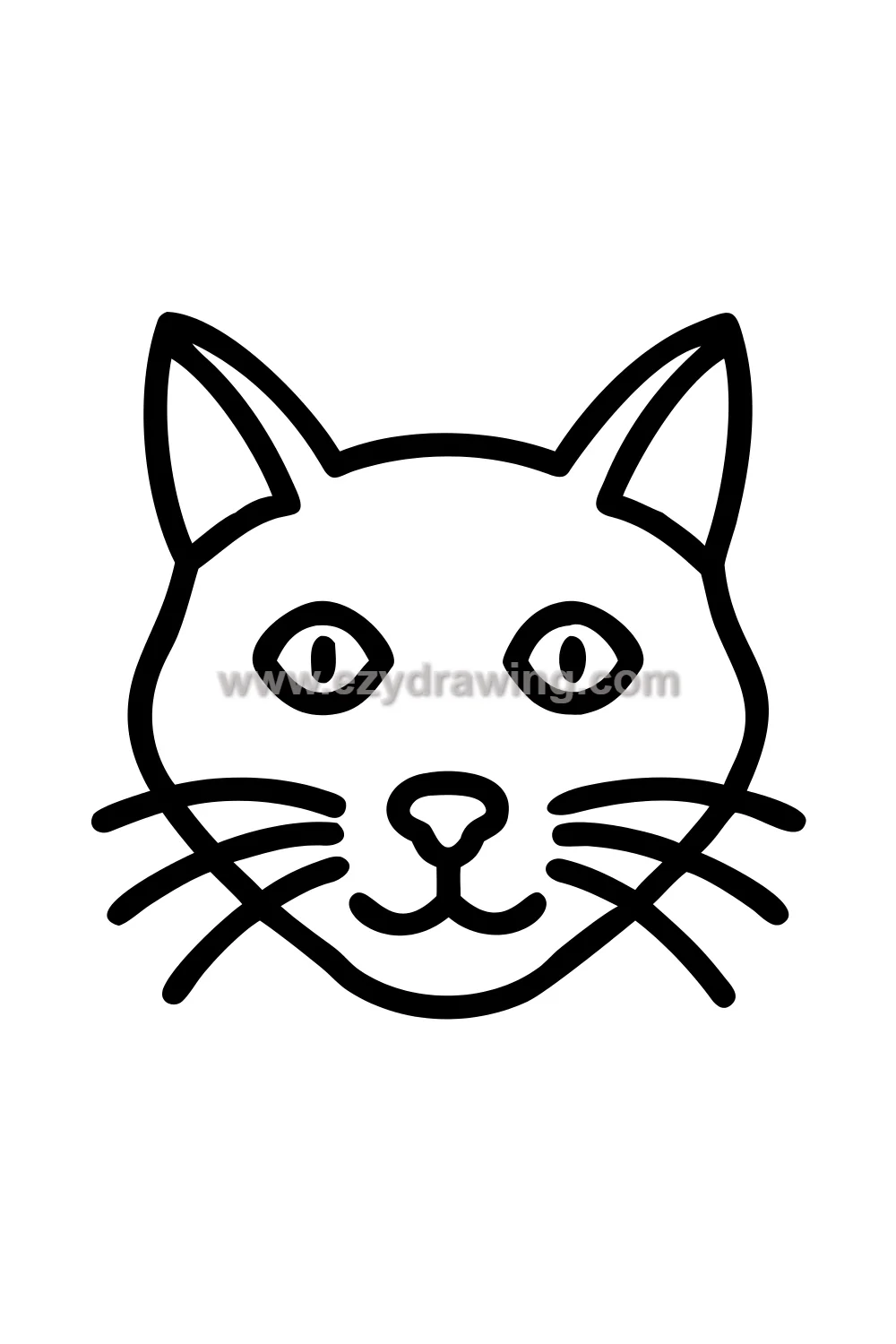
A realistic cat portrait captures the extraordinary combination of softness and intensity that makes cats endlessly compelling subjects — the dense fur rendered in thousands of short directional strokes that follow the growth pattern across each area of the face, the piercing eyes with their remarkable vertical pupils and the specific iris texture that makes cat eyes so hypnotic, and the individual whisker strands that are among the longest and most elegant lines in any animal portrait.
The fur rendering is the dominant technical challenge — each area of the face has fur that grows in a specific direction, and the short pencil strokes that describe it must follow these directions faithfully. The chin fur grows downward, the cheek fur sweeps backward, the forehead fur grows forward and down. Getting these directions right makes the fur feel genuinely three-dimensional.
This cat portrait teaches the fundamental realistic technique of directional mark-making, and exploring couple poses drawing alongside it helps expand your skills in capturing relationships and form. A deeply satisfying realistic drawing idea! 🐱
4. Realistic Human Hand Study
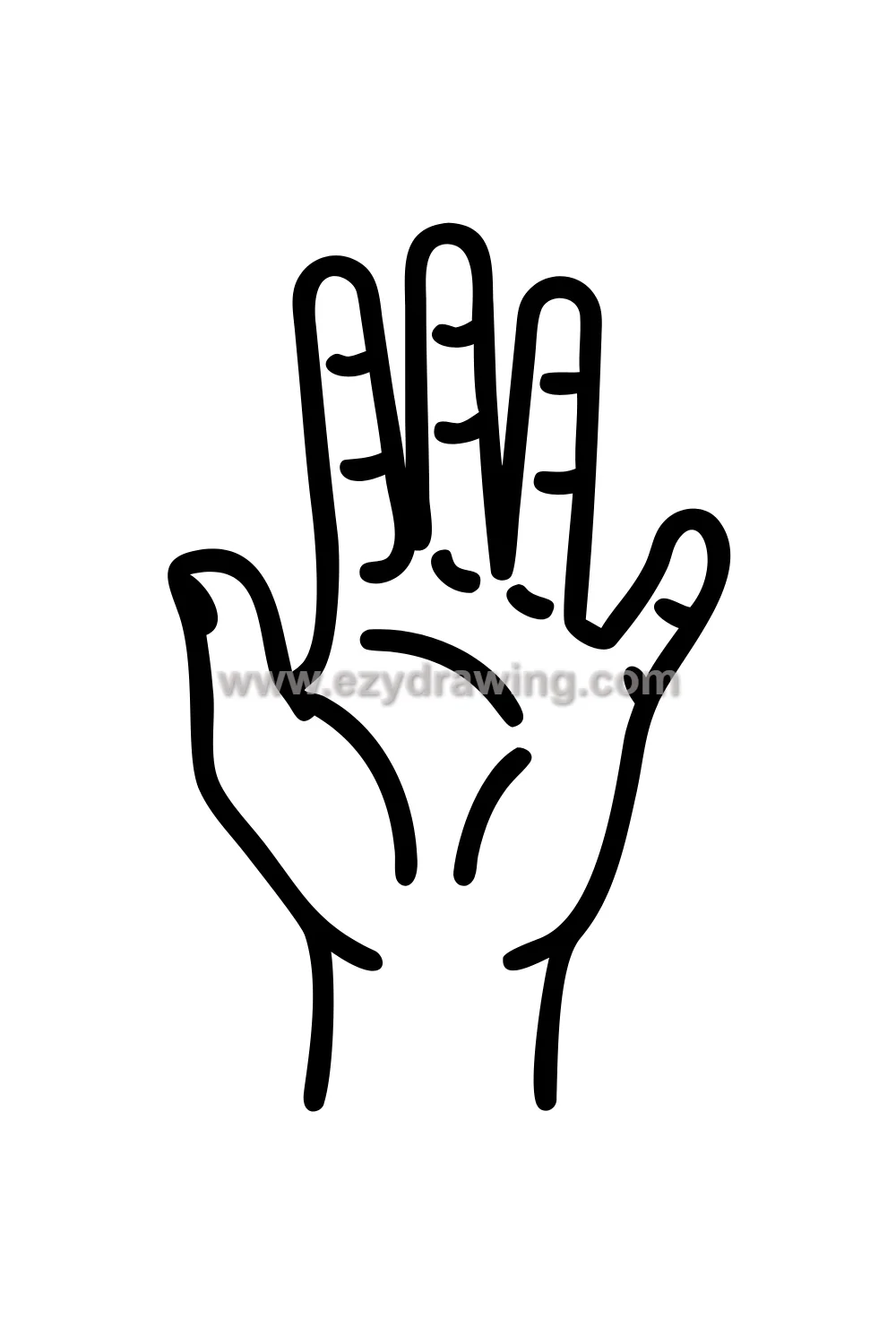
A realistic hand study is simultaneously the most challenging and most rewarding figure drawing exercise — every knuckle requires its own small shaded form to describe the bump of the joint beneath the skin, every finger has three distinct segments separated by joint fold lines, the veins on the back of the hand create a beautiful branching network, and the fingernails require their own specific rendering of the nail plate, lunula, and surrounding skin folds.
The knuckle rendering is the technical key to a convincing hand — each knuckle is a small rounded bump that catches light on its highest point and falls into shadow on either side. The pattern of three knuckle bumps on each finger, rendered consistently in value, immediately transforms flat finger shapes into convincingly three-dimensional cylindrical forms.
This hand study teaches more about realistic form rendering than almost any other single subject, and combining it with base drawing practice helps strengthen your overall structure and accuracy. A foundationally important realistic drawing idea!
5. Realistic Feather Detail Study
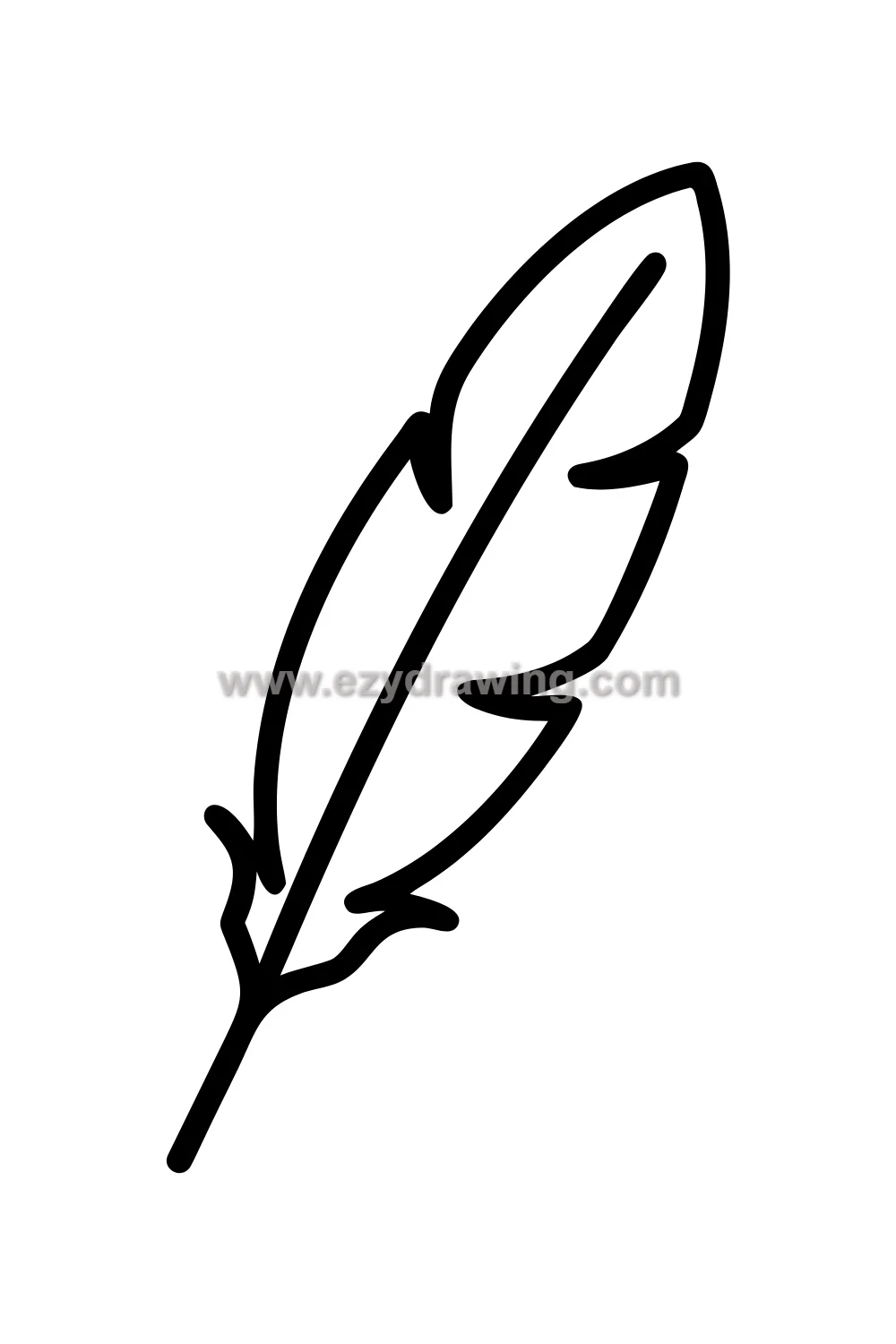
A single feather reveals its extraordinary natural engineering under the careful eye of the realistic artist — the central rachis shaft as the structural backbone from which everything extends, hundreds of individual barb lines radiating outward at consistent angles on both sides, the subtle variations in value across the surface suggesting the iridescence or color marking of the specific feather type, and the calamus base where the shaft begins.
The barb lines are the defining mark-making challenge of this study — each one is a short line radiating from the rachis at a consistent outward angle, drawn with slightly varying pressure to create the soft texture of the vane. The lines should be drawn continuously from rachis outward to the feather edge, creating a rhythm of parallel marks that builds the feather texture convincingly.
This feather study teaches the foundational realistic technique of building texture through consistent directional marks. A meditative and beautifully detailed realistic drawing idea! 🪶
6. Realistic Apple with Light and Shadow
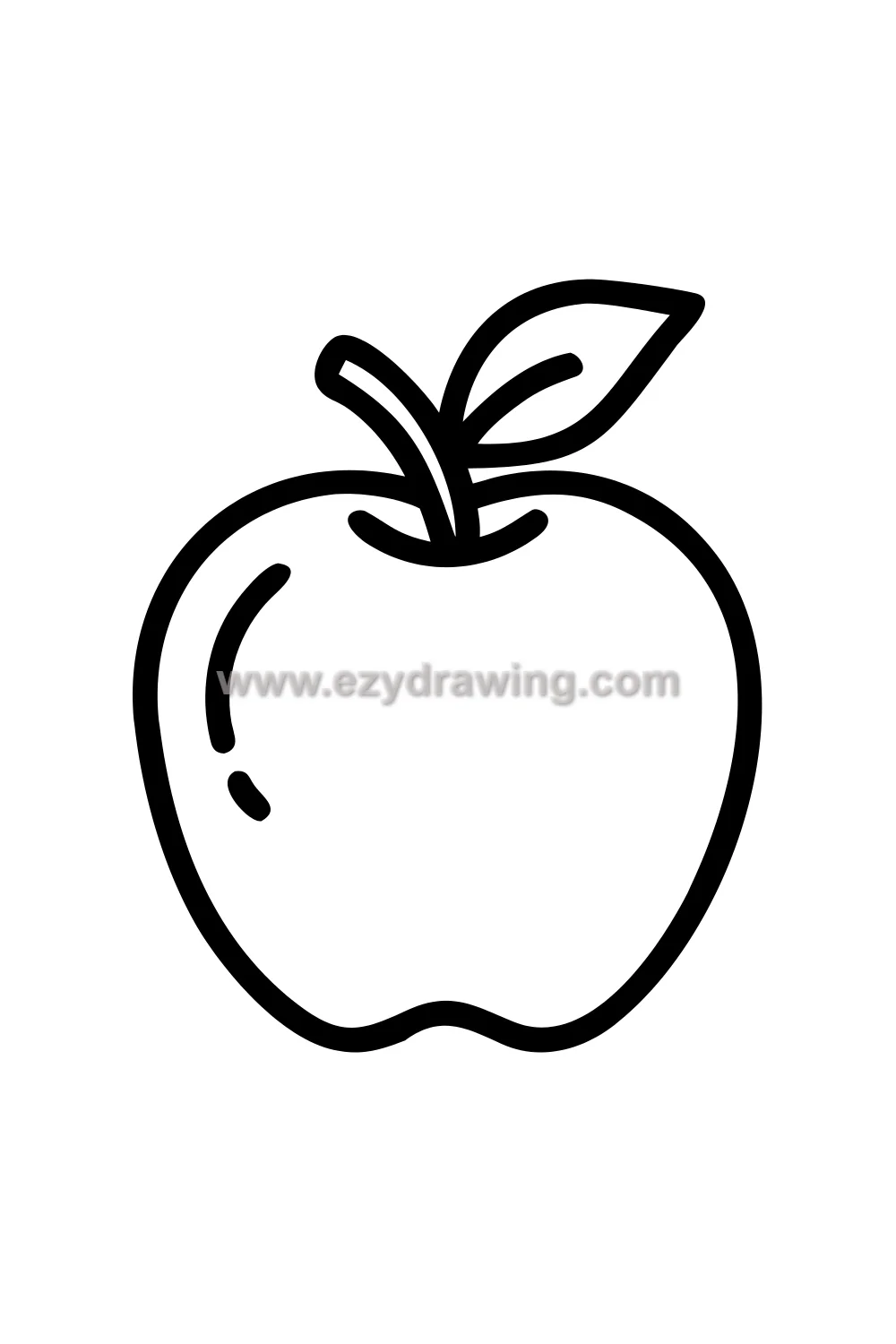
A realistic apple is the perfect complete lesson in three-dimensional form rendering — every element of light behavior on a rounded object is present and clearly demonstrable. The bright specular highlight where direct light strikes the skin most directly, the smooth gradient transition from light through mid-tone to the core shadow on the turning away side, the cast shadow on the surface below, and the subtle reflected light bouncing back into the shadow from the surrounding surface.
These five elements — highlight, light, mid-tone, core shadow, reflected light, and cast shadow — are the complete vocabulary of realistic three-dimensional form rendering, and they appear in this exact relationship on every rounded object regardless of its complexity. Master them on the apple and they transfer directly to spheres, faces, figures, and every other rounded form.
This apple study is possibly the single most educationally complete realistic drawing exercise a beginner can attempt. An absolutely essential realistic drawing idea! 🍎
Check Out More Easy Cute Mandala Drawing Ideas for Beginners
7. Realistic Water Droplets on Surface
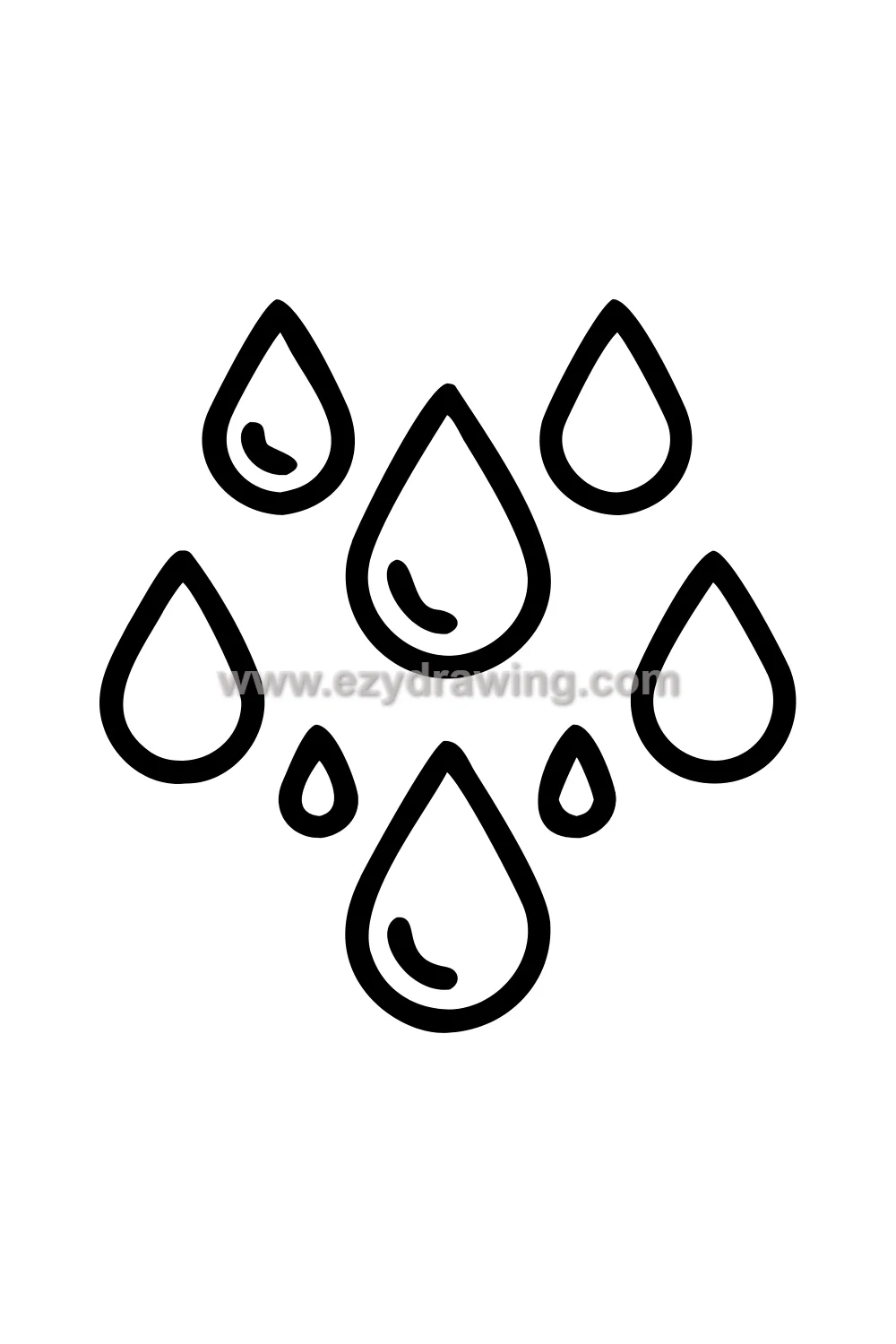
Water droplets are one of the most impressive and surprisingly achievable realistic drawing subjects — each small drop following a specific and learnable pattern of light behavior that creates the convincing illusion of transparent liquid sitting on a surface. The bright highlight on the upper surface, the darkening at the base where light bends through the curved liquid, the cast shadow below with a thin light gap between droplet and shadow edge, and the internal reflected light all combine to make a flat pencil mark read as a transparent sphere.
The thin light gap between the bottom of the droplet and the beginning of its cast shadow is the single most important detail in a convincing water droplet drawing — this gap exists because light travels under the droplet from the side before creating the shadow beyond it. This one detail, when included, instantly makes water droplets look genuinely real.
This study produces one of the most impressive results-to-difficulty ratios in all of realistic drawing. A remarkably achievable realistic drawing idea! 💧
8. Realistic Butterfly Wings
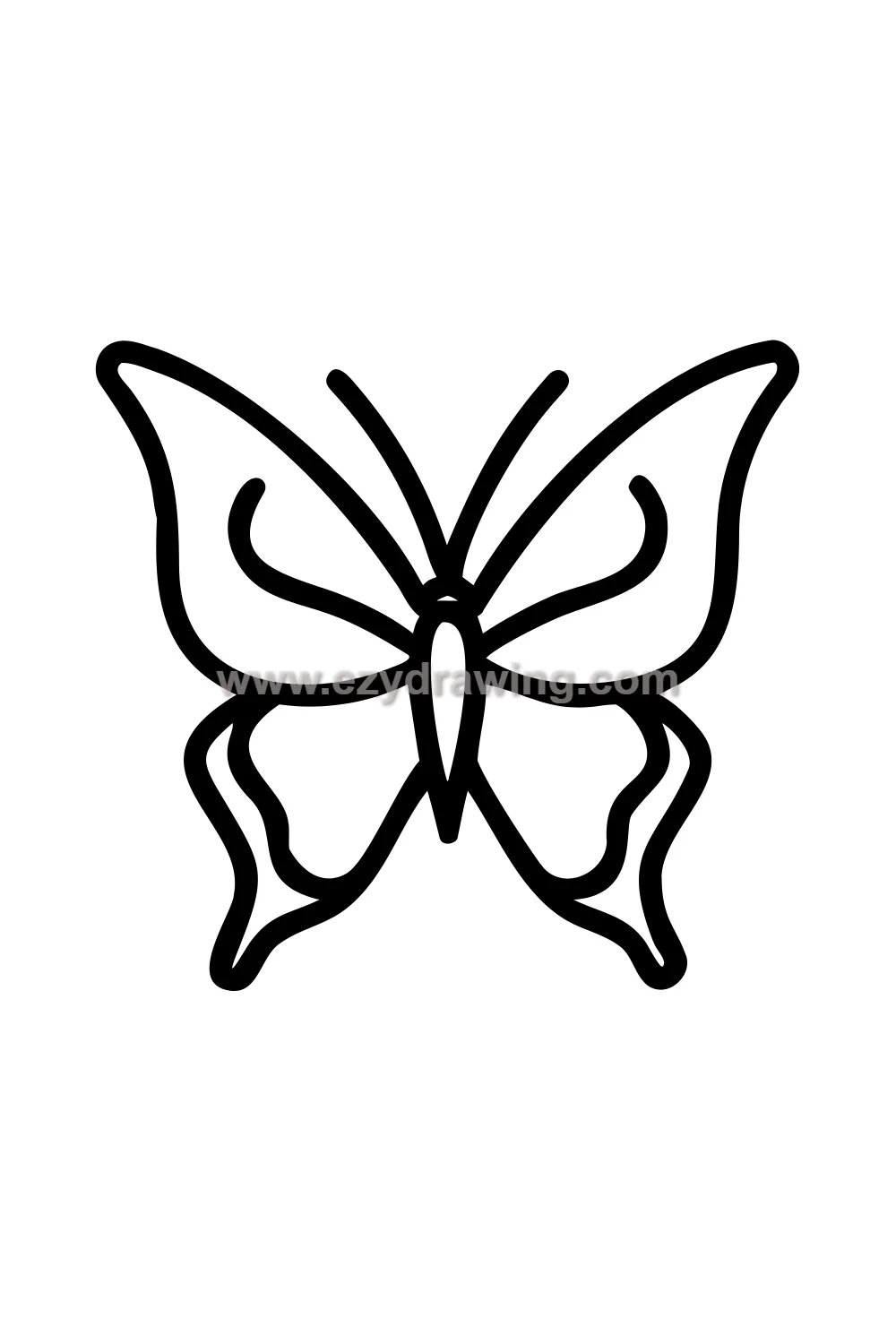
A realistic butterfly spread in display position reveals the extraordinary natural artistry of its wing design — the vein structure dividing each wing into a network of cells like the leading of a stained glass window, the characteristic markings of the species rendered in their specific shapes and value relationships, and the subtle scale texture that gives butterfly wings their distinctive powdery softness when suggested through careful shading.
The wing vein structure is drawn first as a network of branching lines following the characteristic pattern of the specific butterfly species — these veins create the compositional framework of the wing and the cells they define then receive the markings and color values. The eye spots on many butterfly wings are among the most beautiful and satisfying details in all of nature drawing.
This butterfly study connects the artist to the breathtaking precision of entomological illustration. A stunningly detailed realistic drawing idea! 🦋
9. Realistic Portrait Nose and Lips
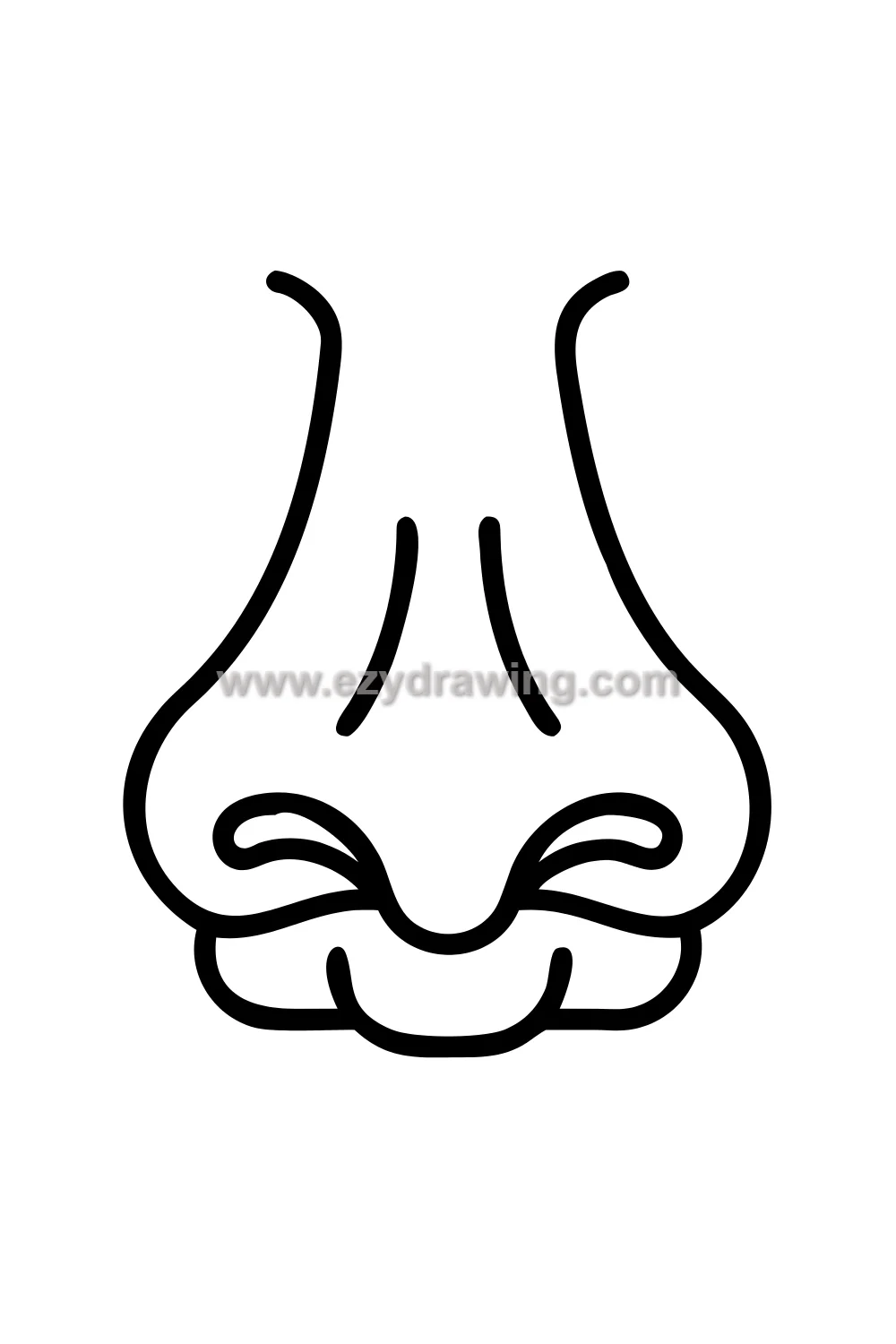
This nose and lips study addresses two of the most important and most commonly avoided areas of realistic portrait drawing — the nose with its complex three-dimensional structure of bridge, tip, alar wings, and columella requiring careful value rendering to describe without relying on outlines, and the lips with their characteristic form highlight on the lower lip surface and the subtle Cupid’s bow of the upper lip.
The nose is one of the most technically interesting portrait elements because it is rendered almost entirely through value rather than line — the nostrils are not outlined but described through the shadow shapes within and around them, and the tip of the nose is defined by the shadow beneath it rather than a drawn circle. This value-first approach to the nose is a fundamental realistic drawing skill.
This study directly improves portrait drawing quality for anyone who completes it seriously. A technically transformative realistic drawing idea! 👃
10. Realistic Fabric Folds and Drapes
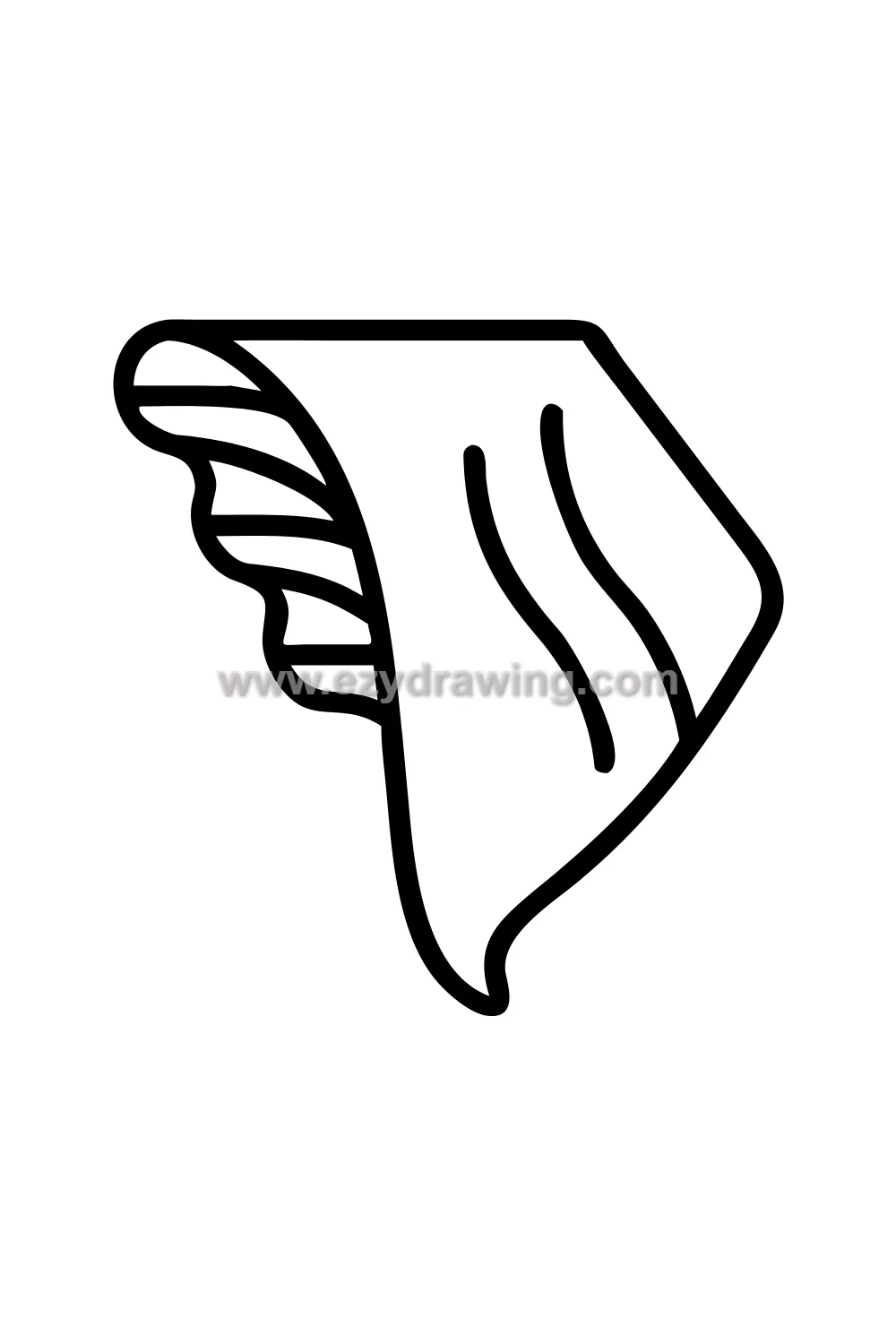
Fabric folds are one of the most important and most transferable realistic drawing skills — every clothed figure, every draped interior, every still life with textile elements requires the understanding of how fabric creates its characteristic fold patterns. The ridges of folds catch the light and are drawn as the lightest values, the valley depths fall into shadow and receive the darkest marks, and the smooth fabric surfaces between them carry the graduated mid-tones.
The key insight about fabric folds is that they are not random — they follow predictable patterns based on where the fabric is supported, where it hangs free, and where it is pulled by gravity or tension. Pipe folds hang in parallel tubes from a support point, diaper folds span between two support points, and zigzag folds stack where fabric pools on a surface. Understanding these patterns makes fabric drawing feel logical rather than overwhelming.
This fabric study improves every figure drawing that involves clothing. A deeply practical realistic drawing idea! 👗
11. Realistic Wood Grain Texture
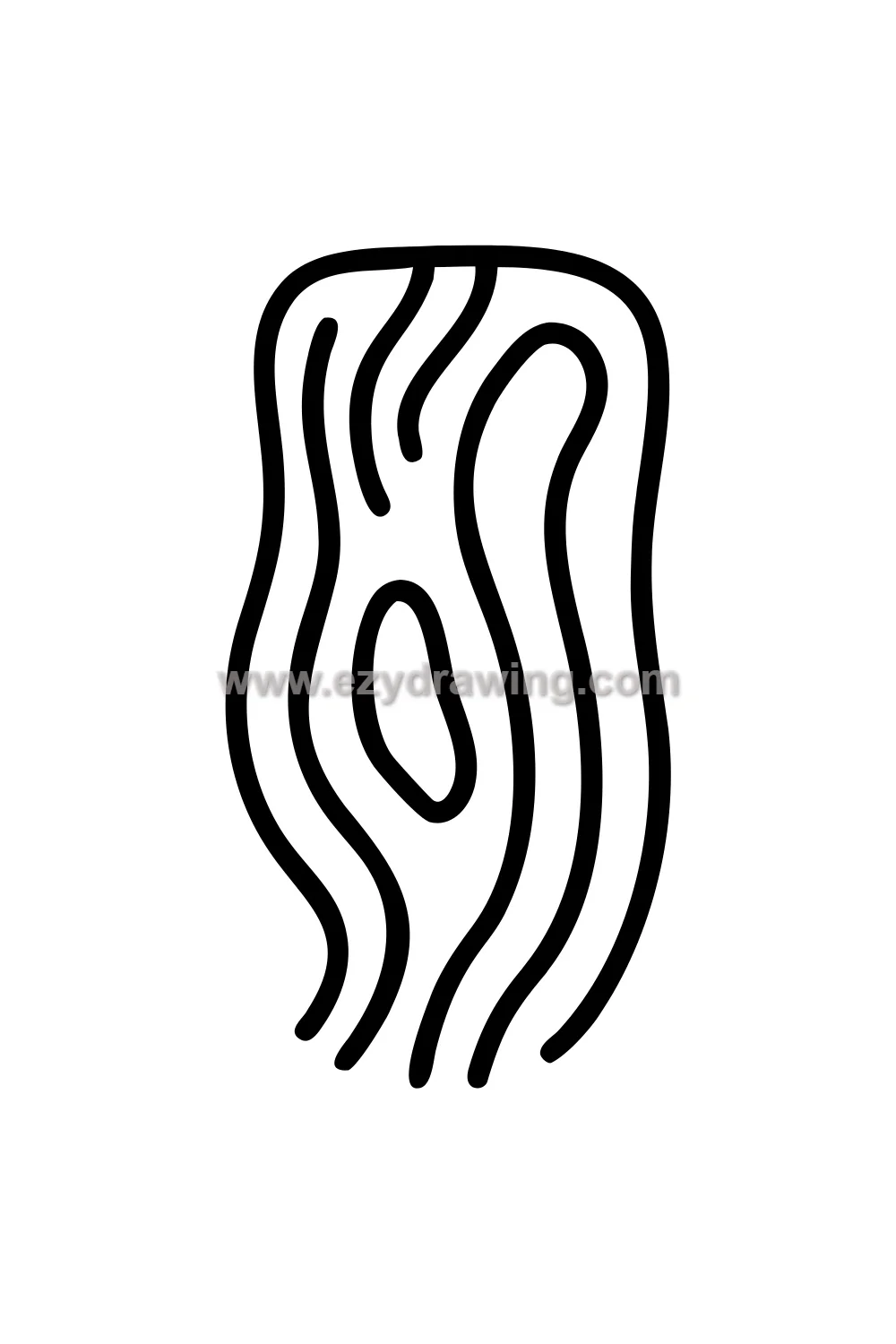
A realistic wood grain study captures one of nature’s most beautiful and distinctive textures — the flowing parallel curves of annual growth rings, each line slightly different from its neighbors in darkness and curvature, the dramatic distortion around knots where the grain lines sweep around the circular knot formation, and the variation between lighter softer growth and darker harder growth that creates the characteristic alternating light and dark pattern of real wood grain.
The wood grain lines are drawn as gently curving parallel marks that follow the characteristic kidney-bean or oval shape of the annual rings — not perfectly parallel but organically varied, sometimes slightly closer together and sometimes slightly farther apart, and always with the characteristic asymmetric curve that distinguishes natural wood from any manufactured pattern.
This wood grain study teaches the realistic mark-making technique of building natural organic textures. A meditative and satisfying realistic drawing idea! 🪵
12. Realistic Glass and Reflection
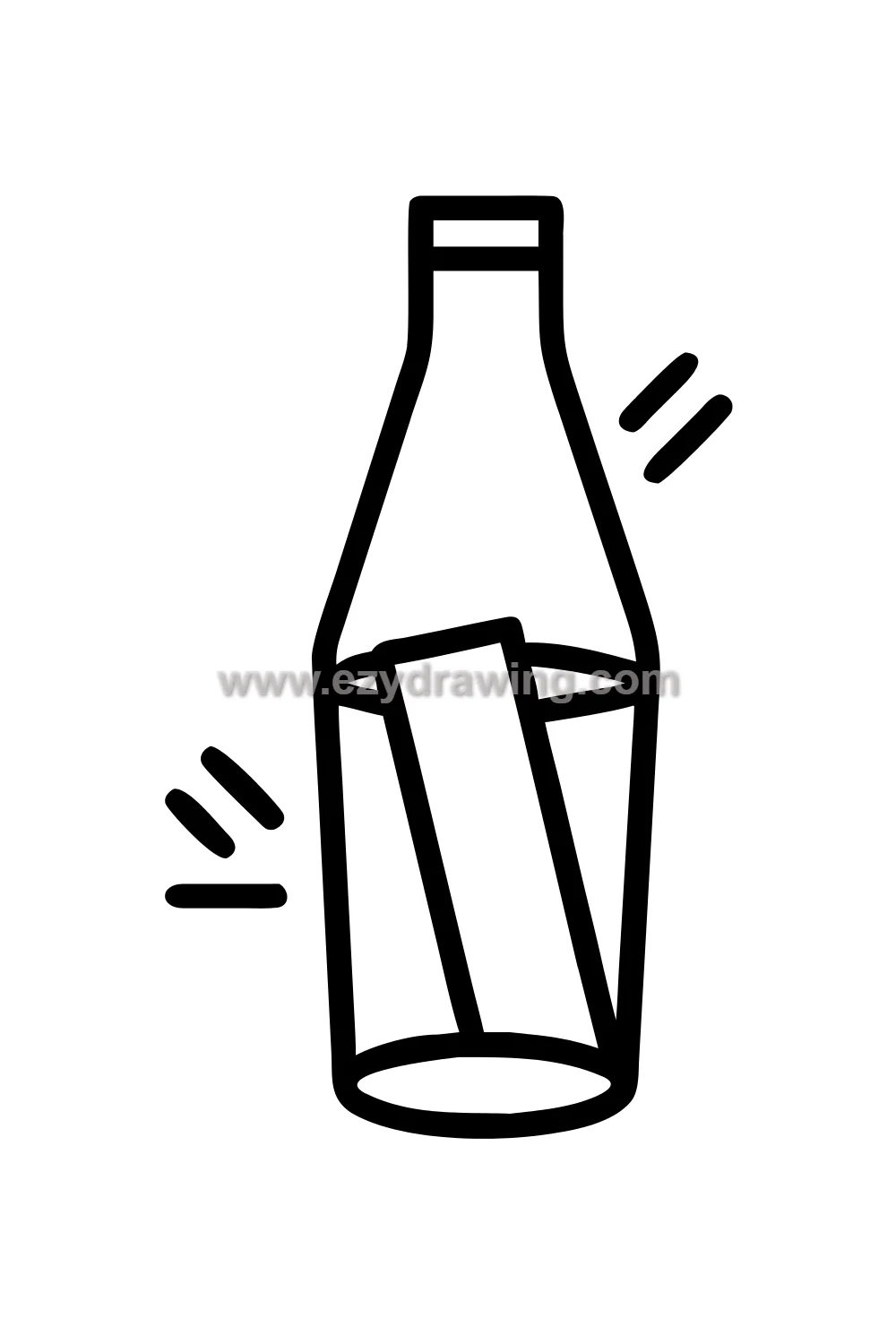
Realistic glass drawing is the ultimate transparency challenge — a glass object simultaneously reflects light from its surface, transmits and distorts light and images through its body, creates caustic light patterns on surrounding surfaces, and defines its own edges through rim highlights rather than outlines. All of these optical behaviors happening simultaneously on one object makes glass one of the most complex and most rewarding realistic subjects.
The key to convincing glass drawing is understanding that the glass object is largely defined by what happens around and through it rather than by the glass itself. The distorted images visible through the curved glass body, the bright rim highlights that define the glass edges, and the cast light patterns on the surface below are all more visually important than any marks on the glass surface itself.
This glass study teaches the advanced realistic skill of drawing transparency and optical complexity. A technically fascinating realistic drawing idea! 🔮
13. Realistic Self Portrait
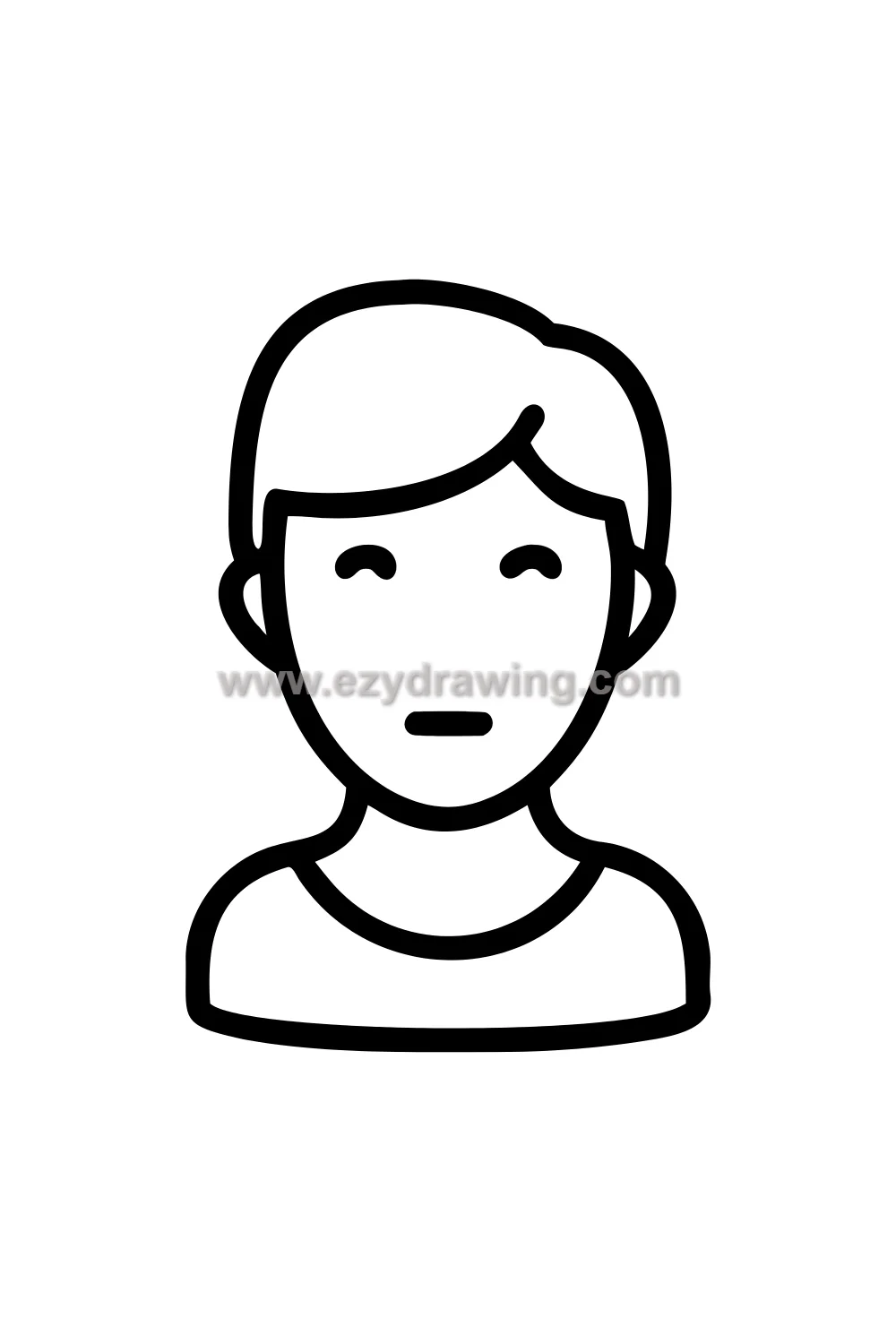
The realistic self portrait is the most personal and most demanding of all realistic drawing subjects — your own face, observed in a mirror with complete honesty, drawn not as you imagine yourself but as you actually are, with your specific and unique proportions, the particular shapes of your features, and the exact character that lives in your expression. This is the drawing that every great artist has always returned to.
The self portrait has two great advantages as a drawing subject — your face is always available as a reference and it never gets tired of posing. The mirror setup creates a consistent and controllable lighting situation, and the challenge of truly seeing your own face rather than drawing your idea of your face teaches the fundamental realistic drawing lesson more powerfully than any other exercise.
This self portrait is the perfect final realistic drawing idea because it combines every skill developed throughout this list — form rendering, texture, value, proportion, and the patient observation that is the foundation of all realistic drawing — into one unified, personal, and profoundly meaningful creative act. The most complete and important realistic drawing idea to end on! 🪞
Congratulations on exploring all 13 realistic drawing ideas! 🎨 From the close-up study of a single eye to the profound self examination of a self portrait, you have traveled through the full range of realistic drawing practice and discovered how careful observation, patient mark-making, and the understanding of light and shadow can transform pencil marks into convincing illusions of reality.
Realistic drawing is ultimately a practice of deep attention — the more carefully you see, the more truthfully you draw, and the more truthfully you draw, the more carefully you learn to see.
Keep observing, keep practicing, and keep marveling at what a pencil can do when guided by genuinely seeing eyes! ✨🖍️
✏️ Explore more cute easy drawing ideas with us >>
Easy Cute Anatomy Drawing Ideas
Easy Cute Side Profile Drawing Ideas
Easy Cute Perspective Drawing Ideas
Easy Cute Body Base Drawing Ideas
Easy Cute Eye Drawing Ideas