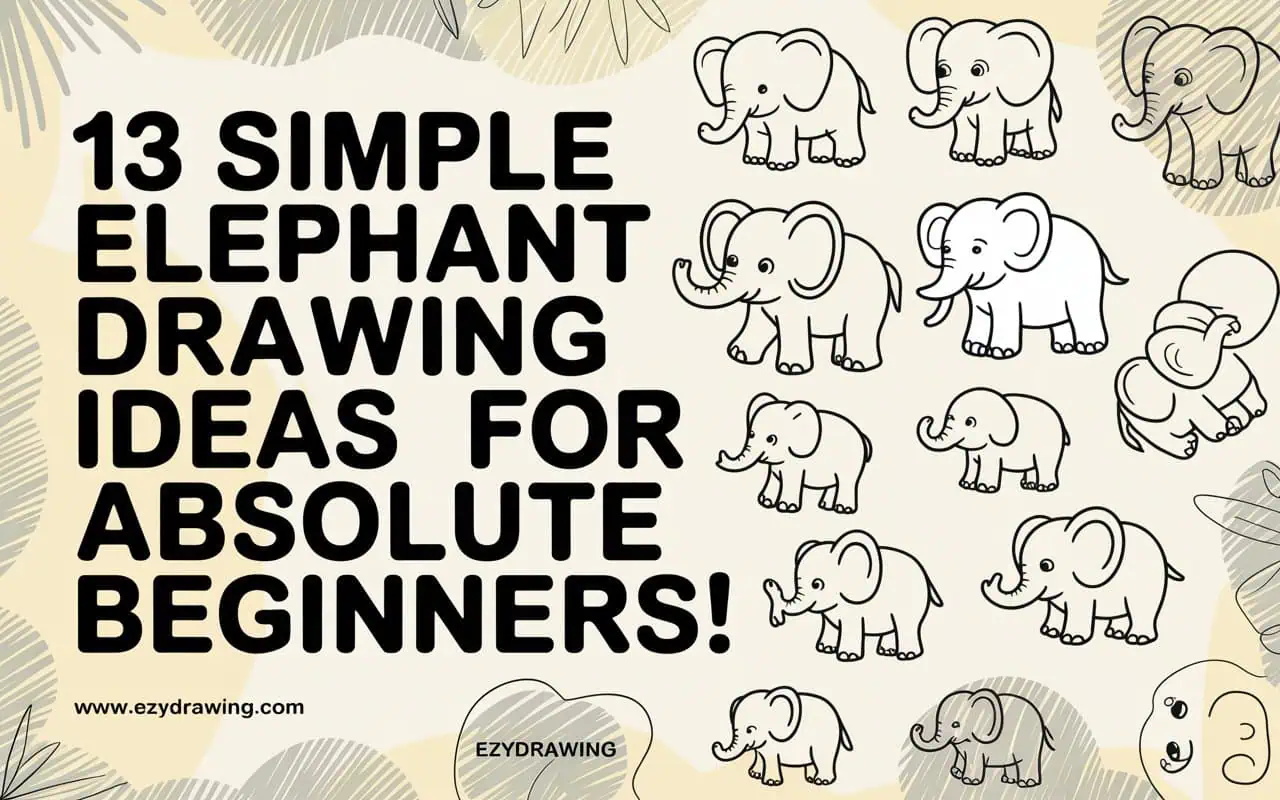
13 Simple Elephant Drawing Ideas for Absolute Beginners
Elephant drawing ideas is one of the most rewarding subjects for artists of all skill levels, especially for anyone interested in animal drawing.
These majestic creatures offer a perfect blend of simple shapes and gentle details that make animal drawing fun and approachable while helping you practice basic forms, proportions, and creative expression in an easy and enjoyable way.
Learning to draw elephants teaches you about proportions, shading, and texture in ways that translate to other subjects. The combination of their distinctive features—large ears, long trunks, and wrinkled skin—provides excellent practice for observational skills.
Whether you’re sketching for relaxation or building your artistic portfolio, mastering elephant drawing ideas opens doors to wildlife art and nature illustration. Let’s explore the best techniques to bring these gentle giants to life on paper.
Best Elephant Drawing Ideas to Learn Drawing Fast
Elephant drawing ideas are a great way to improve your sketching skills quickly and confidently. These ideas focus on simple shapes and smooth lines, making them perfect for beginners.
By practicing easy elephant drawings, you can learn proportions, curves, and basic detailing without feeling overwhelmed. Elephant sketches also help improve hand control and observation skills. With regular practice, you’ll notice faster progress and better accuracy in your drawings.
1. Basic Elephant Silhouette Method
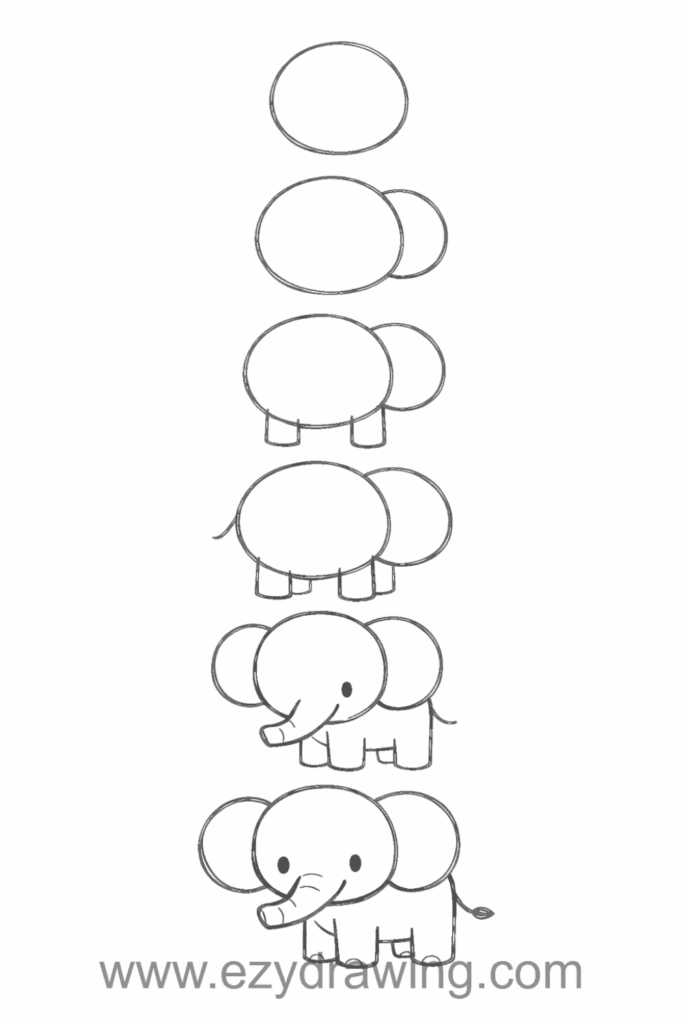
Start your elephant drawing journey with simple shapes that form the foundation. Circle and oval techniques help you establish proper proportions before adding details.
This beginner-friendly approach breaks down the elephant into manageable parts: a large oval for the body, a circle for the head, and cylinders for the legs. Once you’ve mapped out these basic shapes, you can refine the outline and add the trunk, ears, and tail.
Pro Tip: Use light pencil strokes for your initial shapes so you can easily erase and adjust proportions before committing to darker lines. This technique is especially helpful in fox drawing, where starting softly allows you to refine the form naturally and keep the final lines clean and confident..
2. Realistic Elephant Head Drawing
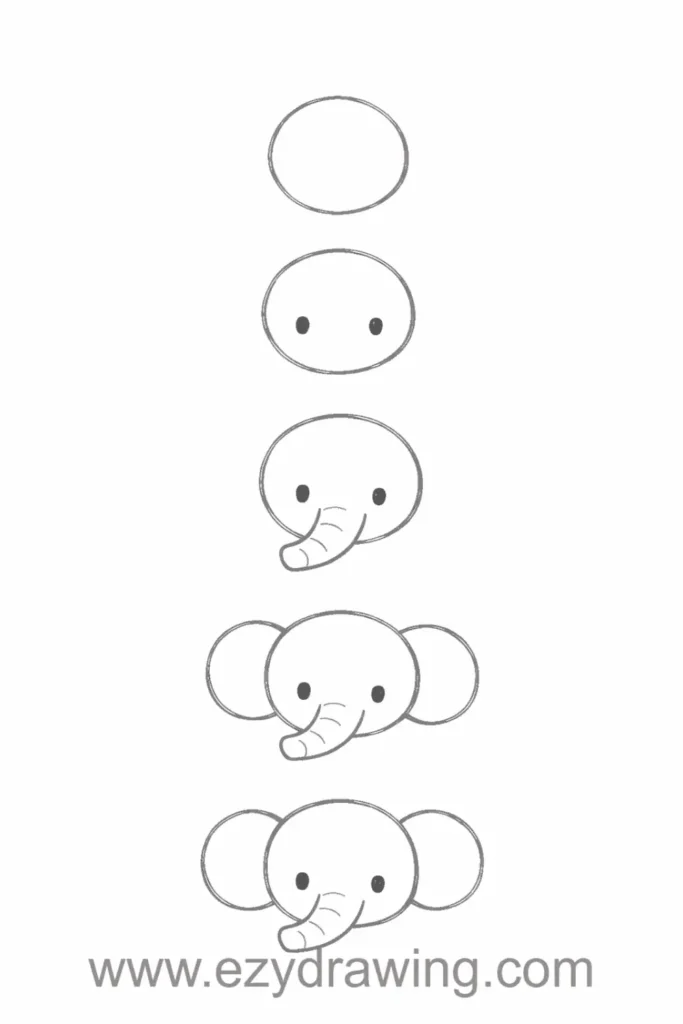
Master the elephant’s facial features by focusing on the head first. Detailed trunk positioning and eye placement are crucial for capturing the animal’s gentle expression and personality.
Pay special attention to the trunk’s segmented appearance and how it naturally curves. The eyes should be positioned on the sides of the head, small relative to the massive skull structure.
Pro Tip: Study reference photos from multiple angles to understand how the trunk connects to the head and how the wrinkles flow naturally around the facial features.
3. Baby Elephant Sketch Technique

Baby elephants offer adorable practice for elephant drawing with their oversized heads and stubby proportions. Their playful poses and innocent expressions make them popular subjects for greeting cards and children’s book illustrations.
Focus on making the head larger in proportion to the body compared to adult elephants. The ears should appear more translucent, and the trunk shorter and chubbier.
Pro Tip: Add personality by positioning the baby elephant in playful poses like a raised trunk, one leg lifted, or standing next to its mother for scale comparison. The same idea applies to snake drawing, where simple pose changes and body curves instantly bring character and life to the illustration..
4. Side Profile Elephant Drawing
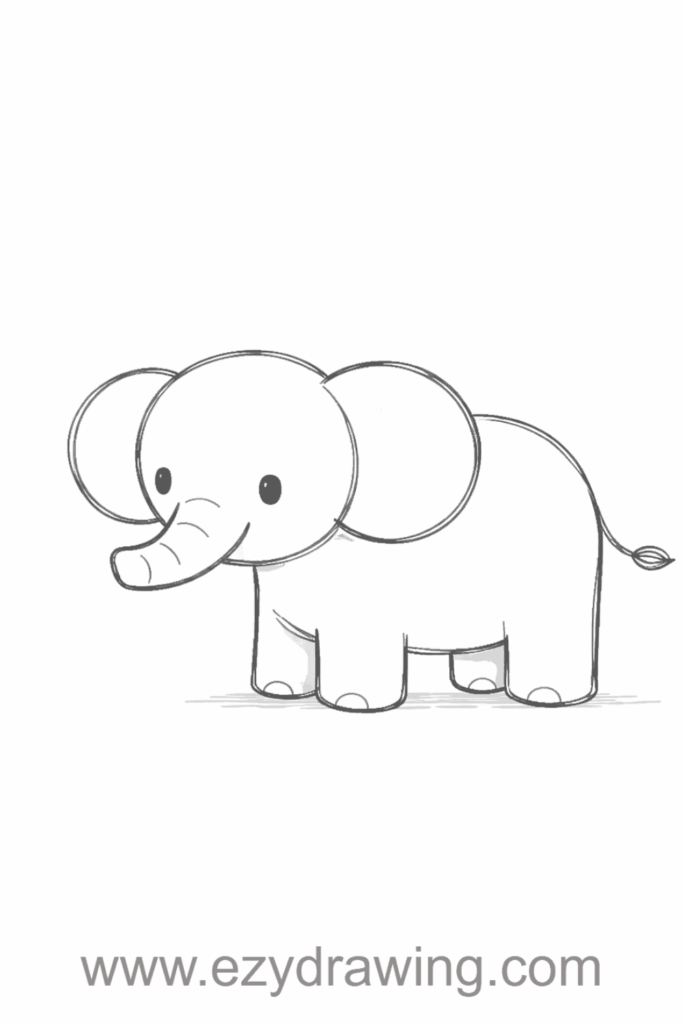
The side profile provides the clearest view of elephant anatomy and is perfect for understanding proportions. This angle showcases the distinctive back curve, trunk length, and leg structure that define elephant silhouettes.
When drawing from the side, establish the highest point at the shoulders or head (depending on the species) and ensure the back slopes appropriately. The legs should appear sturdy with proper joint placement at the knee and ankle equivalents.
Pro Tip: African elephants have concave backs while Asian elephants have convex or level backs—knowing this distinction adds authenticity to your elephant drawing.
Related: Easy Cute Frog Drawing Ideas
5. Elephant Skin Texture and Wrinkles
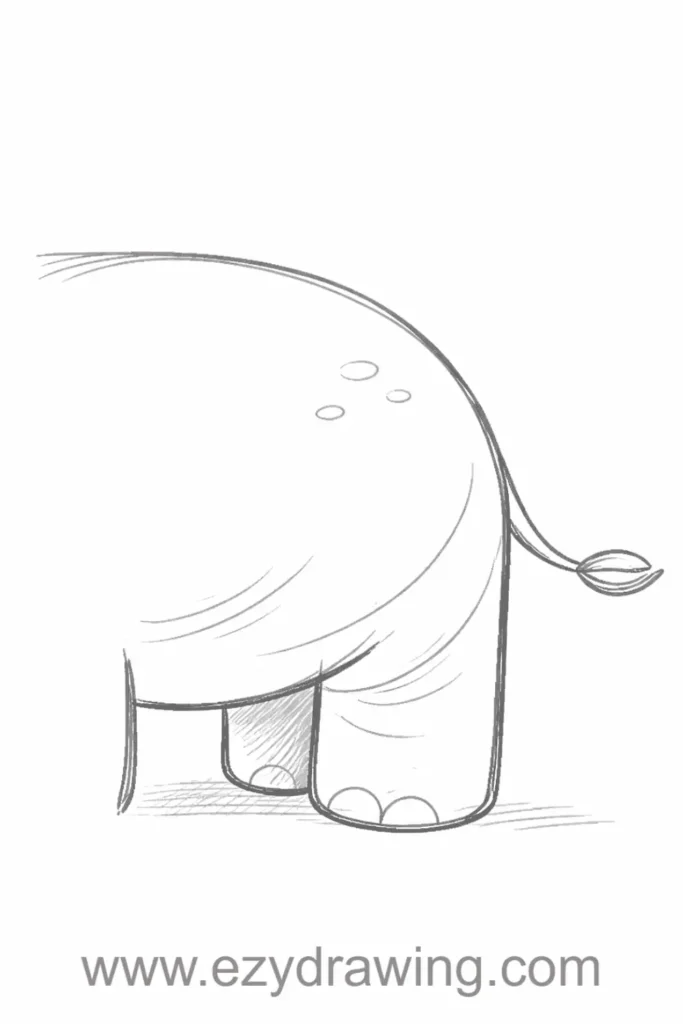
Capturing realistic skin texture transforms a simple elephant drawing into a lifelike masterpiece. Cross-hatching and stippling techniques create the illusion of thick, wrinkled elephant hide.
Start with the major wrinkle patterns that follow the body’s contours, then add smaller details gradually. Concentrate deeper wrinkles around joints, the trunk, and areas where skin naturally folds.
The skin isn’t uniformly textured—vary your approach with smoother areas on younger elephants and more pronounced textures on older individuals.
Pro Tip: Use a blending stump or tortillon to soften some wrinkles while keeping others sharp, creating depth and dimension that makes the skin appear three-dimensional.
6. Elephant Ears Drawing Technique
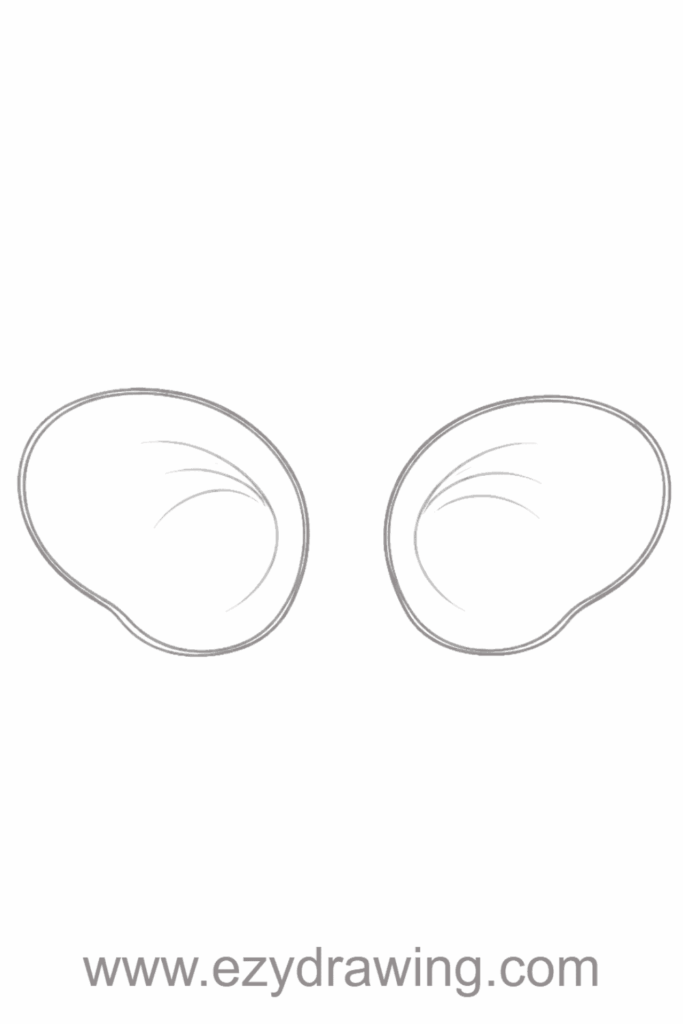
Elephant ears are signature features that require special attention in your elephant drawing. African elephant ears are larger and shaped like the African continent, while Asian elephant ears are smaller and rounded.
Focus on the thin, almost translucent quality of the ears with visible veining patterns. The ears should frame the head naturally, with one slightly overlapping the body when viewed from certain angles.
Pro Tip: Lightly shade the inner ear area to show transparency, and add darker values along the edges where the ear is thickest for realistic dimensionality.
7. Elephant in Motion Drawing
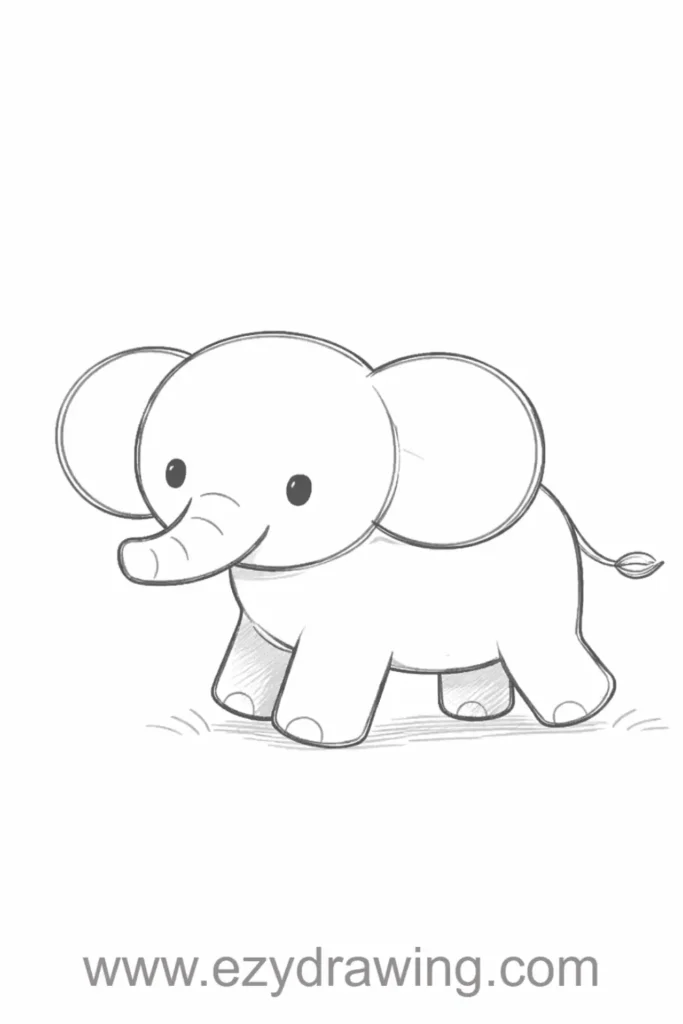
Capturing movement adds dynamic energy to your elephant drawing. Walking poses show weight distribution with diagonal leg pairs moving together in a characteristic gait.
Study how elephants move with surprising grace despite their size. One front leg and the opposite back leg move forward simultaneously, creating a stable walking pattern.
For running poses, all four feet may leave the ground briefly, though elephants can’t truly gallop like horses.
Pro Tip: Add motion blur or dust clouds around the feet to emphasize movement, and position the trunk in an animated curve rather than hanging straight down.
8. Watercolor Elephant Drawing
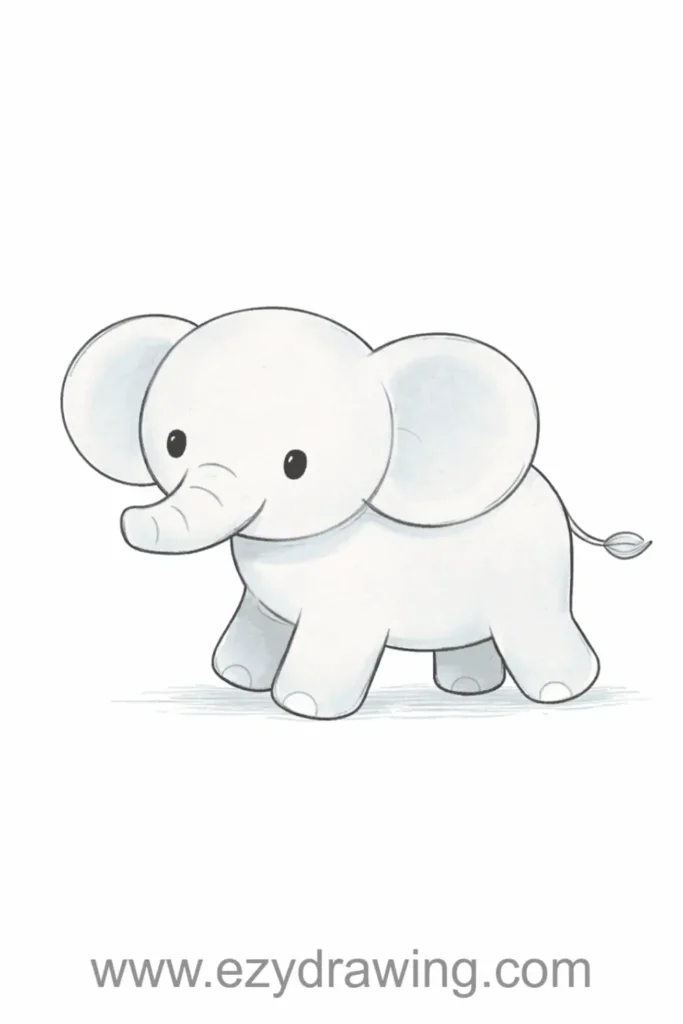
Combining line drawing with watercolor creates stunning elephant drawing artwork. Loose, flowing watercolor washes capture the elephant’s form while maintaining an artistic, expressive quality.
Start with a light pencil sketch, then apply watercolor in layers from light to dark values. Leave the lightest areas untouched to create highlights on the elephant’s back and head.
Pro Tip: Let your initial washes dry completely before adding detail work, and use a damp brush to soften edges where you want the elephant to blend naturally into the background.
9. Cartoon Elephant Drawing Style
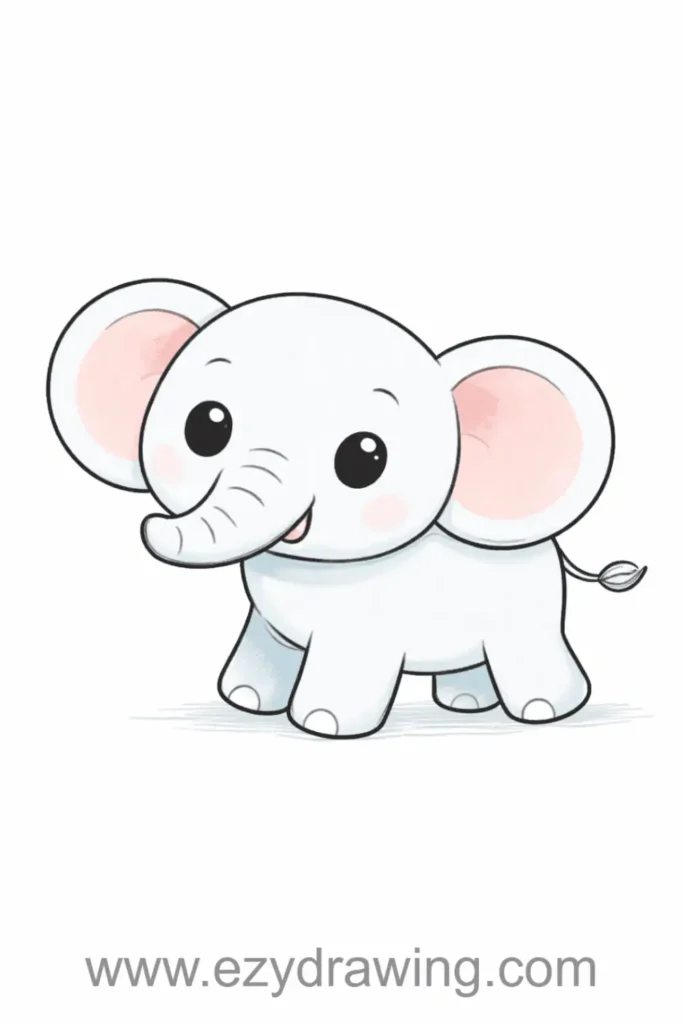
Simplified cartoon styles make elephant drawing accessible and fun for all ages. Exaggerated features like oversized ears and expressive eyes create appealing, character-driven illustrations.
Reduce the elephant to essential shapes with smooth, rounded contours. Emphasize cuteness by enlarging the head relative to the body and adding sparkle to the eyes.
This style works beautifully for children’s books, logos, and decorative art where personality matters more than anatomical accuracy.
Pro Tip: Give your cartoon elephant distinctive characteristics—a flower behind the ear, a particular trunk position, or unique ear shape—to create a memorable character design.
10. Elephant Herd Composition
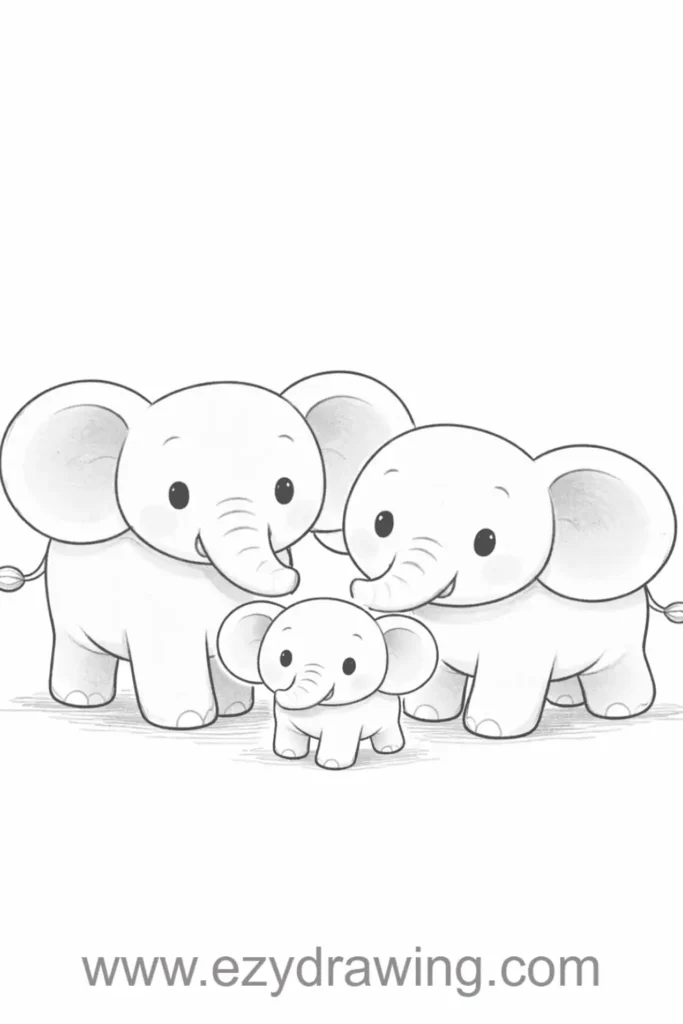
Drawing multiple elephants together challenges your elephant drawing skills with composition and perspective. Overlapping elephants create depth while showing social dynamics of these family-oriented animals.
Vary the sizes to include adults, adolescents, and babies moving together. Position elephants at different depths with smaller, lighter elephants in the background.
Pay attention to how trunks might touch between family members, as elephants use trunk contact for communication and bonding.
Pro Tip: Use atmospheric perspective by making distant elephants lighter and less detailed, while foreground elephants show full texture and contrast for a realistic depth effect.
11. Elephant Tusk and Trunk Detail
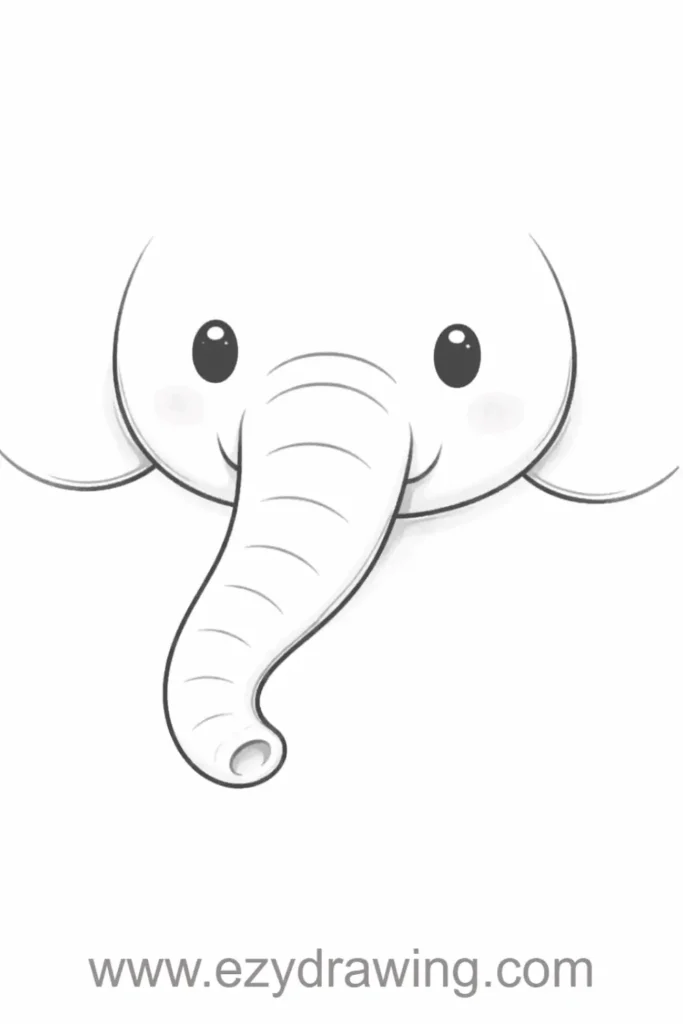
Tusks and trunks are defining features in any elephant drawing. Proper tusk curvature and trunk segmentation add authenticity and character to your artwork.
Tusks curve outward and slightly upward, with variation in length and thickness. Note that only some Asian elephants have visible tusks, while African elephants of both sexes typically have them.
The trunk shows distinct segments with wrinkles encircling it, creating a flexible, muscular appearance. The trunk tip has either one (Asian) or two (African) finger-like projections.
Pro Tip: Draw tusk ivory with a slight sheen using highlights along the curved surface, and remember that tusks narrow toward the tips with visible grain lines running lengthwise.
12. Elephant Eye Expression Drawing
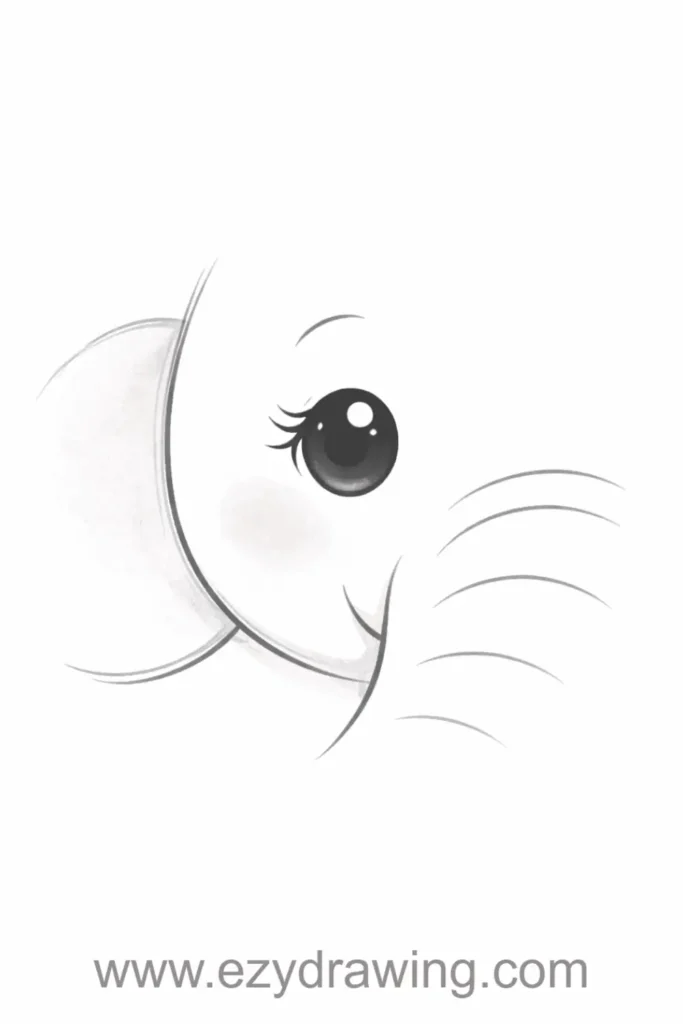
Expressive eyes bring emotional depth to your elephant drawing. The small, intelligent eyes of elephants convey wisdom, sadness, joy, or curiosity depending on your artistic approach.
Position eyes on the sides of the head with thick surrounding skin folds. Add subtle highlights to create the appearance of moisture and life in the eye.
Eyelashes are surprisingly long and should be drawn delicately to frame the eye naturally.
Pro Tip: The area around the eye shows the elephant’s age—younger elephants have smoother skin while older elephants display deeper creases that tell their life story.
13. Elephant with Environmental Context
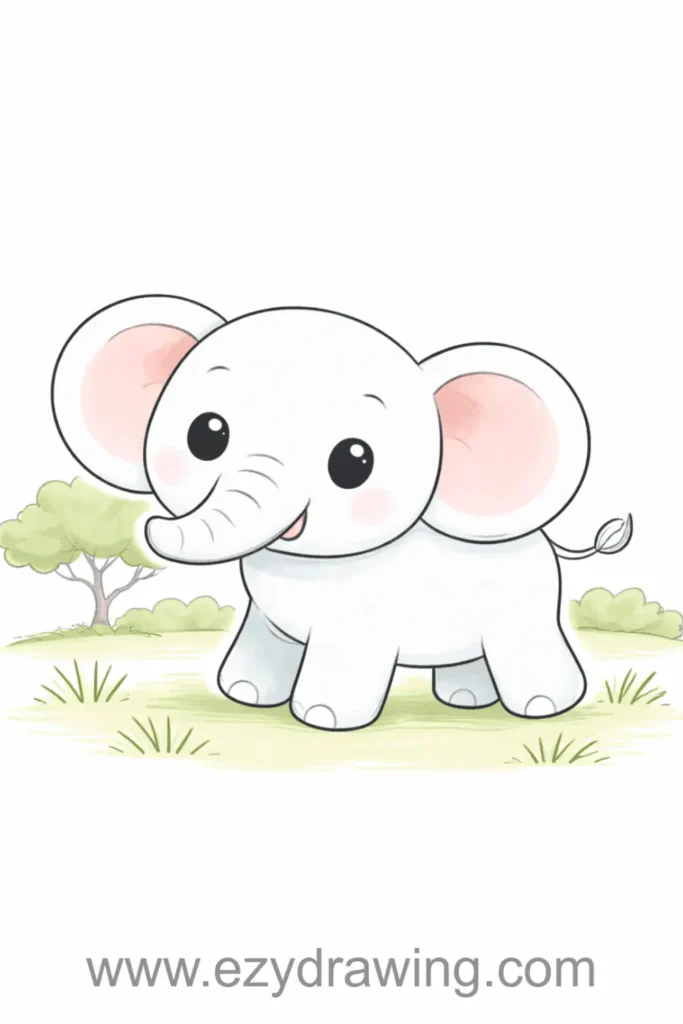
Placing your elephant drawing within its natural habitat creates compelling narrative artwork. Savanna grasslands, acacia trees, and water sources provide authentic environmental context.
Consider the lighting conditions—harsh African sun creates strong shadows, while overcast days provide softer, more even illumination. Add environmental elements that complement rather than overwhelm your elephant subject.
Background elements should be less detailed than the elephant itself, keeping focus on your main subject while providing context.
Why Elephant Drawing Is Worth the Investment
Elephant drawing develops fundamental artistic skills that transfer to countless other subjects. The combination of simple foundational shapes and complex surface details provides the perfect progression from beginner to advanced techniques in a single subject.
Practicing elephant drawing improves your understanding of anatomy, proportion, and three-dimensional form. Mastering wrinkle patterns and texture work enhances your ability to render any animal or organic subject with greater realism and confidence.
The time invested in elephant drawing pays dividends across your entire artistic journey. These skills become building blocks for wildlife art, illustration, character design, and even abstract work that requires strong foundational drawing abilities.
Things to Consider Before Choosing Elephant Drawing References
Quality reference photos determine the success of your elephant drawing ideas project. High-resolution images showing clear details of skin texture, lighting, and anatomy provide the visual information necessary for accurate rendering.
Consider the elephant species when selecting references for your elephant drawing—African and Asian elephants have distinct differences. African elephants have larger ears, concave backs, and two trunk fingers, while Asian elephants are smaller with convex backs and one trunk finger.
Lighting conditions in reference photos dramatically affect your elephant drawing outcomes. Strong directional lighting reveals form and texture better than flat, overcast lighting, giving you clear shadow patterns to follow for dimensional accuracy.
Other Articles You May Like
Easy Cute Hibiscus Flower Drawing Ideas
Easy Cute Turtle Drawing Ideas
Easy Cute Car Drawing Ideas
Easy Cute Goofy Drawing Ideas
Easy Cute Sunflower Drawing Ideas