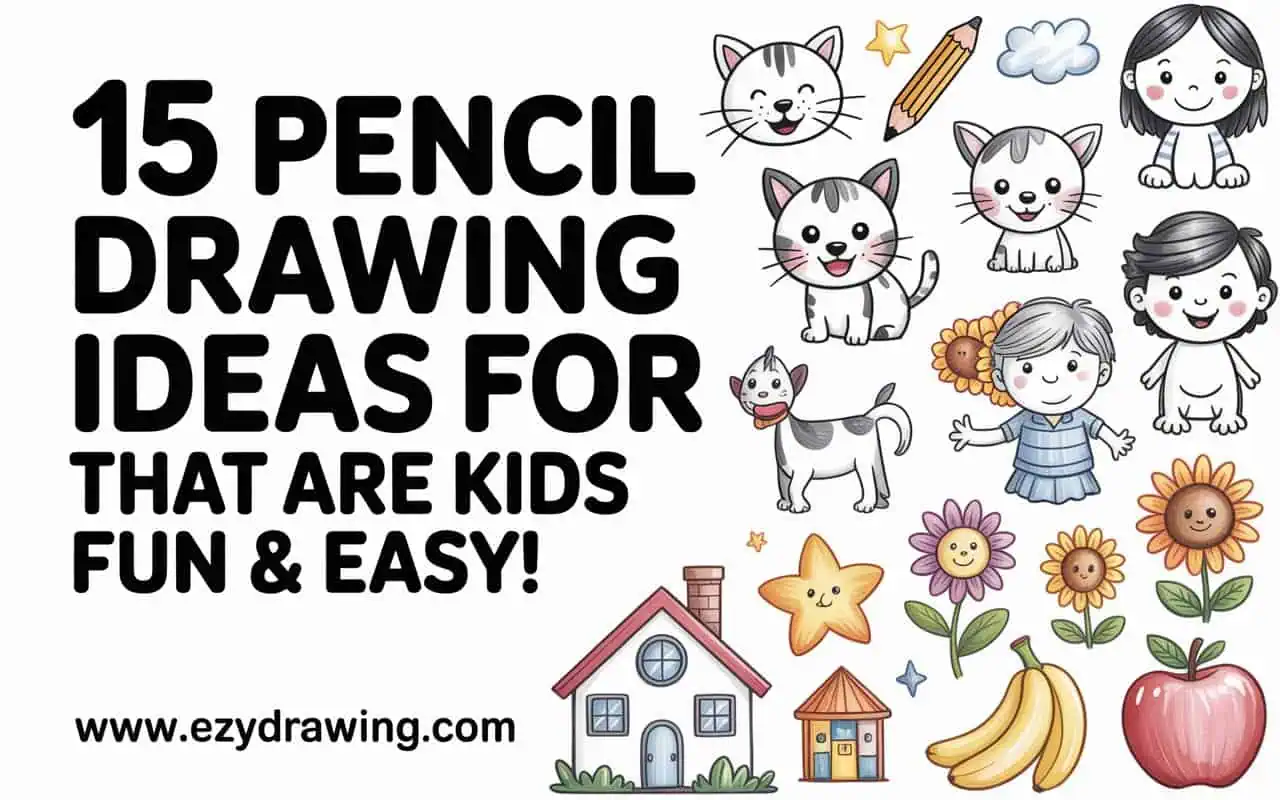
15 Pencil Drawing Ideas for Kids That Are Fun & Easy
Finding the right pencil drawing ideas for kids can transform ordinary afternoons into creative adventures that build confidence and artistic skills.
Simple sketching and practice drawing activities help young artists develop fine motor control while exploring their imagination in a low-pressure, forgiving medium.
Drawing with pencils offers children an accessible entry point into the world of art without expensive supplies or complicated techniques.
From basic shapes to whimsical characters, body base drawing helps kids understand simple forms and proportions while allowing them to experiment, erase, and refine their creations at their own pace.
These carefully selected pencil drawing ideas for kids range from beginner-friendly projects to slightly more challenging concepts that grow with your child’s abilities.
Each idea encourages creative thinking while teaching fundamental drawing skills that will serve them throughout their artistic journey.
Pencil Drawing Ideas for Kids to Learn and Have Fun
Pencil drawing ideas for kids are a wonderful way to boost creativity while helping them learn basic art skills in a fun and stress-free way.
Simple subjects like animals, cartoons, flowers, houses, trees, fruits, and everyday objects allow children to practice shapes, lines, and shading without feeling overwhelmed.
Adding eye drawing ideas also helps kids understand expressions and facial details in an easy, playful manner. Drawing scenes from nature, favorite story characters, or playful patterns encourages imagination and improves hand-eye coordination.
These easy pencil drawing activities help kids develop focus, confidence, and self-expression, making learning enjoyable while turning art time into a fun and rewarding experience ✏️🎨
1. Friendly Cartoon Animals
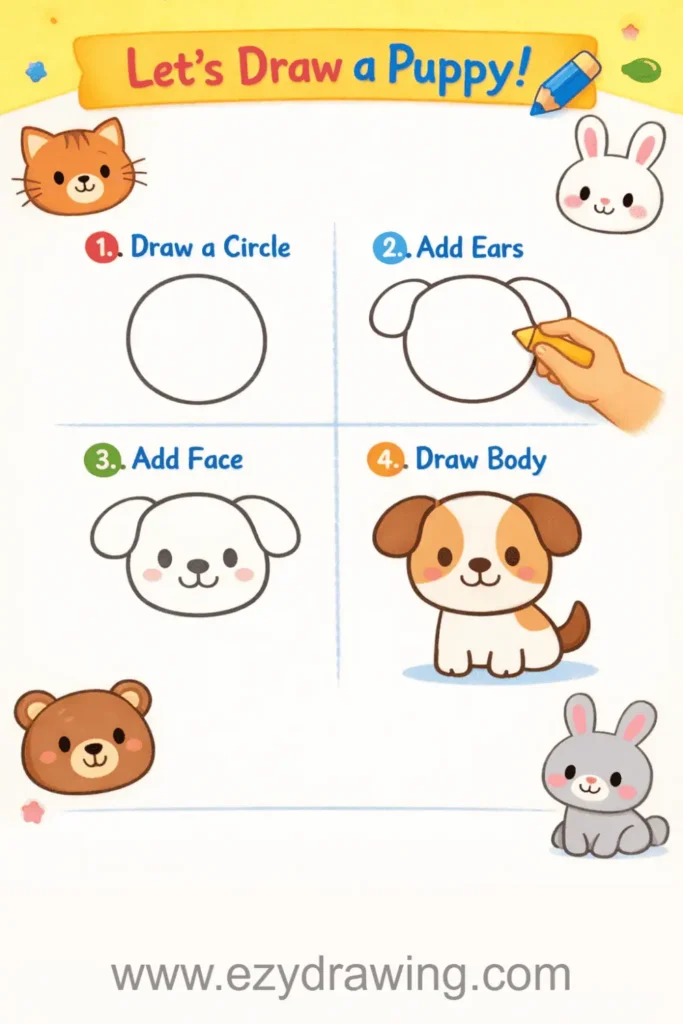
Start with simple shapes to create adorable cartoon animals that kids absolutely love. Circles, ovals, and triangles become the foundation for bears, cats, rabbits, and puppies with just a few strategic lines.
This approach teaches children how complex drawings break down into basic geometric shapes, building their confidence with each completed creature. Young artists can add personality through expressive eyes, silly smiles, and playful poses.
Pro Tip: Encourage kids to draw their favorite pet or stuffed animal first—the emotional connection makes them more invested in getting the details right, and they’ll naturally observe proportions more carefully.
2. Underwater Ocean Scenes
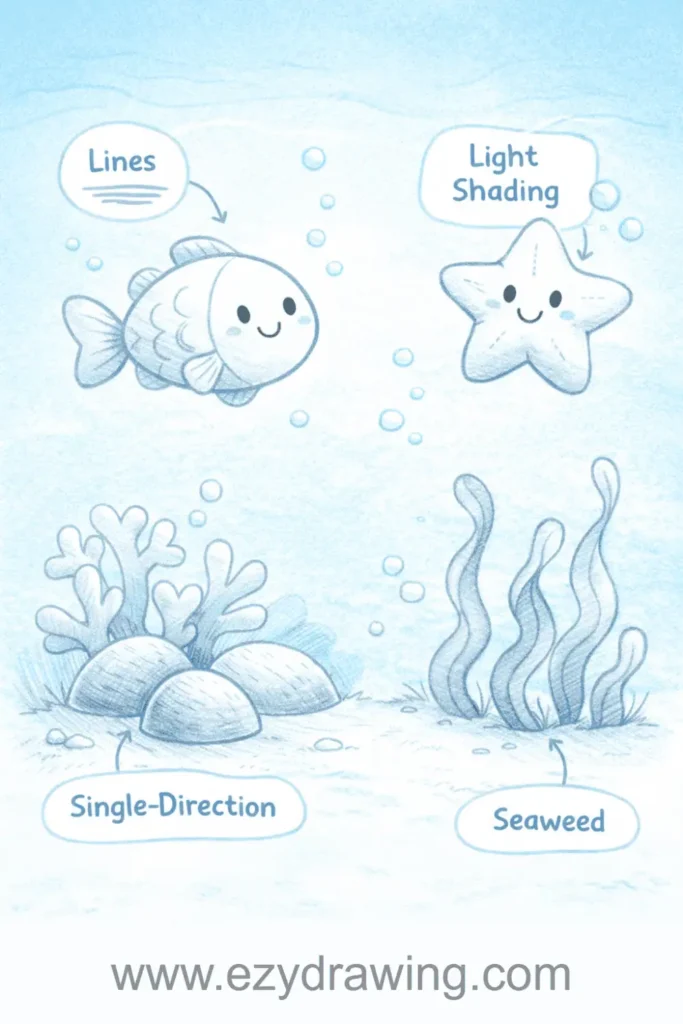
Ocean drawings let kids explore imagination while practicing different textures and patterns through fish scales, coral formations, and wavy seaweed. The underwater theme provides natural boundaries that make composition easier for beginners.
Children can fill their ocean with jellyfish, starfish, sea turtles, and colorful fish swimming among bubbles and treasure chests. This subject matter encourages layering and teaches how objects appear closer or farther away.
Pro Tip: Show kids how to use the side of their pencil for soft shading to create water depth, and the point for defining individual details like fish fins and coral textures.
Related: 10+ Easy Cute Doodles Drawing Ideas
3. Fantasy Castle Drawings
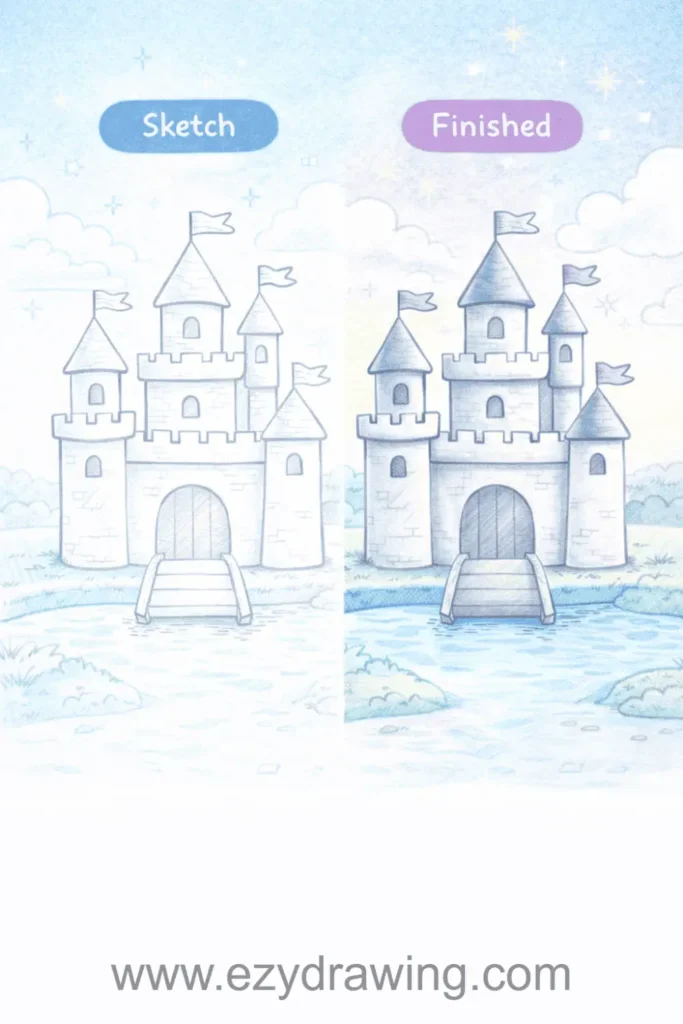
Castle drawings combine geometric precision with creative freedom, teaching kids about symmetry, patterns, and architectural elements. Towers, flags, drawbridges, and stone walls offer repetitive shapes that build drawing confidence.
Pro Tip: Use a ruler for the main castle walls and towers to create clean lines, then let kids freestyle the decorative elements like flags, windows, and surrounding landscape for a perfect balance of structure and creativity.
4. Silly Monster Characters

Monster drawings free kids from realistic expectations since there’s no wrong way to draw an imaginary creature. Multiple eyes, wild hair, funny teeth, and unusual body shapes all work perfectly.
This drawing idea particularly helps anxious perfectionists relax and enjoy the creative process. Encourage experimentation with different expressions, sizes, and combinations of features that would never exist in nature.
Pro Tip: Create a “monster parts” reference sheet together—different eye styles, mouth shapes, horn options, and body types—that kids can mix and match when they’re feeling stuck for ideas.
Related: 13+ Easy Cute Drawing Sketches Ideas
5. Simple Landscape Horizons
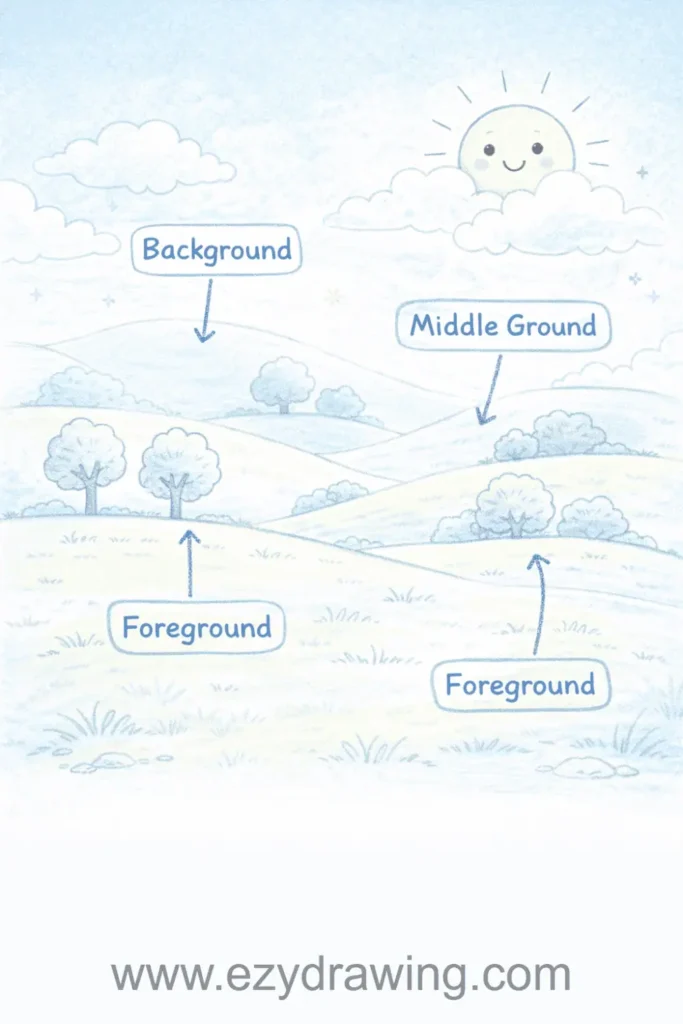
Teaching basic landscape composition helps kids understand foreground, middle ground, and background relationships through simple horizon lines. Rolling hills, trees, clouds, and a sun create peaceful scenes with minimal complexity.
Start with a horizontal line dividing sky from land, then add graduated elements that get smaller toward the horizon to introduce perspective naturally. This foundational skill applies to countless future drawings.
Pro Tip: Use different pencil pressures for different distances—press harder for close objects and lighter for distant ones to create natural depth without complicated shading techniques.
6. Fruit and Vegetable Still Life
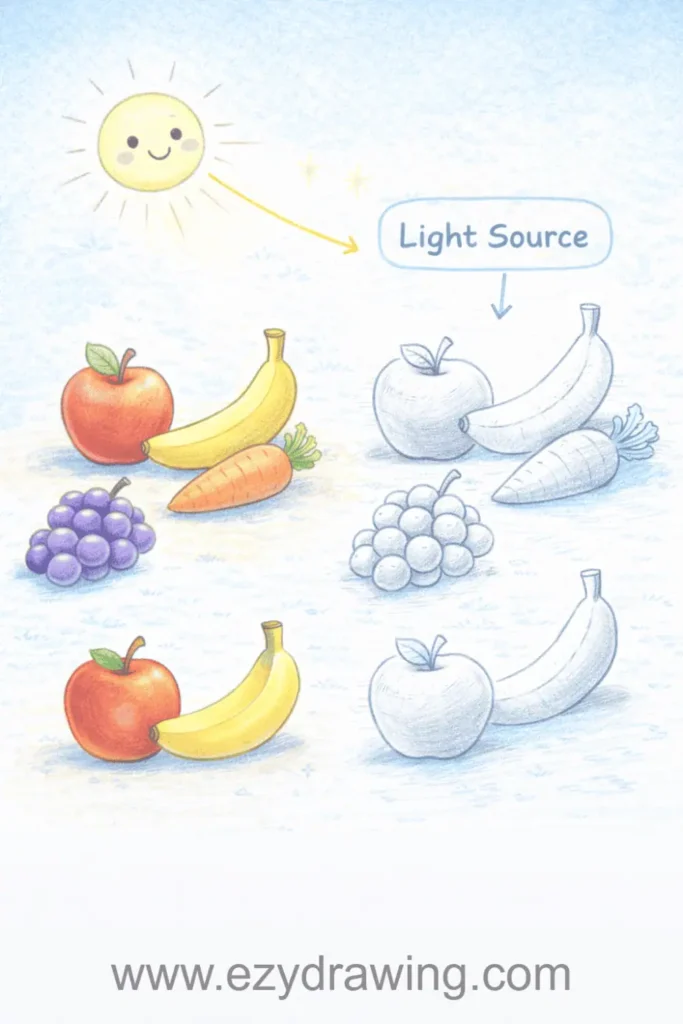
Drawing fruits and vegetables teaches observation skills, basic shading, and organic shapes through familiar objects. Apples, bananas, grapes, and carrots offer varied forms that introduce different drawing challenges.
These subjects help kids learn how light creates highlights and shadows on three-dimensional objects. Start with single items, then progress to simple arrangements of two or three pieces.
Pro Tip: Place a real apple or orange under a desk lamp so kids can see exactly where shadows fall and highlights appear—direct observation makes shading concepts click instantly.
Related: 12+ Easy Cute Frog Drawing Ideas
7. Outer Space Adventures
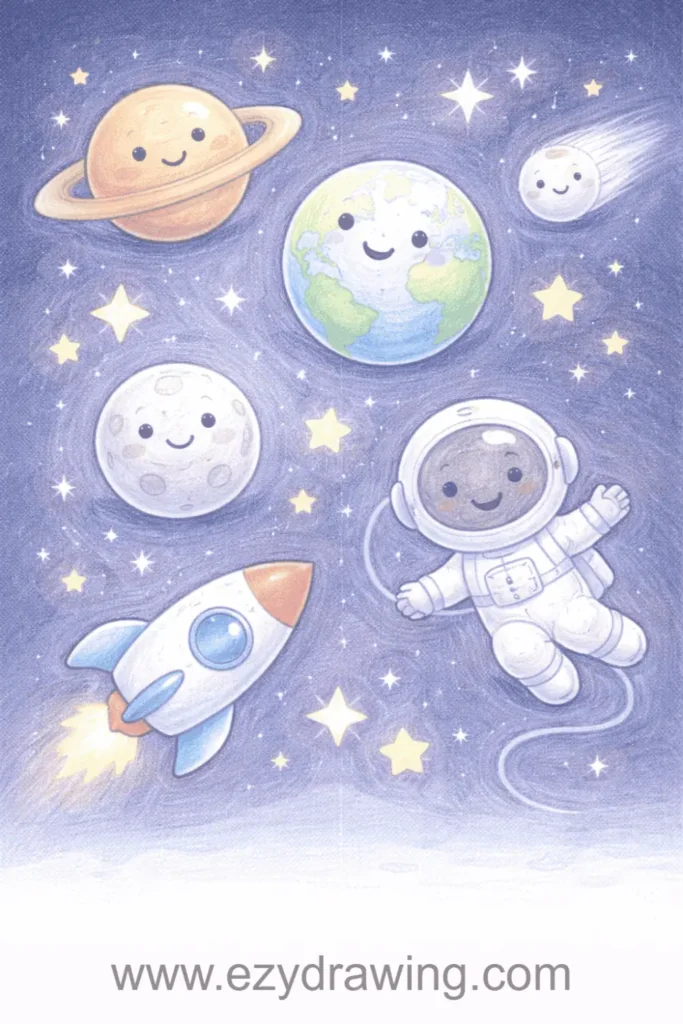
Space drawings captivate kids while teaching them to work with circles for planets, stars, rockets, and astronauts against dark backgrounds. This theme naturally introduces contrast and negative space concepts.
Planets with rings, craters, and different textures provide excellent shading practice. Add comets, satellites, and alien spacecraft to personalize each cosmic creation.
Pro Tip: For younger children, trace circular objects like cups or lids to create perfect planets, then focus creative energy on decorating each one with unique patterns and features.
8. Family Portrait Faces
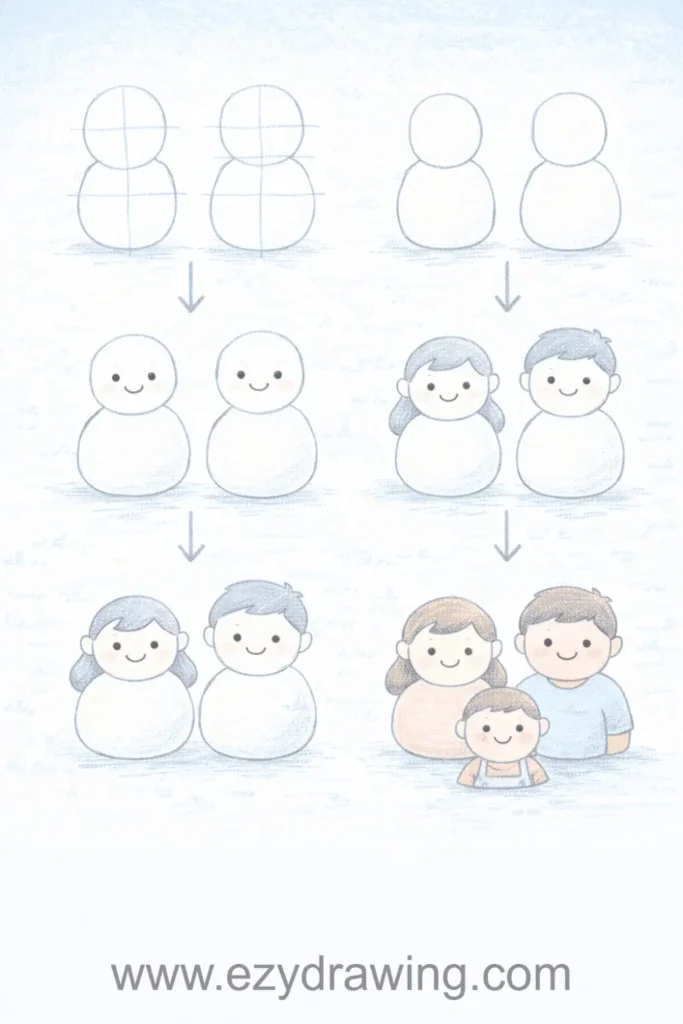
Portrait drawing teaches facial proportions, expressions, and capturing personality through simplified approaches. Start with basic oval shapes, then add guidelines for eyes, nose, and mouth placement.
Kids learn that eyes typically sit halfway down the head and other surprising proportion rules. Drawing family members makes practice meaningful and creates treasured keepsakes.
Pro Tip: Take reference photos at eye level with good lighting, then encourage kids to notice unique details like glasses, hairstyles, and smiles that make each family member recognizable.
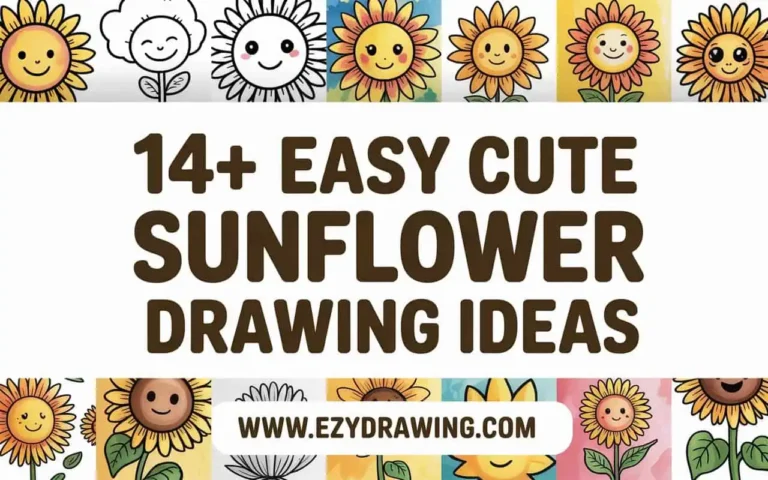
Related: 14+ Easy Cute Sunflower Drawing Ideas
9. Dinosaur Sketches
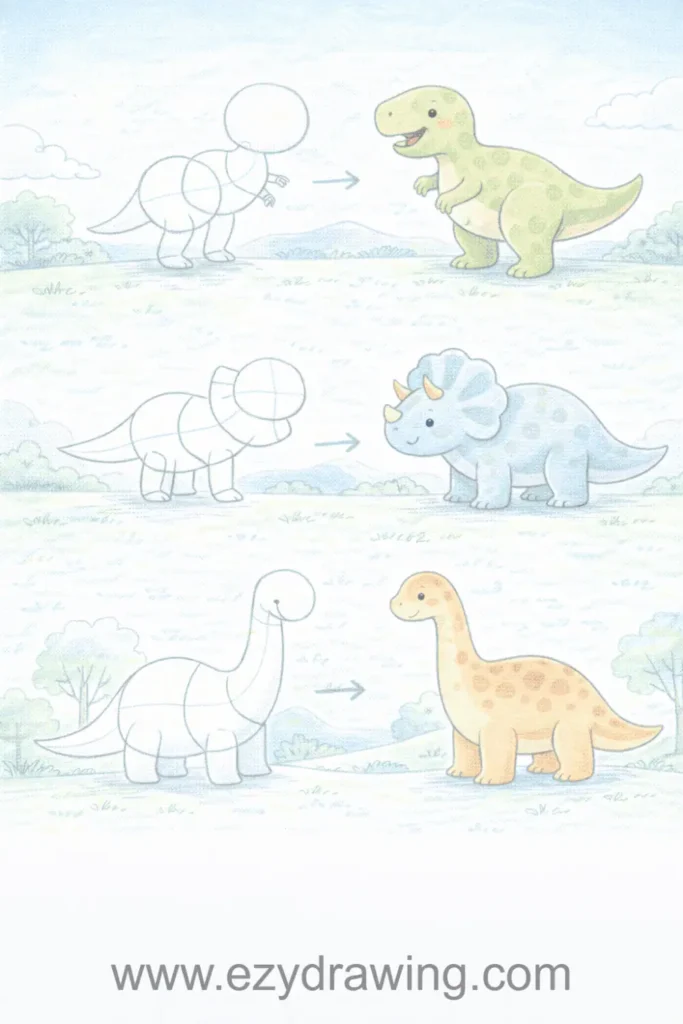
Dinosaurs combine scientific interest with artistic challenge, offering various body types from long-necked sauropods to fierce T-Rex predators. These prehistoric creatures teach kids about skeletal structure and dynamic poses.
Scales, claws, teeth, and spikes provide excellent texture practice while sparking conversations about paleontology. Reference books or images help kids learn accurate anatomy while still encouraging creative interpretation.
Pro Tip: Start with side-view dinosaurs since they’re easier than perspective angles, and focus on getting the distinctive silhouette right before adding scales and other surface details.
10. Tree and Nature Studies

Drawing different tree types teaches observation of natural patterns, branching structures, and organic textures from bare winter trees to full summer canopies. Each season offers unique drawing opportunities.
Bark textures, leaf clusters, and root systems develop detailed observation skills. Kids learn that trees aren’t just lollipop shapes but complex structures with character and variety.
Pro Tip: Collect interesting leaves, pinecones, and bark samples for close-up texture studies before tackling whole trees—understanding parts makes drawing the complete tree much easier.
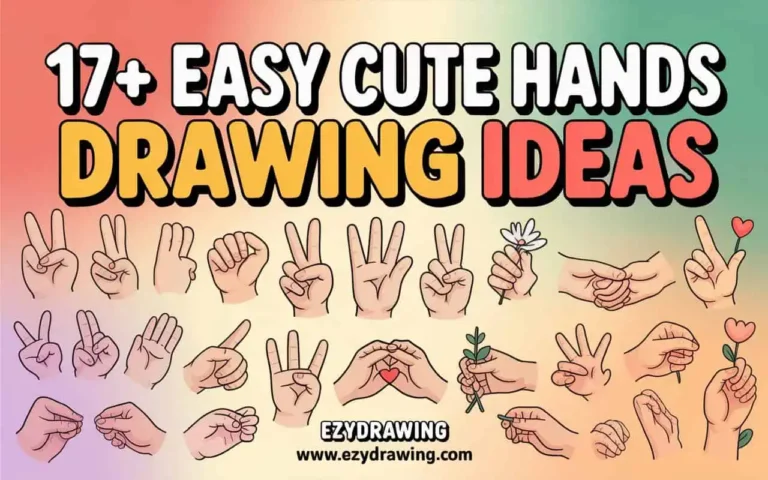
Related: 17+ Easy Cute Hands Drawing Ideas
11. Sports Action Figures
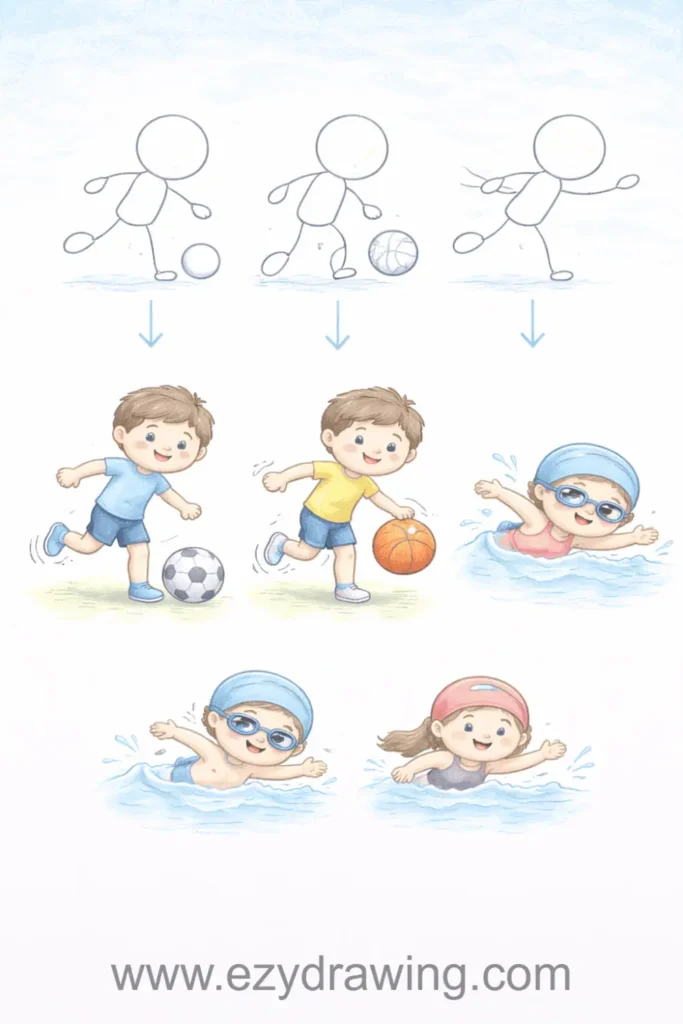
Sports drawings teach movement, dynamic poses, and action through stick figures that evolve into more detailed athletes. Soccer players kicking, basketball players jumping, and swimmers diving capture energy and motion.
These drawings help kids understand body proportions, joint placement, and how limbs bend during different activities. Starting with action stick figures removes pressure and makes figure drawing approachable.
Pro Tip: Have kids pose in front of a mirror doing their favorite sport move, then quickly sketch their own reflection—this kinesthetic connection makes proportion and motion more intuitive.
12. Weather and Cloud Patterns
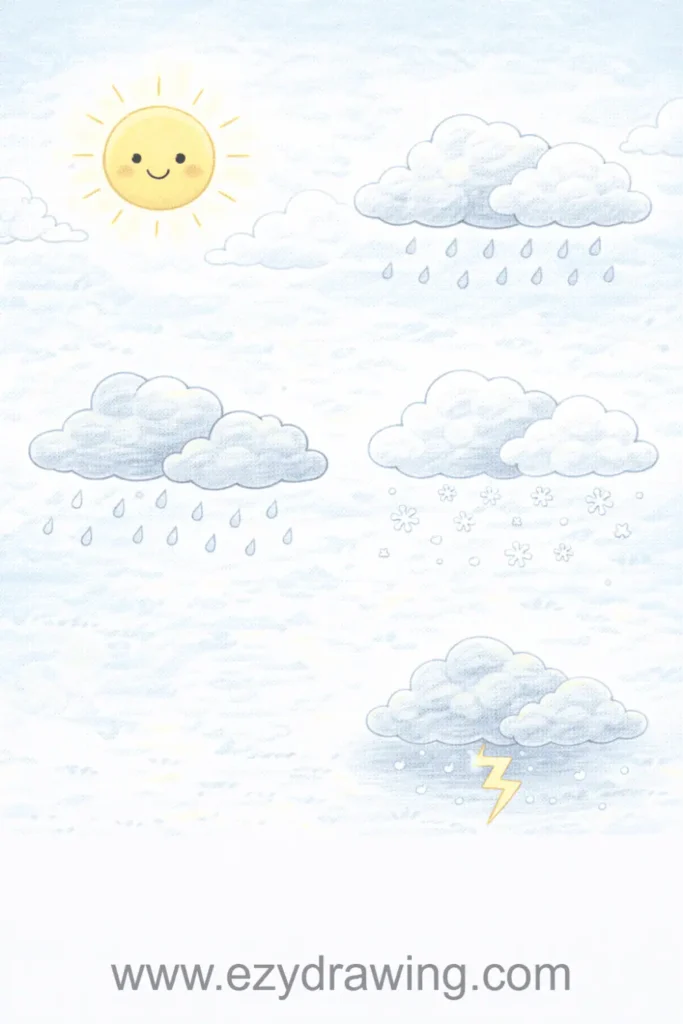
Weather drawings explore different cloud formations, rain, snow, lightning, and sunshine while teaching atmospheric effects. Cumulus puffs, wispy cirrus streaks, and storm clouds each require different pencil techniques.
Shading gradients in clouds introduce subtle tonal transitions. Adding weather elements like raindrops, snowflakes, or lightning bolts incorporates pattern and rhythm into compositions.
Pro Tip: Practice drawing clouds by looking at the actual sky on different days—kids will notice that clouds have dark undersides and bright tops, not uniform shading, making their drawings more realistic.
Related: 13 Rabbit Drawing Ideas for Kids
13. Fantasy Dragon Illustrations
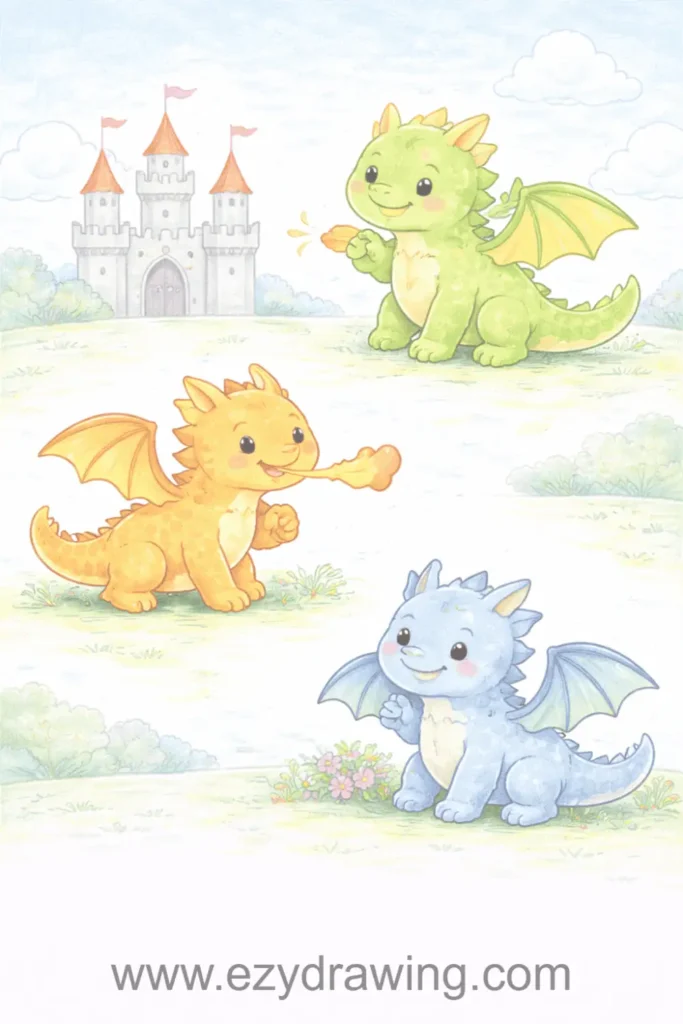
Dragon drawings combine elements from real animals with pure imagination, using reptile features, bird wings, and creative embellishments. Kids learn to reference reality while inventing fantastical creatures.
Scales, horns, wings, and fire breath offer tremendous creative freedom within a recognizable framework. Dragons can be fierce or friendly, sleeping or flying, encouraging personal interpretation.
Pro Tip: Build dragons from familiar parts—a lizard body, bat wings, eagle talons, and snake neck—then let kids add unique details like extra horns, different scale patterns, or unusual color notes in their sketches.
14. House and Building Architecture

Architectural drawings teach perspective basics, geometric shapes, and spatial relationships through familiar structures. Simple houses with roofs, windows, and doors introduce symmetry and proportion.
Adding chimneys, fences, pathways, and surrounding landscaping creates complete scenes. Kids learn how parallel lines appear to converge in the distance, introducing one-point perspective naturally.
Pro Tip: Start by drawing the house from the front view where everything stays flat and straight, then progress to corner views that show two sides and introduce angular perspective challenges.
15. Superhero Character Creation
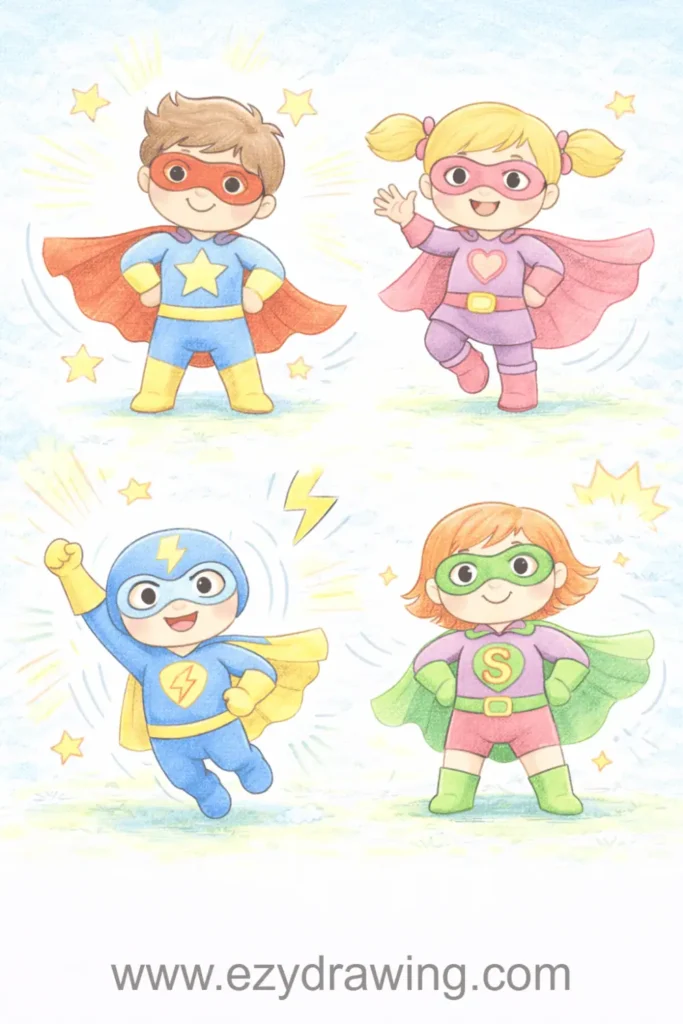
Superhero drawings let kids design original characters with unique powers, costumes, and symbols while learning human figure basics. Capes, masks, emblems, and action poses make these drawings exciting and personal.
This drawing idea encourages storytelling through visual elements—what powers does the hero have, and how does their costume reflect that? Kids create entire narratives through their designs.
Pro Tip: Start with a simple costume design on paper first, like sketching the symbol, cape style, and mask separately, then put all elements together on the full character to avoid overwhelming complexity.
Related: 13 Easy Dress Drawing Ideas for Kids
Why Pencil Drawing Ideas for Kids Are Worth the Investment
Pencil drawing ideas for kids provide low-cost, high-impact creative development that builds fine motor skills, spatial reasoning, and visual literacy essential for academic success. A simple pencil and paper unlock unlimited creative potential without expensive supplies or complicated setup.
Regular drawing practice with structured pencil drawing ideas for kids significantly improves hand-eye coordination, patience, and problem-solving abilities that transfer directly to writing, mathematics, and critical thinking. Research shows children who engage in regular art activities demonstrate enhanced cognitive flexibility and improved academic performance across multiple subjects.
The focused concentration required for pencil drawing ideas for kids naturally develops attention span and emotional regulation skills while providing screen-free entertainment. Drawing creates a meditative state that reduces anxiety, builds self-confidence, and offers healthy emotional expression, giving children valuable tools for managing stress throughout their lives.
Things to Consider Before Choosing Pencil Drawing Ideas for Kids
Select pencil drawing ideas for kids that match your child’s current skill level while offering slight challenges that encourage growth without causing frustration. Age-appropriate complexity ensures children stay engaged and motivated rather than overwhelmed or bored.
Consider your child’s personal interests when selecting pencil drawing ideas for kids—dinosaur enthusiasts will engage more deeply with prehistoric subjects than generic flowers. Matching drawing topics to existing passions leverages intrinsic motivation and makes practice feel like play rather than work.
Evaluate whether the pencil drawing ideas for kids you choose teach transferable skills like shading, proportion, or perspective that build foundational artistic knowledge. Projects that introduce specific techniques provide more long-term value than random doodling, creating a progressive learning path that develops genuine artistic competence
Other Drawing Ideas You May Like
13 Easy Cake Drawing Ideas for Creative Beginners
13 Deer Drawing Ideas
13 Simple Elephant Drawing Ideas
30+ Easy Cute Fox Drawing Ideas
30+ Easy Cute Hair Drawing Ideas