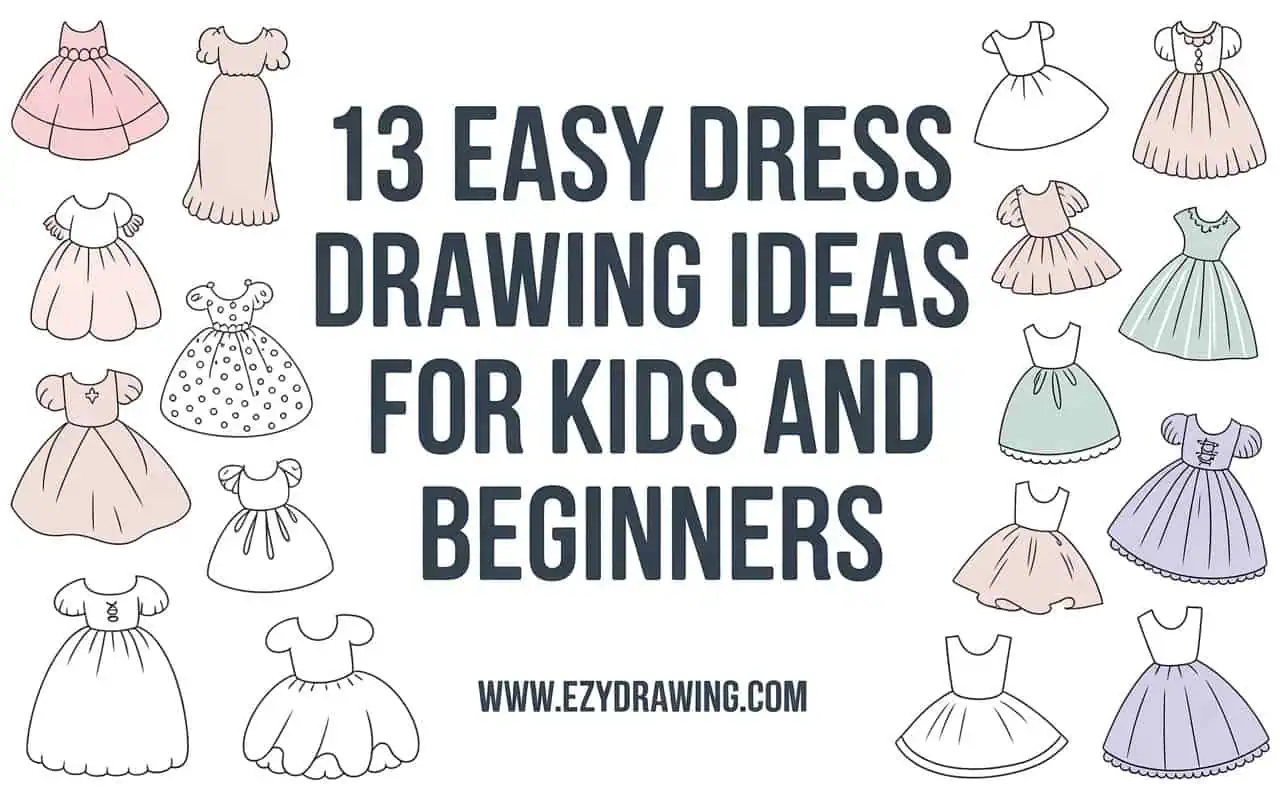
13 Easy Dress Drawing Ideas for Kids and Beginners
Dress Drawing Ideas are a fun and simple way for kids and beginners to explore creativity while learning basic drawing shapes through object drawing practice.
These ideas focus on easy lines, cute dress styles, and beginner friendly designs that help build confidence without feeling overwhelming.
By combining Dress Drawing Ideas with object drawing, children learn how to sketch everyday items step by step while improving hand control and observation skills.
This approach makes drawing enjoyable, creative, and perfect for young artists who are just starting out.
Drawing dresses allows you to experiment with silhouettes, fabrics, and details without the commitment of actual garment construction. It’s the perfect way to explore your design vision and build a professional portfolio.
Mastering various dress drawing ideas opens doors to fashion illustration, costume design, and personal creative expression. Let’s explore the most inspiring concepts to elevate your sketching game.
13 Cute Dress Drawing Ideas Kids Will Love to Try
13 Cute Dress Drawing Ideas Kids Will Love to Try are perfect for sparking creativity and making drawing time more enjoyable for young artists.
These ideas focus on simple shapes, adorable styles, and playful details that feel fun rather than complicated.
From flowy skirts to cute sleeves, each concept helps kids practice basic lines while boosting confidence, just like starting with Cake Drawing to learn simple shapes and smooth curves.
Designed with beginners in mind, these dress sketches turn learning into a joyful activity and encourage kids to keep drawing, experimenting, and expressing their imagination freely through fun object based drawings.
1. Classic A-Line Dress Sketch
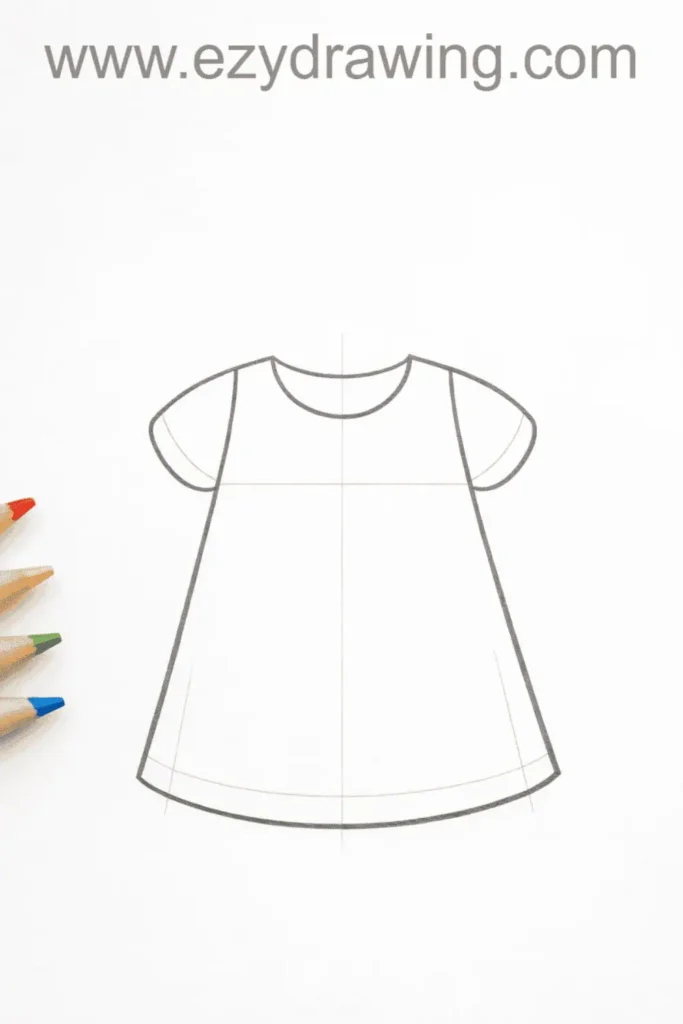
The A-line silhouette is perfect for beginners learning dress drawing fundamentals. This timeless shape gradually widens from the fitted bodice to create a flattering, universally appealing form.
Start with simple construction lines to map out the shoulders, waistline, and hem. Similar to Car Drawing, where basic shapes help define the form before adding details, focus on capturing the gentle flare that defines this elegant style while paying attention to how the fabric drapes naturally from the waist.
Pro Tip: Use light pencil strokes for your initial outline, then gradually darken the lines as you refine the shape—this makes corrections easier and keeps your drawing clean.
2. Flowing Maxi Dress Illustration
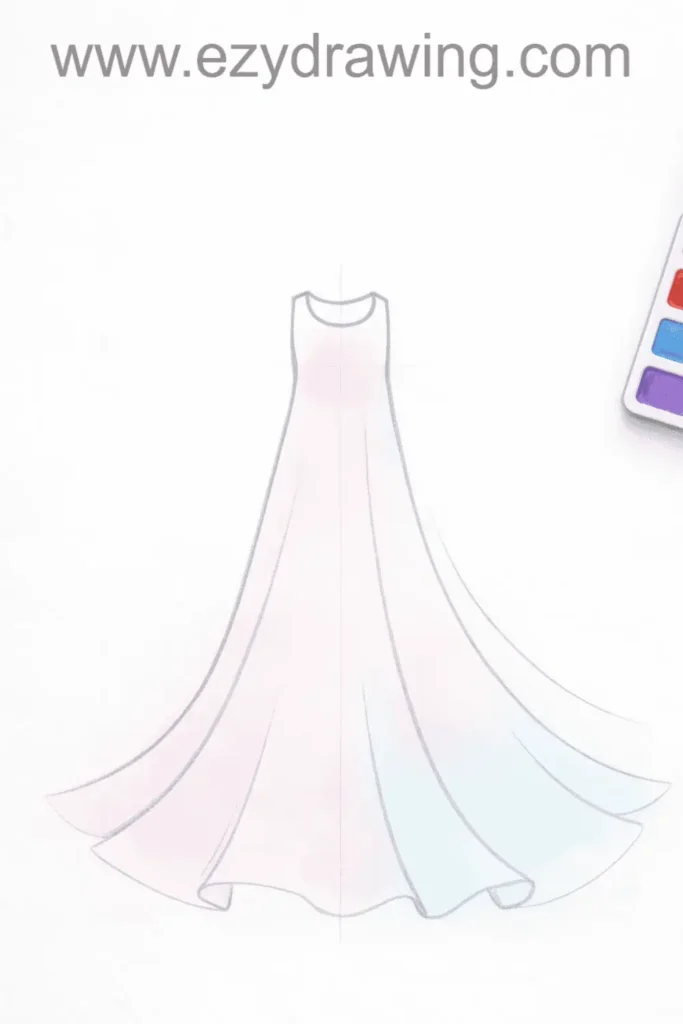
Maxi dresses offer excellent practice for drawing movement and fabric flow. These floor-length designs challenge you to capture the graceful cascade of lightweight materials like chiffon or silk.
Emphasize the vertical lines and gentle curves that create the illusion of length. Just like skull Drawing uses curves and contours to show form and depth, add subtle shading along the folds to give your drawing dimension and bring the flowing fabric to life.
Pro Tip: Reference real fabric photos while drawing to understand how different materials drape differently—cotton falls straighter while silk creates more fluid, organic folds.
Related: 13+ Easy Cute Bow Drawing Ideas
3. Vintage 1950s Swing Dress Design
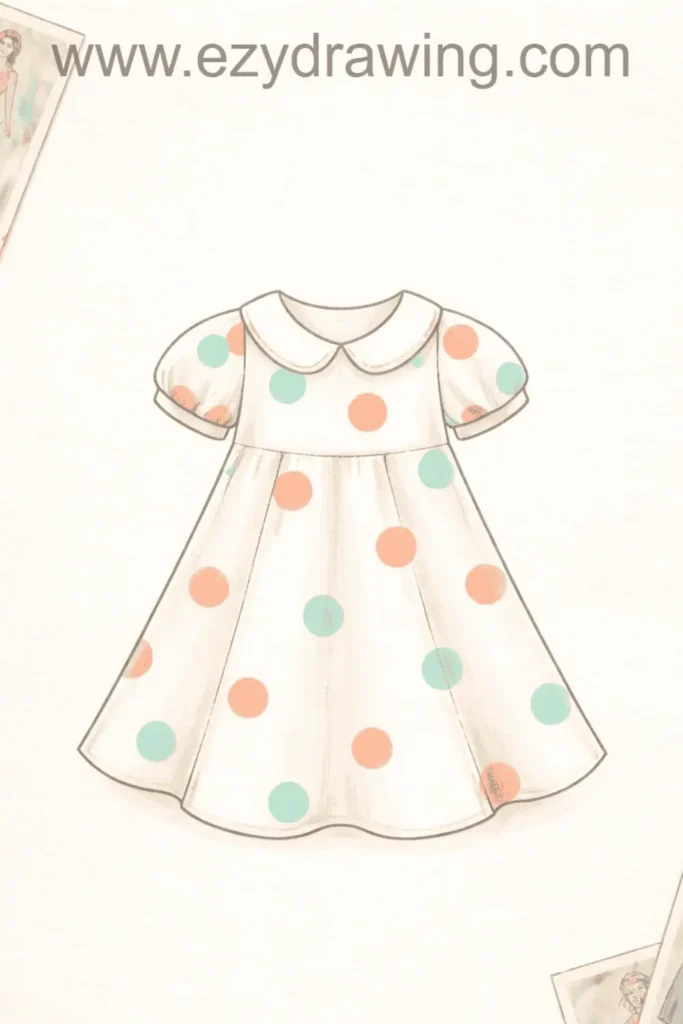
The iconic 1950s swing dress features a fitted bodice with a full, circular skirt that creates dramatic volume. This style teaches you to draw structured shapes combined with playful movement.
Focus on the cinched waist and how it contrasts with the voluminous skirt. Add details like sweetheart necklines, cap sleeves, and petticoat-enhanced fullness for authentic vintage appeal.
Pro Tip: Draw a hidden petticoat layer beneath your swing skirt to understand the structure that creates that signature poof—it improves the realism of your illustration.
4. Modern Bodycon Dress Sketch
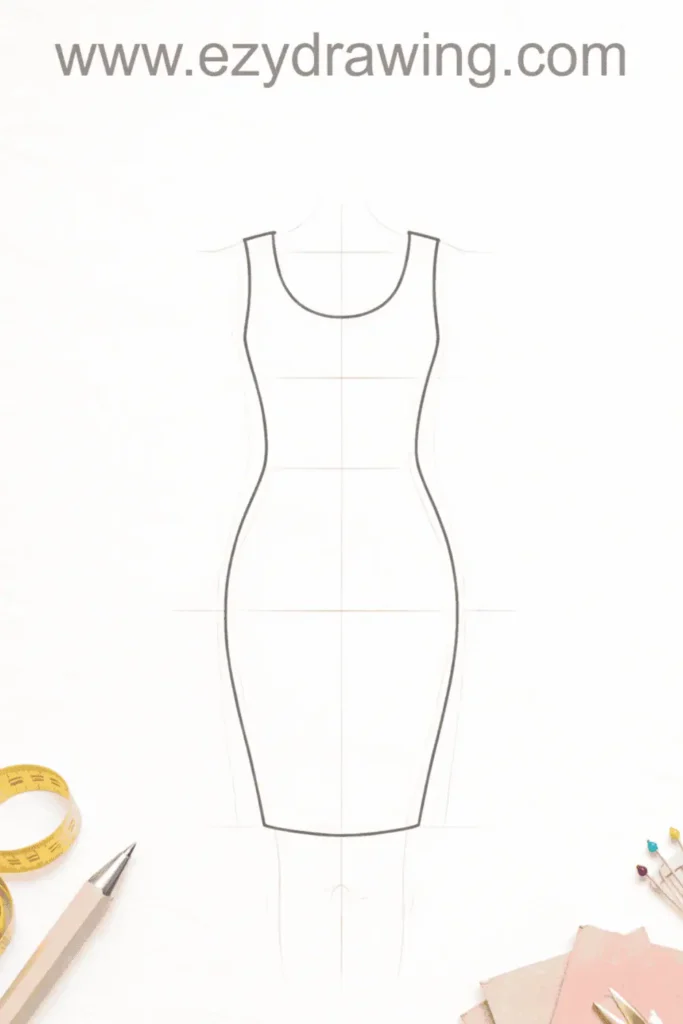
Bodycon dresses are excellent for practicing figure drawing and understanding body proportions. These form-fitting designs require attention to the human silhouette and how stretchy fabrics conform to curves.
Draw the dress as a second skin, following the natural contours of the body. Use strategic shading to emphasize the sculpted fit and add seam lines that enhance the shape.
Pro Tip: Practice drawing the underlying body figure first, then add the dress over it—this ensures your proportions stay accurate and the garment looks believable.
Related: 14+ Easy Cute Moon Drawing Ideas
5. Boho Off-Shoulder Sundress
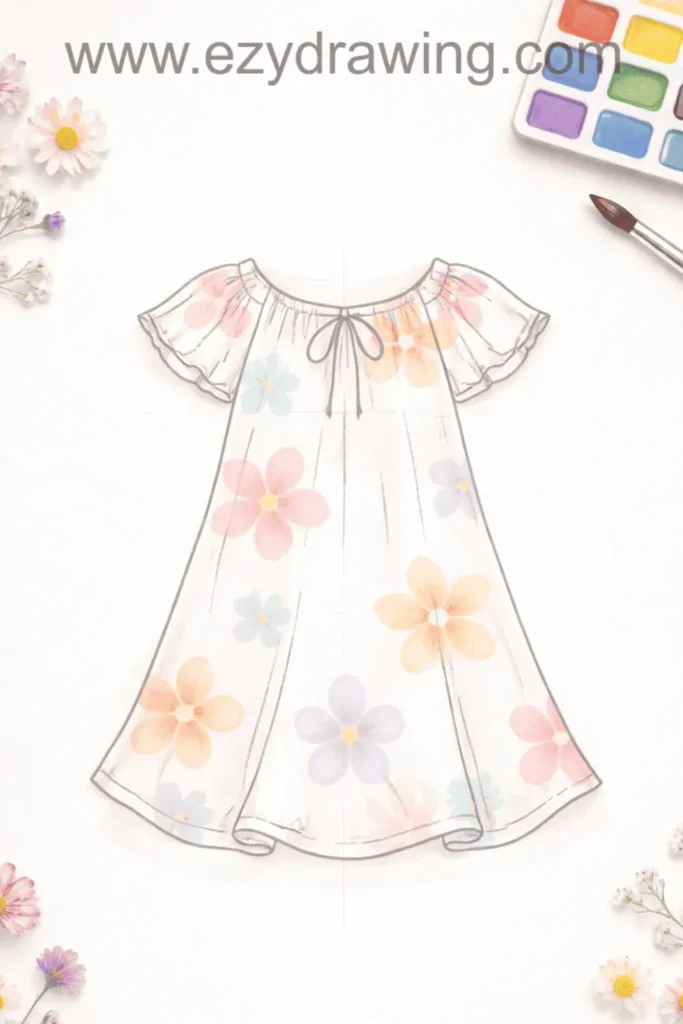
The bohemian off-shoulder style combines romantic details with relaxed silhouettes. This dress drawing idea features gathered elastic necklines, tiered skirts, and flowing sleeves that create effortless movement.
Add textural elements like lace trim, embroidery, or crochet details to enhance the boho aesthetic. The loose, comfortable fit allows you to focus on decorative elements rather than precise body conforming.
Pro Tip: Layer your drawing with different patterns—floral prints on the skirt, solid bodice, and lace trim—to create visual interest while maintaining balance.
6. Elegant Evening Gown Concept
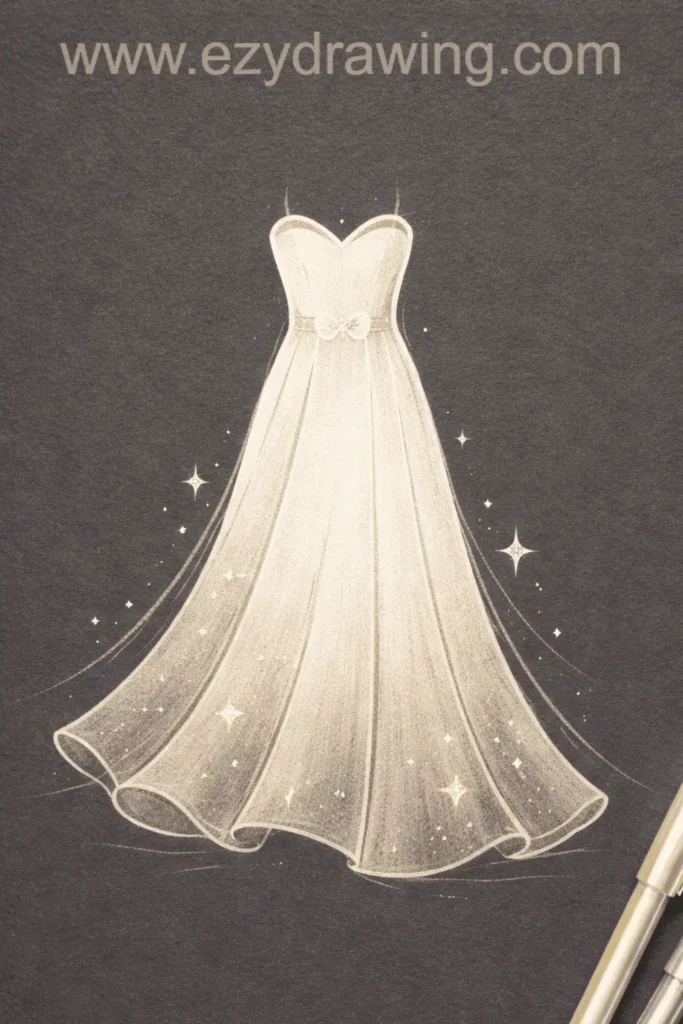
Evening gowns push your drawing skills with elaborate details and luxurious fabrics. These formal designs incorporate dramatic trains, intricate beading, and sophisticated draping techniques.
Focus on creating depth through shading to show the richness of materials like satin, velvet, or sequined fabric. The floor-length elegance provides opportunities to practice drawing flowing movement and structural boning.
Pro Tip: Use a combination of hard and soft pencils—harder pencils for delicate details like beadwork, softer pencils for deep shadows in fabric folds.
Related: 11+ Easy Cute Graffiti Drawing Ideas
7. Casual T-Shirt Dress Drawing
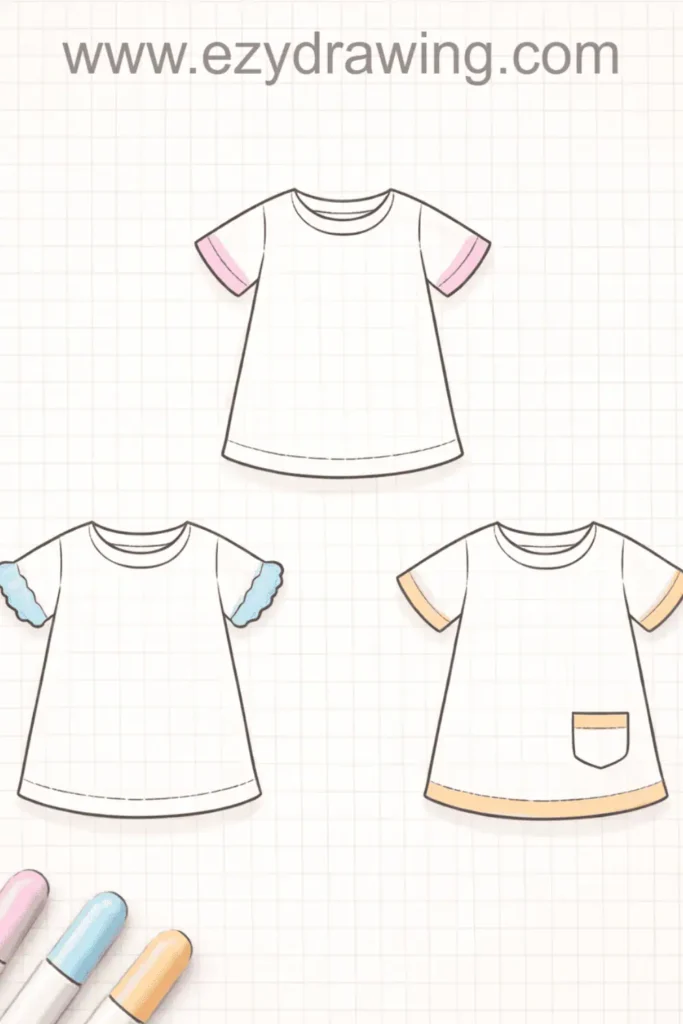
The t-shirt dress offers simplicity perfect for quick sketching practice. This relaxed style features minimal seaming, comfortable fit, and versatile styling options.
Capture the soft, slightly oversized look with gentle draping at the shoulders and sides. Add details like side pockets, rolled sleeves, or a casual belt to personalize the basic silhouette.
Pro Tip: Draw multiple variations of the same t-shirt dress with different sleeve lengths and hem styles on one page—it’s great practice and creates a cohesive design collection.
8. Wrap Dress Illustration
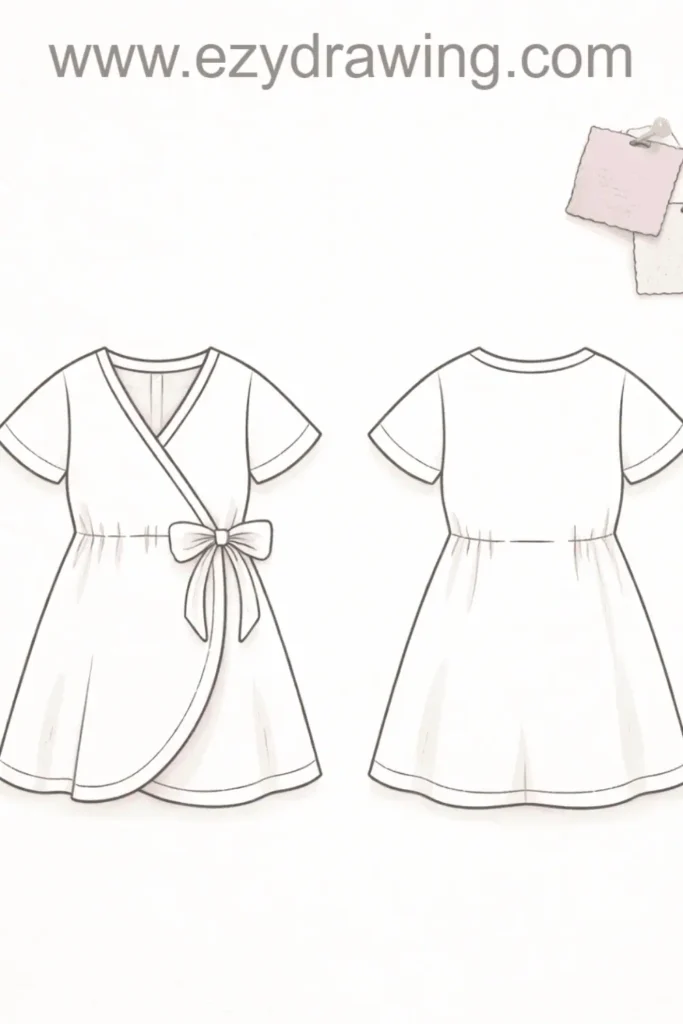
The wrap dress design teaches you to draw diagonal lines and asymmetrical closures. This flattering style features a V-neckline, tied waist, and overlapping front panels that create visual interest.
Pay attention to how the fabric crosses and secures at the side or front. The adjustable tie creates natural gathering that you can emphasize with strategic shading and line work.
Pro Tip: Draw the dress both tied and untied on the same figure template to understand the garment’s construction—this helps you create more accurate and believable illustrations.
Related: 15+ Easy Cute House Drawing Ideas
9. Fit-and-Flare Cocktail Dress
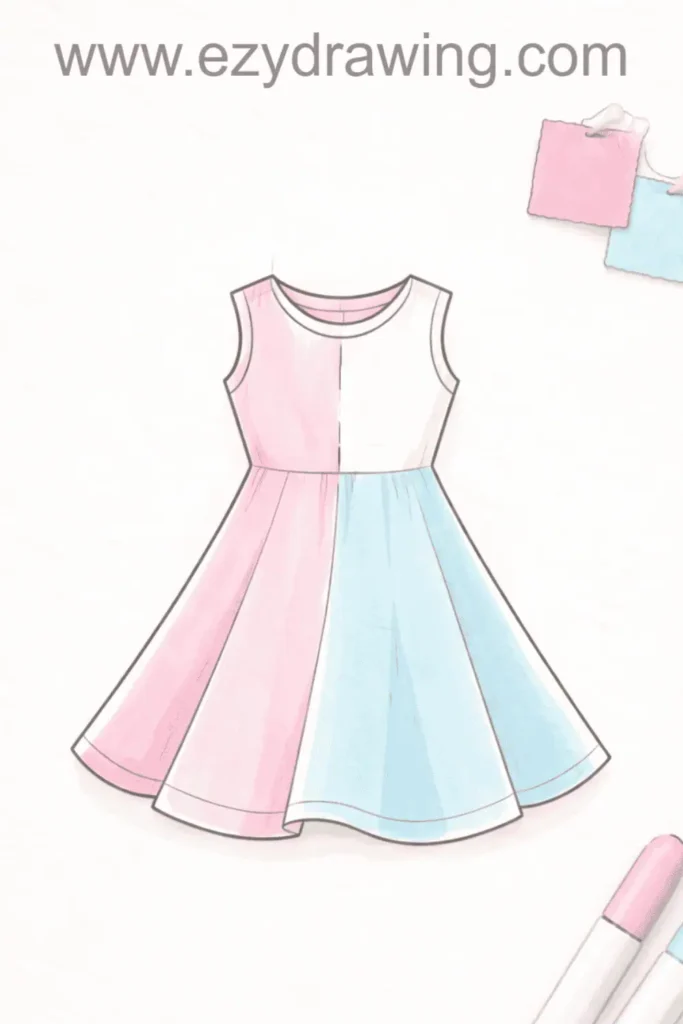
The fit-and-flare silhouette combines structured bodice with playful skirt volume. This versatile dress drawing idea works for both casual and formal occasions, featuring defined waistline and flared skirt.
Emphasize the transition point where the fitted portion meets the flare. Add details like princess seams, darts, or a defined waistband to show how the garment is constructed.
Pro Tip: Use a ruler for the straight bodice seams and freehand curves for the flared skirt—this combination creates the perfect balance of structure and movement.
10. Shirt Dress with Belt Detail
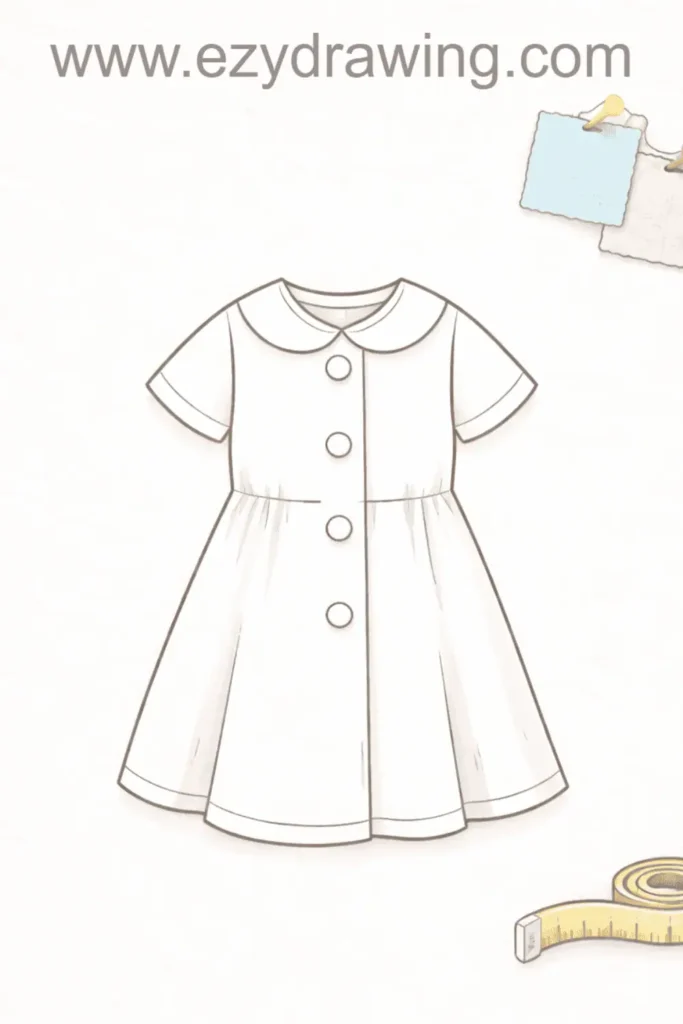
The shirt dress blends menswear-inspired elements with feminine styling. This design features button-front closure, collar, and belt that creates a polished, put-together look.
Focus on drawing the collar structure and evenly spaced buttons down the front. The cinched belt adds definition and shows how accessories transform a basic silhouette.
Pro Tip: Practice drawing different collar styles—pointed, rounded, or mandarin—on the same shirt dress base to expand your design vocabulary and create variety.
Related: 20 Easy Apple Drawing Ideas for Kids to Learn and Enjoy
11. Asymmetrical Hem Party Dress
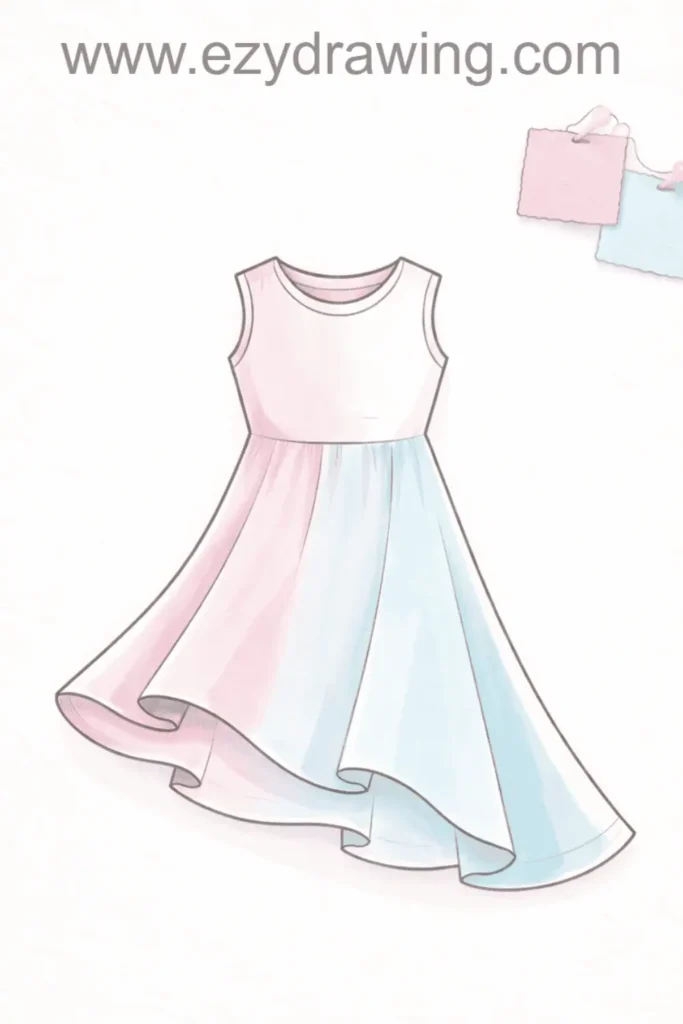
Asymmetrical designs challenge your understanding of balance and proportion. These eye-catching dresses feature uneven hemlines that create dynamic movement and modern appeal.
Draw the lowest and highest points of the hem first, then connect them with a graceful curve. Use shading to show how the varying lengths create depth and interest from different angles.
Pro Tip: Sketch quick thumbnail versions with different asymmetry angles before committing to your final drawing—this helps you find the most flattering and interesting proportion.
12. Romantic Lace Overlay Dress
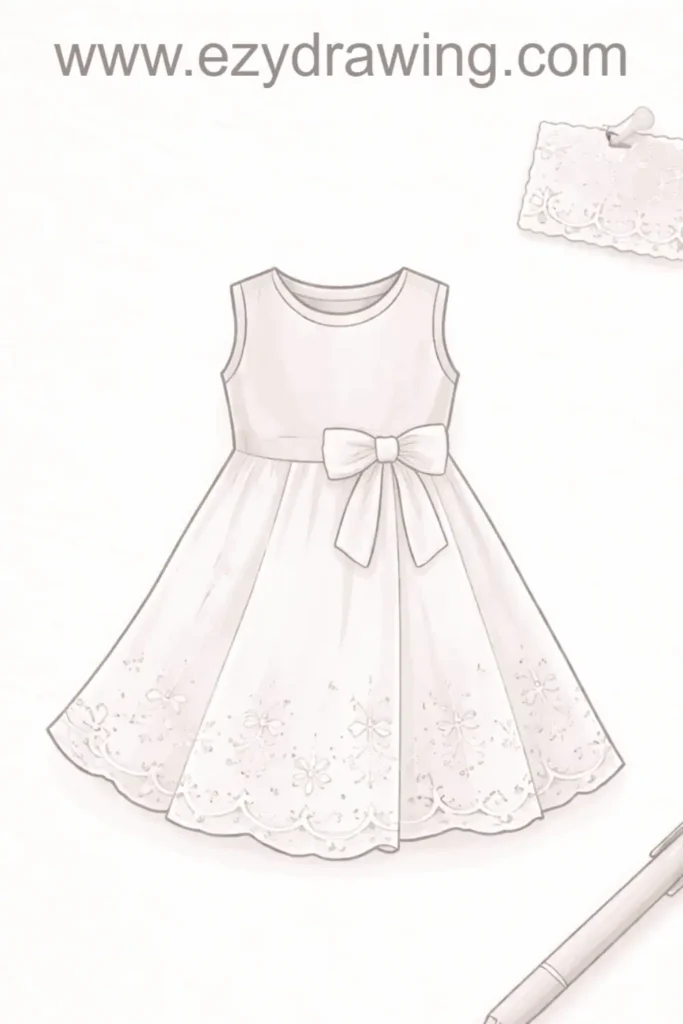
Lace overlay designs provide excellent practice for drawing intricate patterns and layered fabrics. These dresses feature transparent lace over solid underlayers, creating depth and texture.
Focus on drawing the lace pattern with lighter, more delicate lines while keeping the underlayer more solid. The contrast between layers adds sophistication and visual complexity to your illustration.
Pro Tip: Create a simple lace pattern template that you can reuse across multiple drawings—this saves time and maintains consistency in your portfolio pieces.
Related: 20 Playful Candle Drawing Ideas for Kids of All Age
13. Contemporary Midi Dress Design
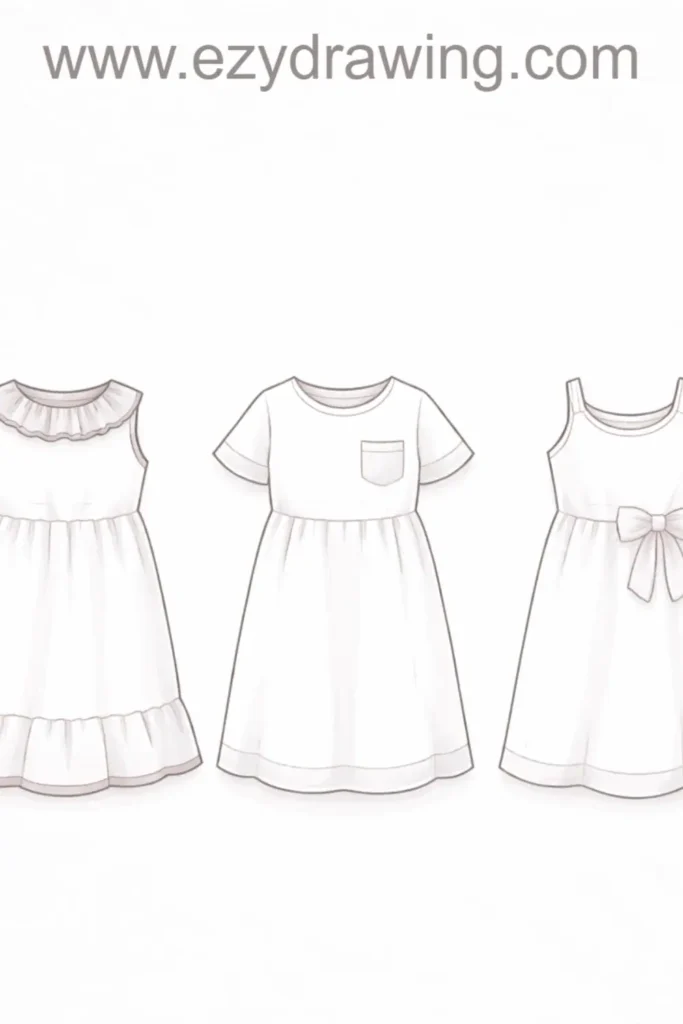
The midi-length dress offers versatile styling between casual and formal. This modern length hits mid-calf and provides opportunities to practice drawing balanced proportions and contemporary silhouettes.
Experiment with different necklines, sleeve styles, and waist treatments on this classic length. The mid-calf hem creates an elegant, sophisticated look that works across seasons and occasions.
Pro Tip: Draw the same midi dress design on different body types and heights to understand how one design looks on various figures—this skill is crucial for professional fashion illustration.
Why Dress Drawing Ideas Are Worth the Investment
Investing time in dress drawing ideas builds essential skills that translate into professional opportunities in fashion design, illustration, and costume design. These foundational techniques create a strong portfolio that opens doors to creative careers and freelance projects.
Practicing various dress drawing ideas develops your unique artistic voice and style signature. The versatility you gain allows you to tackle any design challenge, from quick concept sketches to detailed technical illustrations.
Learning diverse dress drawing ideas provides lifelong creative fulfillment and stress relief. This valuable skill set combines artistic expression with practical application, making it both personally rewarding and potentially profitable.
Things to Consider Before Choosing Dress Drawing Ideas
Select dress drawing ideas that match your current skill level while providing room for growth. Starting with overly complex designs can lead to frustration, while too-simple concepts won’t challenge your abilities or expand your techniques.
Consider the dress drawing ideas that align with your personal style and career goals. Focusing on specific aesthetics—whether vintage, modern, or avant-garde—helps you build a cohesive portfolio that showcases your unique perspective.
Evaluate which dress drawing ideas offer the most learning value for your development stage. Prioritize designs that teach fundamental techniques like proportion, draping, and detail work before moving to advanced conceptual pieces.
Other Drawing Ideas You May Like
13 Deer Drawing Ideas Every Beginner Can Try Today
13 Simple Elephant Drawing Ideas for Absolute Beginners
30+ Easy Cute Fox Drawing Ideas
10+ Easy Cute Doodles Drawing Ideas
14+ Easy Cute Sunflower Drawing Ideas