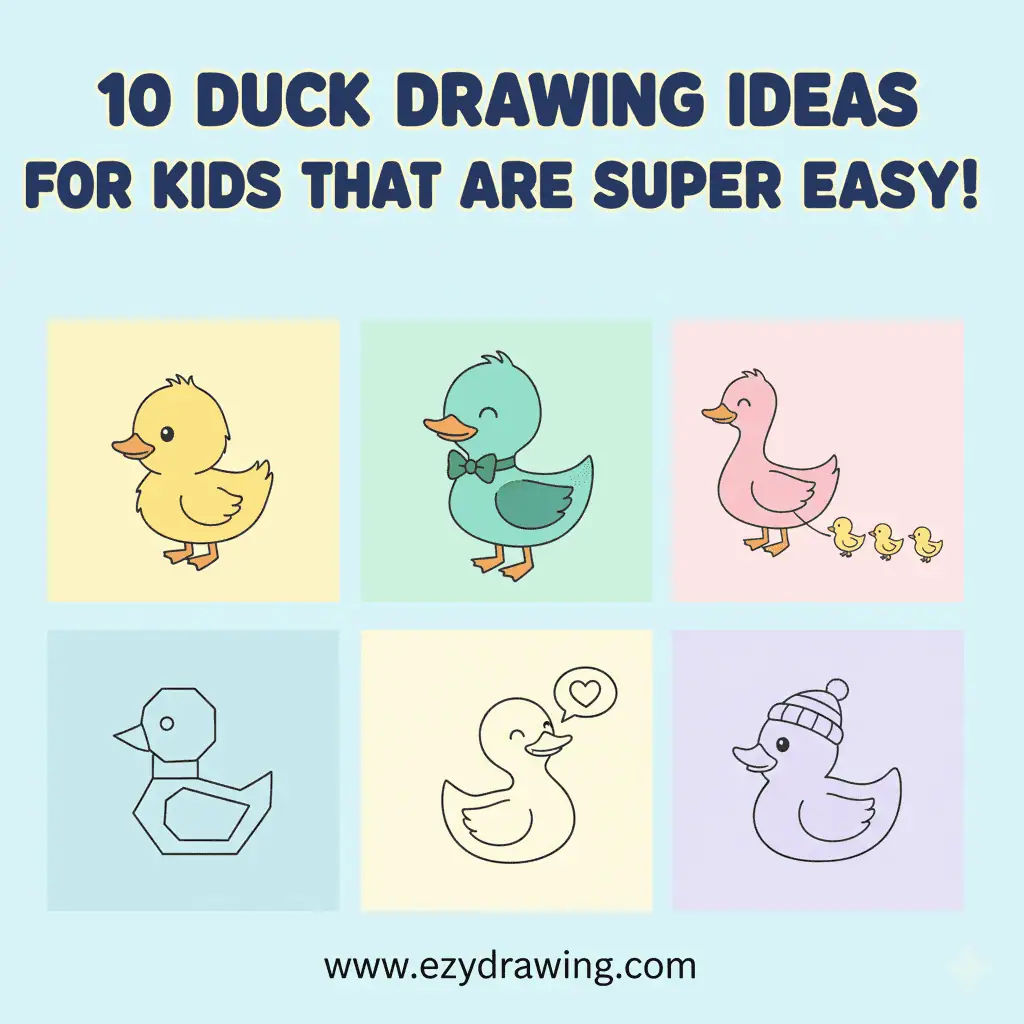
10 Duck Drawing Ideas For Kids That Are Super Easy
Looking for simple duck drawing ideas for kids that spark creativity? You’ve come to the right place. These easy tutorials help young artists build confidence while having fun, while gently introducing animal drawing through friendly shapes and simple steps.
By practicing animal drawing in a playful way, kids improve focus, imagination, and basic sketching skills without feeling overwhelmed.
Drawing ducks teaches children about shapes, proportions, and artistic expression. Each project uses basic techniques that develop fine motor skills and imagination. Kids will love creating their own feathered friends.
Whether your child is a beginner or experienced artist, these duck drawing ideas for kids offer something for everyone. Let’s dive into these delightful projects that make art time enjoyable and educational.
10 Duck Drawing Ideas For Kids Everyone Will Love
Duck drawings are a fun and friendly way to help kids enjoy art time while learning basic shapes and lines, just like simple rabbit drawing activities that children love.
These ideas are designed to be cute, clear, and easy to follow, making them perfect for young children and beginners who want to practice both duck and rabbit drawing in a playful, stress free way.
From happy cartoon ducks to playful ducklings, each drawing helps improve hand control, creativity, and confidence. Whether used at home, in classrooms, or during quiet time, these duck drawing ideas turn learning into a joyful and relaxing activity that kids truly enjoy.
1. Classic Yellow Rubber Duck
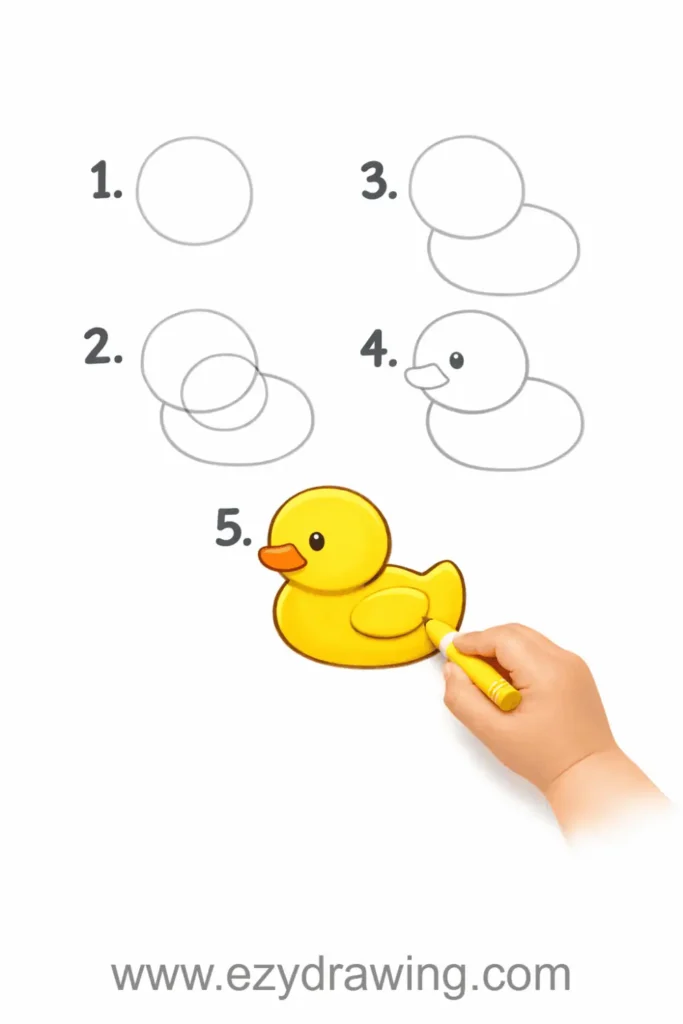
Start with a simple circle for the head and an oval body to create the iconic bath-time companion. Add a small triangle beak pointing left and a dot eye to bring your duck to life.
Step 1: Draw a medium circle for the head. Step 2: Add a larger oval below for the body, slightly overlapping. Step 3: Sketch a small triangle on the left side for the beak. Step 4: Draw a tiny circle for the eye and add a curved line for the wing. Step 5: Color it bright yellow with an orange beak.
This beginner-friendly design takes only five minutes and builds confidence. The rounded shapes make it perfect for preschoolers and kindergarteners.
Pro Tip: Use a yellow crayon to trace over pencil lines, then erase the pencil for a clean, professional look that kids will be proud to display.
2. Swimming Duck with Water Ripples
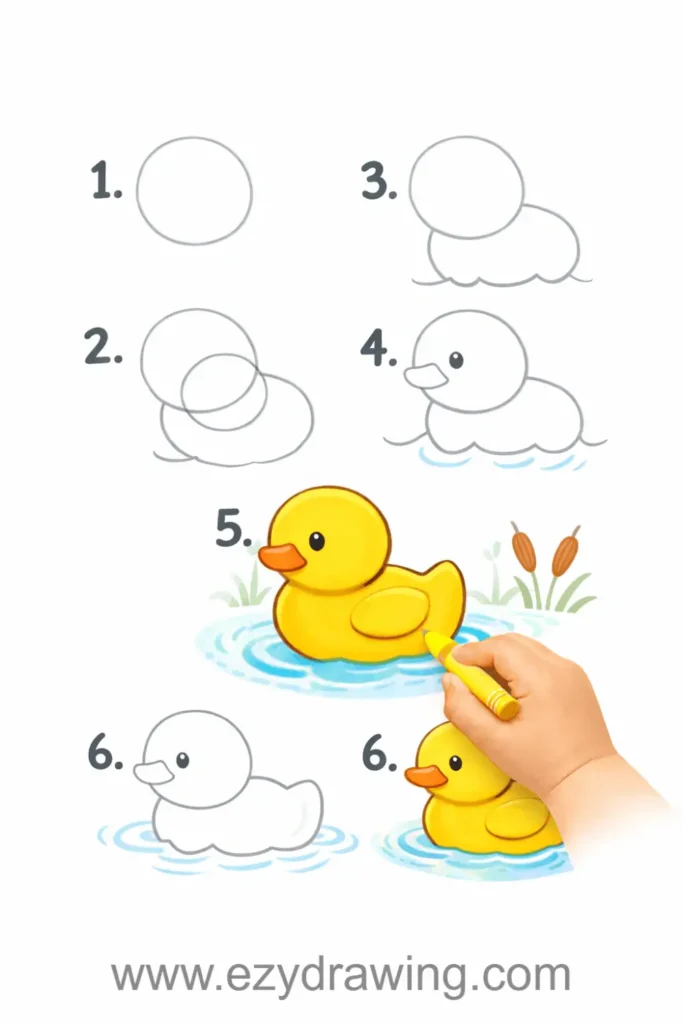
Create a peaceful pond scene by drawing your duck floating on wavy water lines. This teaches kids about environmental context and adds storytelling elements to their artwork.
Step 1: Draw an oval body tilted slightly forward. Step 2: Add a smaller circle for the head connected by two curved neck lines. Step 3: Sketch a flat bill and round eye. Step 4: Draw a curved wing on the body. Step 5: Add three or four wavy horizontal lines below for water ripples. Step 6: Color the duck brown or green with blue water.
The ripple effect introduces simple perspective and movement concepts. Kids learn that drawings can show action and environment simultaneously.
Pro Tip: Use a blue marker to draw wavy water lines, then add white crayon highlights on top to create realistic light reflections that make the water sparkle.
Related: 13 Deer Drawing Ideas Every Beginner Can Try Today
3. Baby Duckling Following Mom
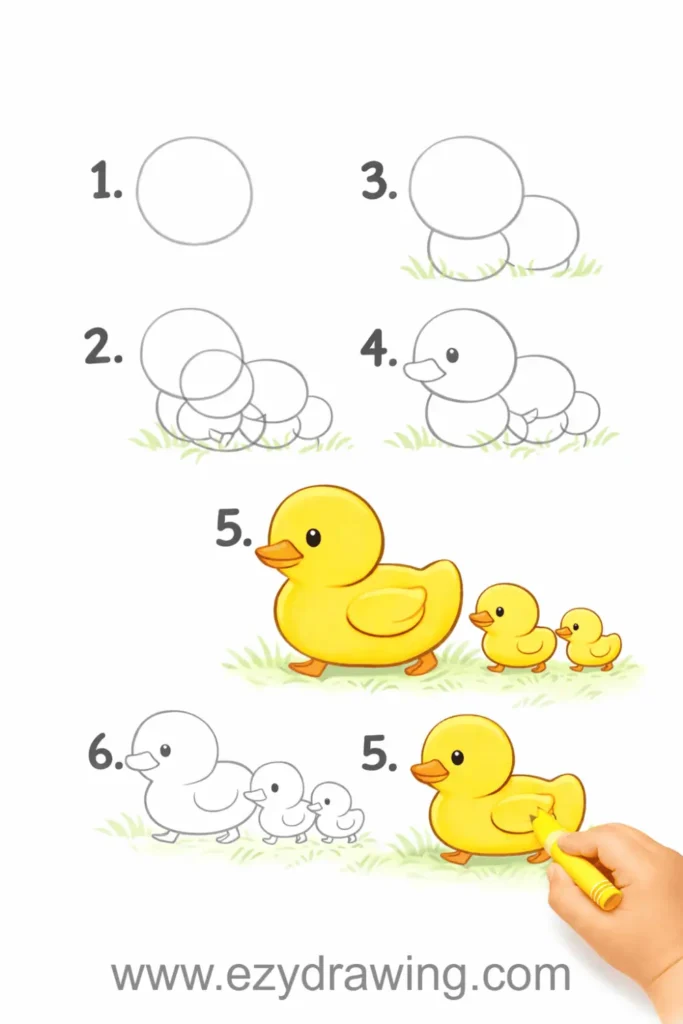
Draw a large duck followed by 2-3 smaller ducklings in a row to create an adorable family scene. This project teaches size comparison and composition skills.
Step 1: Draw a large oval body with a round head for mama duck. Step 2: Add bill, eye, and wing details. Step 3: Draw a smaller oval body behind and to the right. Step 4: Repeat step 3 for two more ducklings, each slightly smaller. Step 5: Add grass lines at the bottom and color yellow with orange feet and bills.
This narrative drawing helps children understand relationships and sequential arrangement. The varied sizes create visual interest and depth.
Pro Tip: Have kids use a ruler to lightly draw a baseline where all the ducks’ feet touch, ensuring they look like they’re walking on the same ground level.
4. Flying Duck with Spread Wings
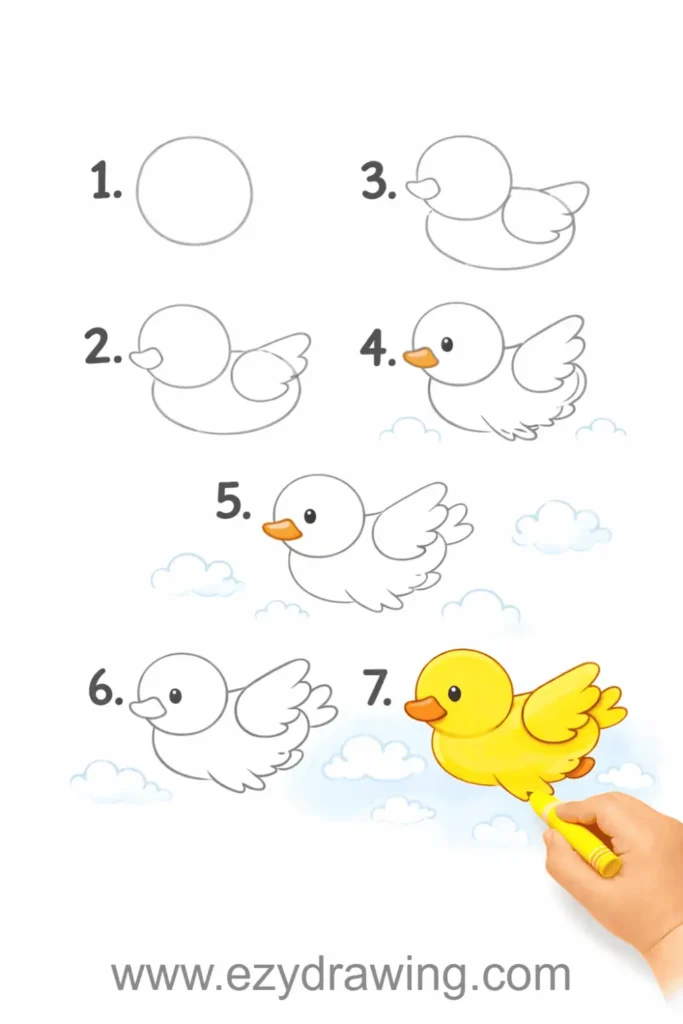
Teach kids about wing anatomy by drawing a duck in mid-flight with wings extended upward. This dynamic pose introduces action and movement to their artwork.
Step 1: Draw a horizontal oval for the body. Step 2: Add a small circle for the head on the left side. Step 3: Sketch a pointed bill and eye. Step 4: Draw two large curved shapes extending from the body for wings—one up, one down. Step 5: Add feather details with small curved lines. Step 6: Draw two small feet tucked under the body. Step 7: Color in natural duck colors like brown and white.
The wing position creates excitement and energy in the composition. Kids discover how diagonal lines suggest motion and power.
Pro Tip: Show children how to draw individual feather lines radiating from the wing’s base to its tip, creating a realistic texture that adds professional detail to their flying duck.
Related: 13 Simple Elephant Drawing Ideas
5. Cartoon Duck with Big Eyes
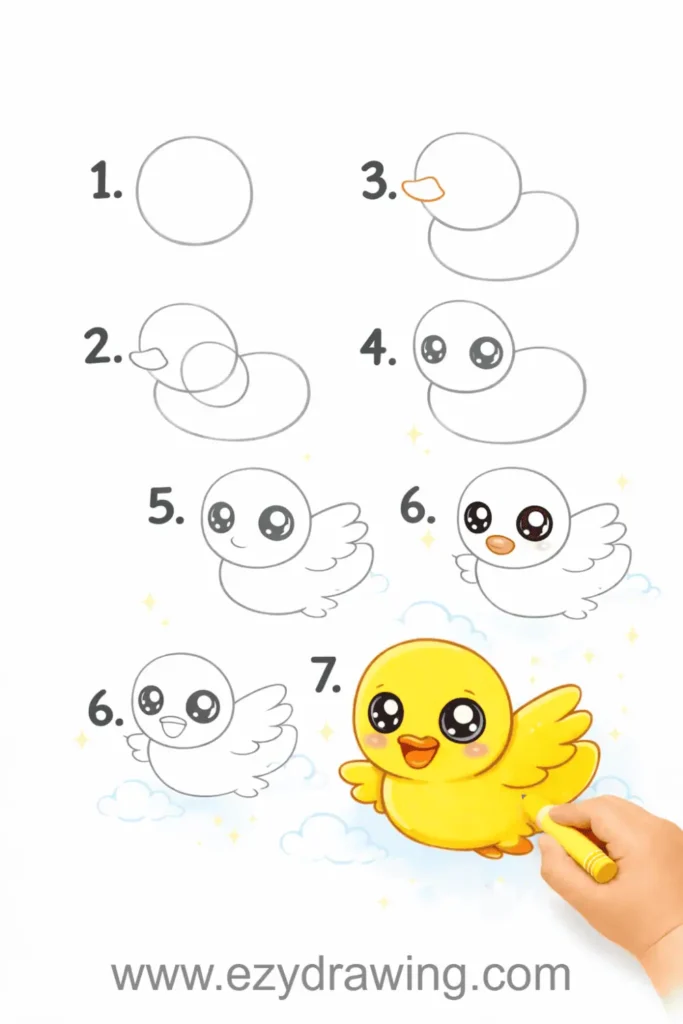
Create a playful character with oversized eyes and exaggerated features that appeal to young children. This style encourages creative expression and personality development.
Step 1: Draw a large circle for the head. Step 2: Add a bean-shaped body below. Step 3: Draw two huge circles for eyes, filling most of the head. Step 4: Add tiny dots for pupils and curved lines for eyelashes. Step 5: Sketch a wide, smiling bill. Step 6: Add small wings and webbed feet. Step 7: Color with bright, fun colors like purple or pink.
Cartoon style removes pressure for realistic proportions, letting kids experiment freely. The expressive eyes teach how facial features convey emotion and personality.
Pro Tip: Encourage kids to add sparkle dots in the eyes using white crayon or paint—two small circles in each eye create an animated, lively character that seems to jump off the page.
6. Duck in Rain Boots and Raincoat
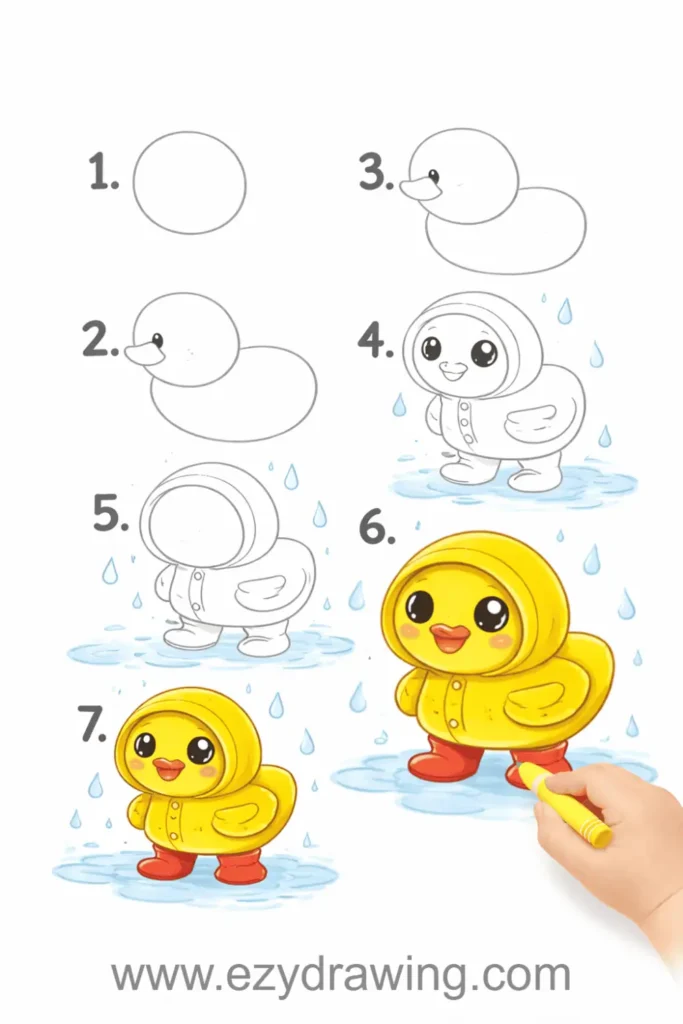
Dress your duck in weather gear for a whimsical scene that combines animals with fashion elements. This advanced project develops detail work and imagination.
Step 1: Draw basic duck shape with oval body and round head. Step 2: Add a triangular raincoat shape over the body. Step 3: Draw a hood over the duck’s head. Step 4: Sketch tall rain boots on the feet. Step 5: Add raindrops falling around the duck with small teardrop shapes. Step 6: Draw puddles beneath using wavy ovals. Step 7: Color the raincoat yellow and boots red.
Clothing details introduce kids to layering and accessories in art. The weather elements create a complete story within one drawing.
Pro Tip: Use a blue watercolor wash over the entire drawing after coloring to create a rainy atmosphere effect, leaving the duck and raincoat white for contrast that really pops.
Related: 30+ Easy Cute Fox Drawing Ideas
7. Duck Sitting on Nest with Eggs
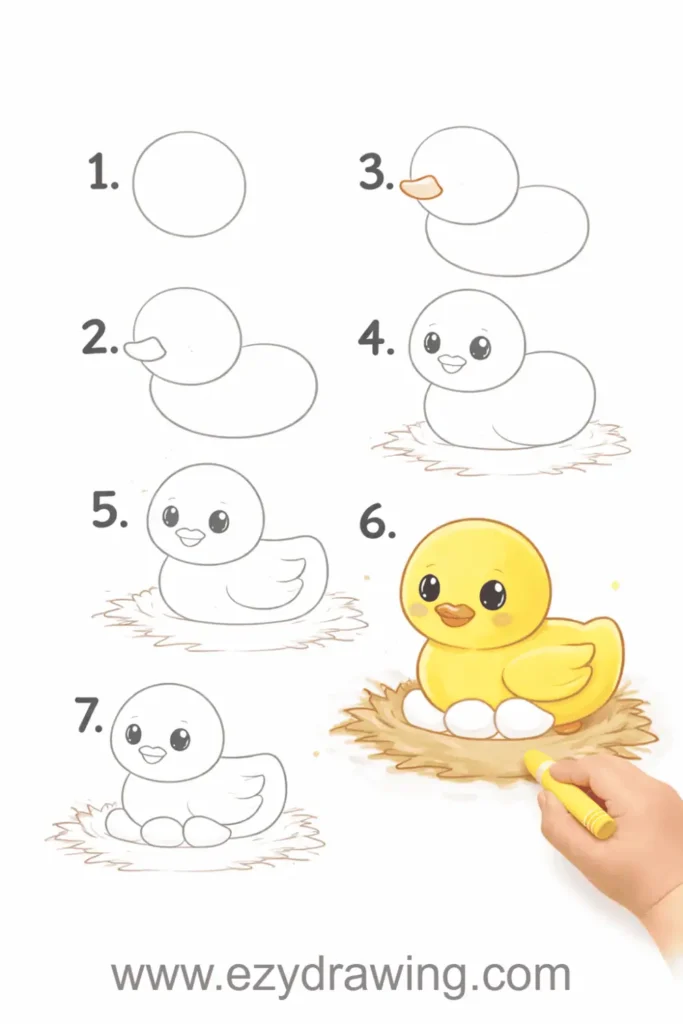
Draw a mother duck protecting her eggs to teach children about nature and nurturing behavior. This circular composition creates visual balance and completeness.
Step 1: Draw a large circle for the nest made of curved, overlapping lines. Step 2: Add the duck’s body sitting in the center. Step 3: Draw the head and bill peeking up. Step 4: Sketch 3-4 oval eggs visible beneath the duck. Step 5: Add wing details draped over the nest. Step 6: Draw straw or grass lines for nest texture. Step 7: Color the nest brown, duck in natural colors, and eggs white or speckled.
The protective pose introduces kids to animal behavior concepts and maternal care. Overlapping elements teach depth and foreground-background relationships.
Pro Tip: Have kids use a brown marker to draw random crisscross lines for the nest, then go back with a lighter brown to add highlights, creating realistic woven texture.
8. Side-View Duck Portrait
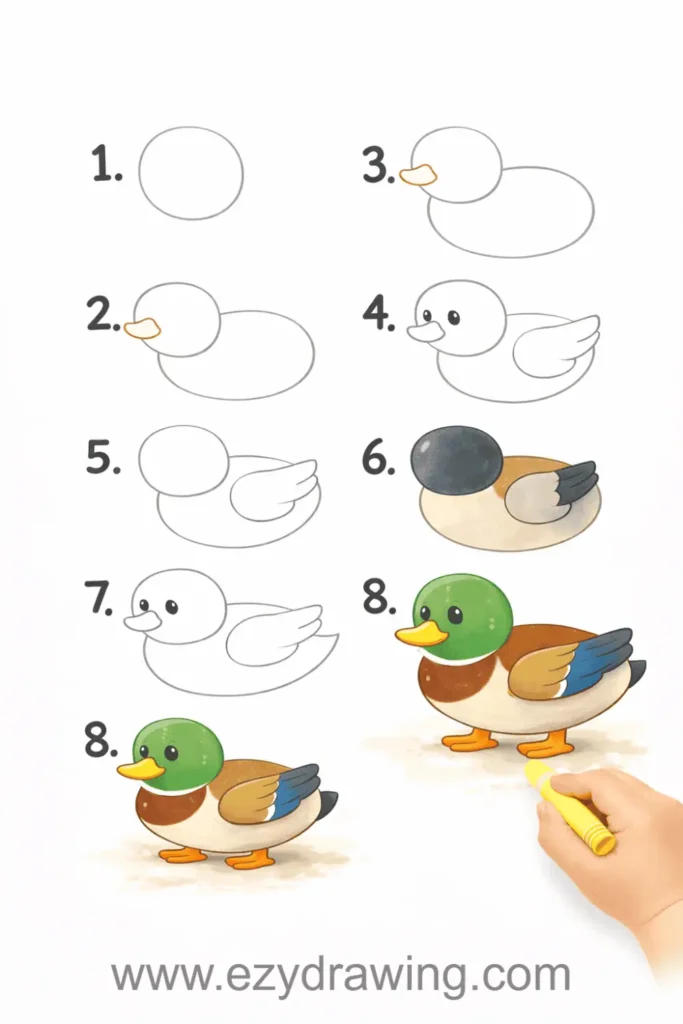
Practice profile drawing with a duck facing left or right, showing the classic silhouette. This teaches proportions from different angles and observation skills.
Step 1: Draw a horizontal oval for the body. Step 2: Add a smaller circle for the head on the left side, slightly overlapping. Step 3: Draw a flat, rounded bill extending left. Step 4: Add a small circle for the eye. Step 5: Sketch curved neck lines connecting head to body. Step 6: Draw a wing shape on the body with feather details. Step 7: Add two legs with webbed feet beneath. Step 8: Color in realistic mallard colors—green head, brown body, and orange feet.
Side profiles challenge kids to think about dimensional form rather than front-facing views. The realistic coloring introduces natural patterns and color combinations.
Pro Tip: Show kids reference photos of real ducks to identify the iridescent green head patch on male mallards, then use green and blue crayons together to create that special shimmer effect.
Related: 11+ Easy Cute Snake Drawing Ideas
9. Upside-Down Dabbling Duck
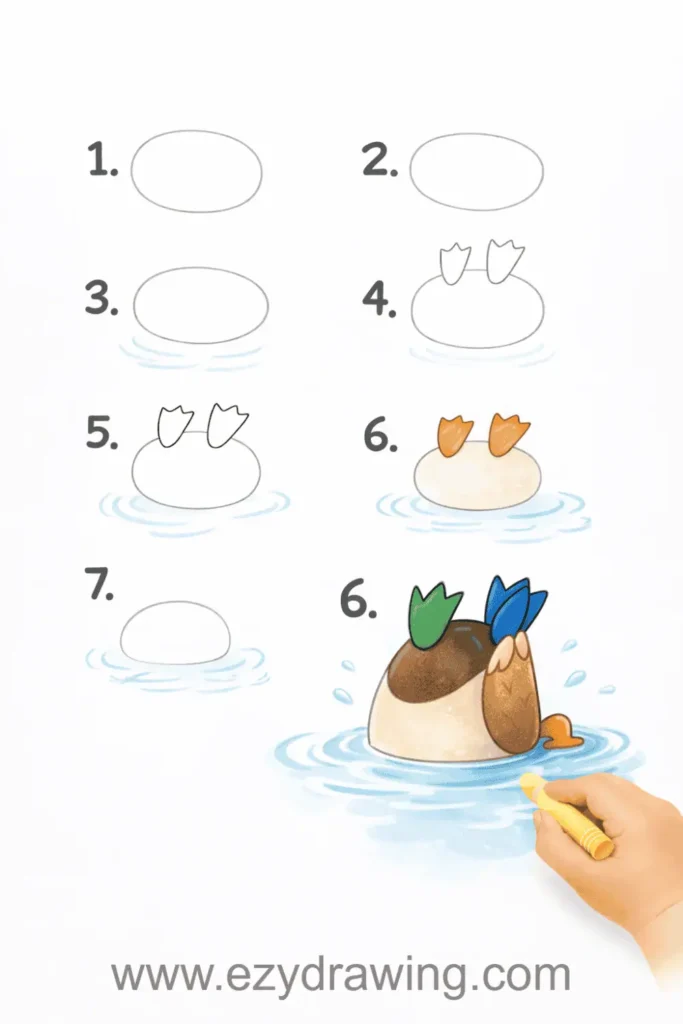
Create a humorous scene showing a duck tipping upside-down while searching for food underwater. This unusual pose teaches creative perspectives and duck behavior.
Step 1: Draw the duck’s tail feathers pointing up as an inverted triangle. Step 2: Add the body tilted downward at 45 degrees. Step 3: Sketch small legs sticking straight up. Step 4: Draw wavy water lines across the middle of the duck. Step 5: Add ripples and bubbles around the water line. Step 6: Color the visible tail and legs, keeping the underwater portion lighter or blue-tinted.
This action pose shows kids that drawings can capture funny, fleeting moments. The water line introduces partial concealment as an artistic technique.
Pro Tip: Use a blue colored pencil to lightly shade everything below the waterline, creating a transparent water effect that shows the duck searching for food beneath the surface.
10. Duck Family in a Row
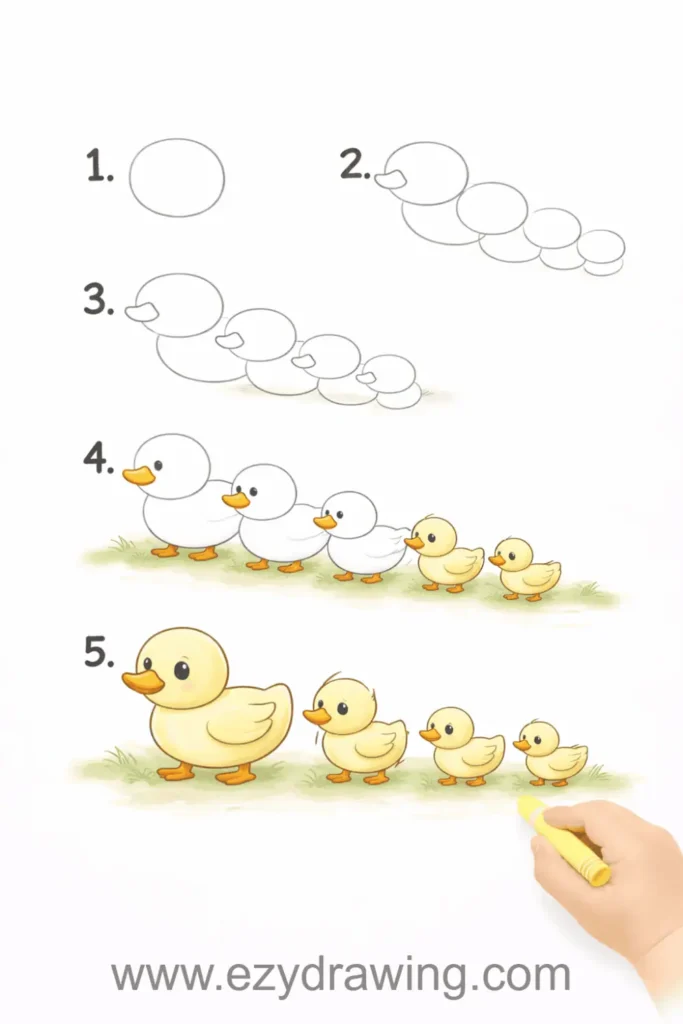
Arrange three to five ducks walking in single file, varying their sizes for visual interest. This composition teaches repetition with variation and family dynamics.
Step 1: Draw the largest duck on the left using basic oval body and round head. Step 2: Add a medium-sized duck to the right and slightly behind. Step 3: Draw a smaller duck following the pattern. Step 4: Continue with one or two tiny ducklings. Step 5: Add bills, eyes, and wings to all ducks. Step 6: Draw a ground line and grass beneath their feet. Step 7: Color each duck slightly differently for personality.
Graduated sizing creates depth perception naturally. The repeating pattern is satisfying while practicing the same shapes multiple times builds skill.
Pro Tip: Number each duck lightly in pencil (1-2-3-4-5) before drawing to help kids maintain proper spacing and size progression, preventing ducks from overlapping unintentionally.
Related: 12+ Easy Cute Frog Drawing Ideas
Why Duck Drawing Ideas for Kids Are Worth the Investment
Duck drawing ideas for kids develop essential fine motor skills and hand-eye coordination through focused practice. The simple shapes and friendly subject matter build artistic confidence that transfers to other creative endeavors and academic subjects.
These projects offer screen-free entertainment that engages children’s imagination and concentration for extended periods. Parents report that duck drawing ideas for kids become favorite quiet-time activities that reduce stress and improve emotional regulation.
The versatility of duck subjects means kids never get bored—from realistic nature studies to cartoon characters. Investing time in duck drawing ideas for kids creates lasting memories and artwork that families cherish for years, while developing crucial developmental skills.
Things to Consider Before Choosing Duck Drawing Ideas for Kids
Consider your child’s current skill level when selecting duck drawing ideas for kids—beginners need simpler shapes while advanced young artists crave detail. Match project complexity to attention span and frustration tolerance for the most enjoyable experience possible.
Think about available materials before starting any duck drawing ideas for kids tutorial. Some projects work best with markers, others with crayons or watercolors, so gathering supplies beforehand prevents mid-project disappointment and maintains creative momentum.
Evaluate the time commitment each project requires when planning duck drawing ideas for kids activities. Quick five-minute ducks work for busy schedules, while elaborate scenes suit lazy weekend afternoons, ensuring completion and satisfaction with finished artwork.
Other Drawing Ideas You May Like
13+ Easy Cute Turtle Drawing Ideas
13+ Easy Cute Horse Drawing Ideas
14+ Easy Cute Bunny Drawing Ideas
19+ Easy Cute Fish Drawing Ideas
15+ Easy Cute Dog Drawing Ideas